Want more from Front Office Sports
in your search results?
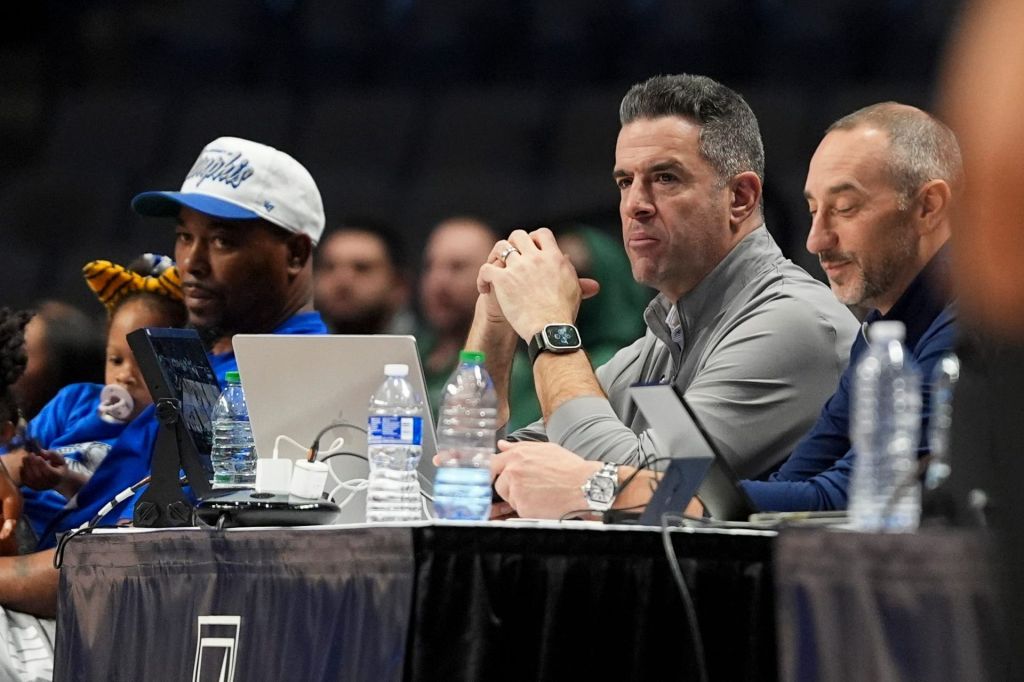
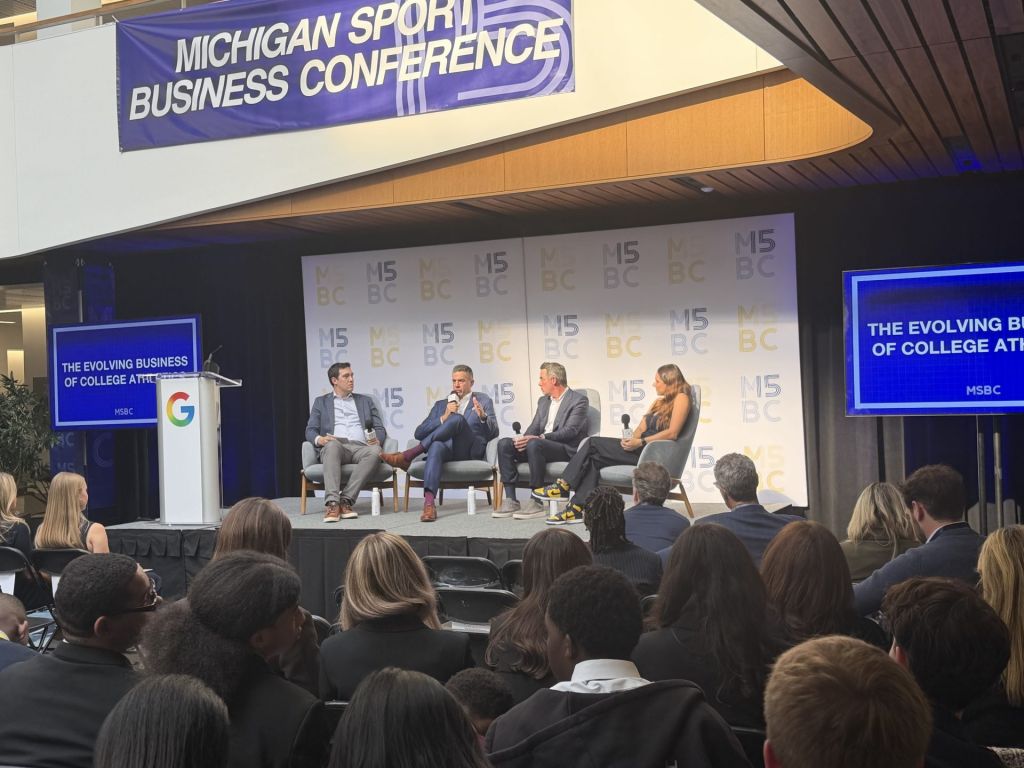
The floodgates of private equity investment into college sports will not fully open until there are clear rules and a predictable governance structure, according to an expert panel at the 15th annual University of Michigan Sport Business Conference.
Private equity sees college sports as a multibillion-dollar opportunity, and schools have had a heightened need for capital amid soaring spending since the House v. NCAA settlement was granted final approval in 2025. To date, however, deals have been slow to materialize. Otro Capital and the University of Utah broke the seal in December, and a few months later a conference-level agreement was reached between the Big 12 and RedBird Capital Partners. (Editor’s note: RedBird IMI, in which RedBird Capital Partners is a joint venture partner, is the primary investor in Front Office Sports.)
But while there’s significant interest from both sides, other potential transactions have sputtered despite seeming close, like the Big Ten deal that fell apart last year. There, 16 of the 18 teams in the Big Ten were reportedly in favor of the transaction, with two holdouts: Michigan and USC. UC Investments, the University of California system’s pension fund that had proposed purchasing an equity stake in the Big Ten, indicated it wouldn’t sign a deal without Michigan and USC.
Smash Sports co-founder and COO Magdalena Kala said during the panel that while she could not speak for any particular school involved in those talks, “you can critique a deal on three things: process, outcome, and implications.” In the case of the Big Ten deal, people had concerns about all three, she said.
Experts currently believe private credit deals—which are structured as loans, with investors providing financing, collecting interest, and getting repaid—are the easier path than traditional private equity investment.
Apollo Sports Capital chief strategy officer Sam Porter, also part of the panel, said private equity firms view college sports as a “very attractive” asset class because of long-term revenue streams like sponsorship, media rights, and ticketing. But it’s challenging to “thread the needle” of schools being public institutions with a mission of higher education.
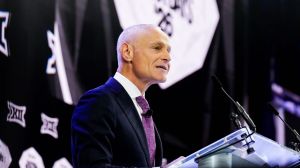
American Conference commissioner Tim Pernetti said on the panel there’s “plenty of money for the taking,” but what schools need is a “real partner” focused on building revenue and creating commercial growth. “We’re all behind on that,” he said.
The challenge, according to Porter, is that investors are accustomed to dealing with professional teams and leagues that have established ownership structures and rules. “When we do a deal with the Yankees, these are big boy owners” who have obligations to other investors and set strict budgets, he said.
By contrast, college sports operates under a “not-for-profit umbrella” where there has historically not been investors who demand a return on investment, Pernetti said.
A major issue is the uncertainty facing investors, Porter said. He pointed to conference realignment and the legal fights that have followed as one example. With professional leagues, “you know who’s making the rules,” he said. There are collective bargaining agreements and league constitutions that set guidelines for how business can be done, while in college “there’s just so much unknown.”
Asked what could make the private equity side more comfortable diving fully into college sports, Porter said “legislation that makes clear how rights will be handled.”
There is currently a bipartisan bill, the Protect College Sports Act (PCSA), that was recently approved in the Senate and now awaits a vote in the House of Representatives. Its passing is not guaranteed. The legislation would double the revenue-sharing cap and attempt to limit cap-circumvention NIL deals, implement a one-time transfer and five-for-five eligibility policy, impose agent restrictions, and offer certain requirements for health and safety standards and Olympic and women’s sports participation. It would also limit conference realignment, coaching transfers, and allow schools to pool and sell media rights together.
Pernetti acknowledged the PCSA isn’t perfect, but said he thinks it needs to pass. Without it, conferences like his will “keep getting raided for talent and coaches,” he said, noting that’s “not sustainable” and “kills the experience for college athletes.”
The broader question of whether athletes should be classified as employees also remains unsettled. As schools navigate revenue sharing and the possibility of more formal labor arrangements, the prospect of athletes being treated as employees, and the implications that would come with that, adds another layer of uncertainty for potential private equity investors.
Pernetti said collective bargaining is a topic that “deserves to be discussed” but admitted it’s a huge challenge to actually make that happen.
“College sports has become a multibillion-dollar industry built on the backs of college athletes who are in the spotlight all the time,” he said.