Want more from Front Office Sports
in your search results?
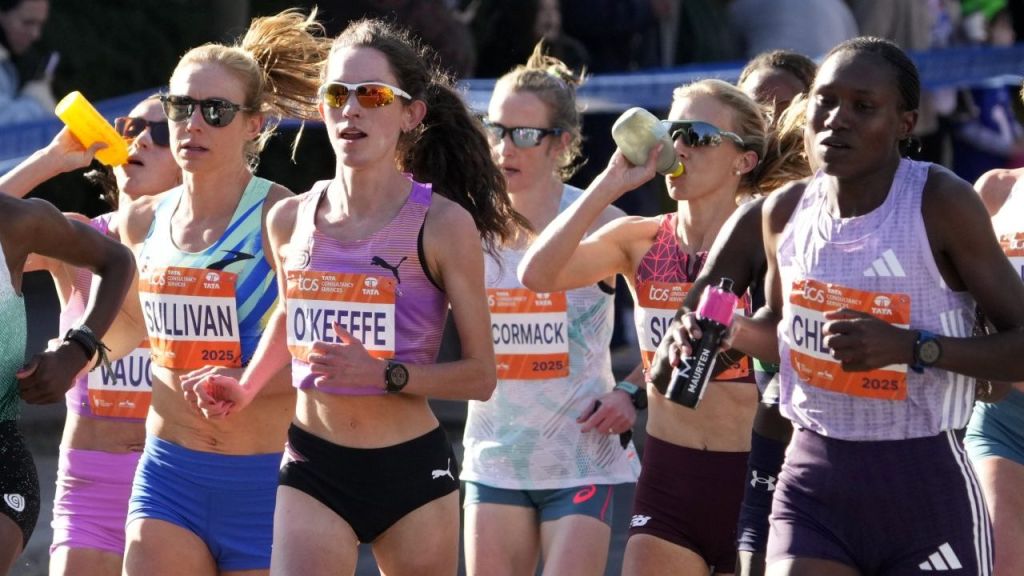
About two and a half weeks before she was due to line up at Sunday’s New York City Marathon, elite runner Fiona O’Keeffe had to share a change of plans. Instead of racing through the five boroughs on Sunday, she’d be recovering from surgery to repair a fully retracted tendon tear in her hamstring.
Though they work hard to stay healthy, injury is a fact of life for elite marathoners, who often log upward of 100 miles weekly. “A lot of these folks, they’re dealing with something at all times,” Dr. Efren Caballes, a sports medicine physician in Colorado who treats both professional and recreational endurance athletes, tells Front Office Sports. “It’s just a matter of, how often does it start to limit their training?”
These setbacks are physically and emotionally challenging for any elite athlete. For professional marathoners, they can also be expensive.
O’Keeffe placed fourth and set the American course record of 2:22:49 in NYC last year, earning $50,000 in prize money. Withdrawing means she misses her chance to compete for her share of this year’s $969,000 purse. And athletes who don’t make it to the starting line typically forfeit all the appearance fees offered by World Marathon Majors and other big races, agent Hawi Keflezighi tells FOS. (He doesn’t represent O’Keeffe, but has several clients in Sunday’s race, including Zouhair Talbi and Annie Frisbie. Appearance deals are individually negotiated and typically confidential.)
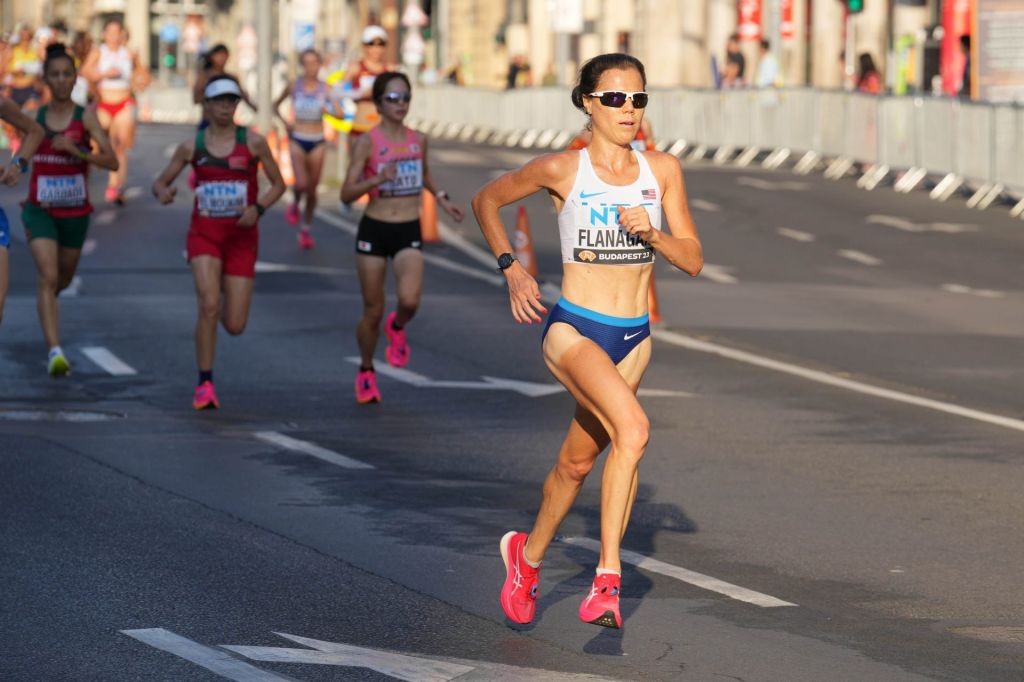
In 2025, pro runner Lindsay Flanagan had to scratch from three marathons she’d committed to: Boston, Chicago, and Valencia. The money she lost in appearance fees would have at least doubled her income from her base contract and coaching, and if she’d performed well, she could have earned even more in prize money and bonuses. “We don’t do it for the money, but at the same time, this is how I pay my mortgage,” she tells FOS. “It’s my job. I think it would be crazy if I wasn’t upset about that.”
The Cost of Care
To add to the strain, many pro runners bear the brunt of their own healthcare costs. Professional sports leagues like the NFL, NBA, and WNBA have collective bargaining agreements governing areas like pay, working conditions, and healthcare coverage. Pro runners, meanwhile, operate as independent contractors without such protections, agent Josh Cox tells FOS.
Runners’ primary sponsorships typically come from footwear companies, and with rare exceptions, these deals don’t include health insurance, Cox says.
Some brands include a line item in contracts to cover premiums, Keflezighi says, while others have team setups that offer support. For example, a training group might have a physical therapist or other health professional on staff, or offer access to other recommended providers, with some or all costs paid for out of a team budget.
And nearly all shoe contracts have a line item for massage, physical therapy, and similar expenses, Keflezighi says.
However, insurance doesn’t typically cover some newer treatments that speed athletes’ recoveries, Caballes says. So they can easily max out these budgets.
Flanagan estimates that, beyond the approximately $300 monthly premiums for her high-deductible plan, she spent around $15,000 out of pocket on the high hamstring tear that kept her from racing last year. She returned to the starting line this spring, running 2:28:34 to place seventh at the Vienna Marathon in April. But soon afterward, her Achilles tendon started hurting.
Her plan didn’t cover the shockwave therapy recommended as a first line of treatment—she did 12 sessions, at about $250 a pop. When that didn’t relieve her pain, she paid about $500 out of pocket for an MRI, which showed a partial Achilles tear, significant scar tissue, and a bony growth called a Haglund’s deformity on her heel that was continually fraying the tendon.
On Oct. 13, she had surgery, for which she’s already paid about $6,000. “I could have gotten an MRI the day it started hurting, but because you’re trying to save money, in the end, you end up actually spending way more money,” she says.
Flanagan says Asics has supported her throughout the process, and she hopes to be competing again by April. But some shoe company contracts have reduction clauses, which financially penalize athletes for not racing frequently enough, Keflezighi says. And when athletes come to the end of a multi-year agreement, their recent performances—or lack thereof—could play a role in negotiations.
All this can place athletes in a difficult cycle. “There’s this fine line of ‘Well, I have to get back because this is how I make my living,’” Caballes says. “But also, if I come back too soon, then I’m spending more time and money because there’s a re-injury.”
Making the Call
Typically, athletes commit to big marathons months in advance. This weekend in New York City, many runners, agents, and race organizers will discuss deals for spring races like Boston and London, Keflezighi says. That leaves plenty of time for injuries to crop up or worsen.
With some, athletes have little choice but to skip a race—for example, when recovering from surgery. In other cases, athletes must calculate risk versus reward in consultation with doctors, agents, and coaches. If a marathoner makes it to the starting line, but doesn’t finish—or in some cases, doesn’t finish within a certain time limit—they may receive a portion of their appearance fee, Keflezighi says.
Decisions often depend on the nature of the injury, what’s on the line for an athlete, and the resources they have available, says Richard Hansen, coach of the Roots Running Project, a professional team also based in Boulder.
For example, his now-wife, Alia, rolled her ankle and fractured her fibula in the lead-up to the 2016 Olympic Trials Marathon in Los Angeles. That bone doesn’t bear much weight, and Hansen was a practicing chiropractor at the time, so the pair had access to frequent imaging and tools like an AlterG anti-gravity treadmill.
Alia did most of her training there and finished 10th at the Trials in a personal-best 2:35:47, a significant career milestone.
Three years later, she developed a stress fracture in her sacrum soon after signing a contract to run the London Marathon. Because that’s a higher-risk injury, she withdrew from the race to recover. “That was a pretty sizable financial hit, but it was in the best interest of her athletic career at the time,” Hansen says.
The Upside of Setbacks
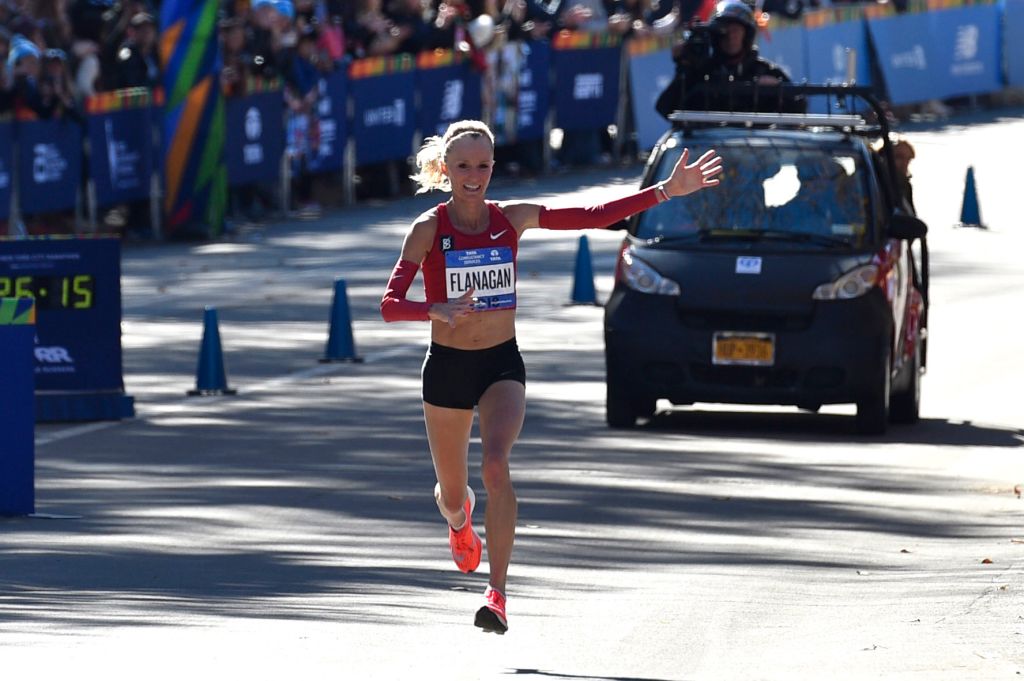
For all their challenges, some athletes find injury offers opportunities to correct imbalances, build mental skills, or address training issues. Eventually, they may return stronger. Shalane Flanagan—no relation to Lindsay—missed the 2017 Boston Marathon due to a sacral stress fracture, then came back to win New York City in 2:26:53 that November, the first American woman to do so since 1977.
And while some may wonder about the messages pro athletes send in the way they handle injury, there are obvious differences between them and the masses. Elite athletes have genetic gifts, as well as the time and incentive to both pursue intensive treatments and recover from them. With all that, timelines and recoveries that seem remarkable are often possible. “There are some people who do stuff that still boggles my mind,” Caballes says.
Take Brooks-sponsored runner Clayton Young. Four weeks out from this year’s Chicago Marathon, MRI results showed his hamstring pain came from a six-inch tear starting near the top of the muscle and tendon.
Young has multiple layers of care at his disposal. As a 2024 Olympian, he’s one of a limited number of top runners who receive elite athlete health insurance through the U.S. Olympic & Paralympic Committee, though he pays a small premium and is taxed on the full value of the benefits. In addition, he’s a founding member of the Run Elite Program, a team that partners with Intermountain Health in Utah. He also has an individual sponsorship from the Commons Clinic, a California-based group of orthopedic specialists, along with support from physiologists and other experts at Brooks and the USOPC.
A physician at Intermountain Health first recommended platelet-rich plasma (PRP)—where a patient’s own blood is spun down into a substance full of healing growth factors, then injected back into the injured area—and four weeks off of running. But he also made clear that an MRI is a single data point. Because Young could still run fast workouts without the injury worsening, he kept training, with close monitoring from coach Ed Eyestone and many medical providers.
On race day, he felt confident he could compete. Though he fell short of his stated goal of breaking the American marathon record of 2:04:43, Young still ran a personal best of 2:05:23, placed seventh overall and top American, and earned $15,000 in prize money in the process.
Another MRI afterward showed no additional damage. Now, when he’d be resting from the race anyway, he’s pursuing PRP treatment in both his hamstring and ankle, further healing a previously injured area. That leaves him optimistic for a full recovery long before 2028, when he hopes to compete for another spot on the Olympic marathon team.
“All things considered, I think it’s a miracle,” Young tells FOS, expressing gratitude for the team around him and saying he has no regrets about the process. “The only thing I would change is just not have the injury there to begin with.”
His exact approach might not work for everyone; Young says his high tolerance for ambiguity allowed him to proceed despite uncertainty. But Keflezighi says he’s hopeful that in the future, the pool of athletes receiving such high-level benefits could expand.
That way, even more of them could access the providers and resources necessary to compete when it’s possible, know when it’s smarter to save their efforts for the next race, and ideally, prevent injury in the first place. “At the end of the day, if you can decrease your chances of injury by a little bit, that helps you get to the starting line—and hopefully get to the finish line faster, too,” he says.
Download the FOS App
The business of sports, in your pocket.



Scan the QR code to get the app now.