Max Kellerman, LeSean McCoy Off DAZN Boxing Show As Mario Lopez Joins
Want more from Front Office Sports
in your search results?
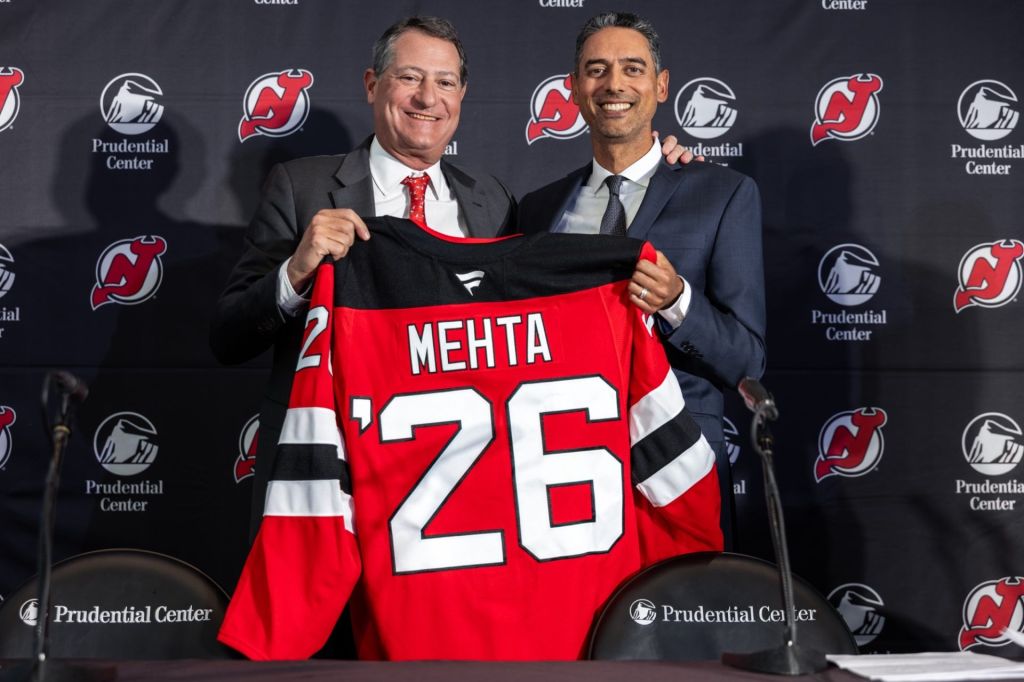
When Sunny Mehta stepped into the Devils front office in April as a first-time general manager, he was not a total outsider. The New Jersey native worked in the organization as their director of analytics in 2014. He won two Stanley Cups with the Panthers as an assistant GM and head of analytics, which raised his profile to the level of being considered for GM openings this past offseason.
Still, despite his NHL front-office experience, Mehta does not look like many GMs of the past. The job has long been the exclusive purview of former pro players and so-called “hockey men” who rose steadily up the front-office ranks. But now, many NHL owners, like the Devils’ Josh Harris and David Blitzer (who hired Sam Hinkie to put “The Process” in place for the Philadelphia 76ers), are starting to break the traditional mold for their next chief.
Mehta is among a new wave of young NHL GMs who have spent less time on the ice—if any at all—and far more in spreadsheets. Owners are catching up to their NBA and MLB counterparts in trying to find corporate-style managers to run their hockey operations, rather than a legendary former player or a longtime executive.
“I am in the prediction business,” says 48-year-old Mehta, who was a professional poker player in his 20s and then worked as a derivatives trader for Peak6 before joining the Devils the first time. “I’m trying to put together a roster and predict the future outcomes of hockey players.”
He has been aggressive in reshaping the roster as much as the salary cap and contract commitments allow in the six months since he took over: He traded away the team’s starting goalie, a recent No. 2 overall pick, and used some of the assets acquired in those deals to add to add 24-year-old Luke Evangelista from the Predators just a few weeks before the season began.
“In [market] trading, when you’re managing a portfolio, you have to do whatever it takes to have winning positions in your portfolio,” Mehta tells Front Office Sports. “I guess I do think of it in a similar way.”
Along with the evolving game of hockey, changes to ownership and organizational structure have brought in GM candidates that would rarely have gotten in the door for an interview a decade or more ago. Being able to manage up as well as down, sometimes in a more corporate environment than GMs of the past encountered, is as important a skill as navigating the salary cap, waiver rules, or trade negotiations.
And it can work. Hurricanes GM Eric Tulsky came from the world of nanoscience and secured several U.S. patents before joining the Hurricanes as a data consultant 12 years ago, eventually leading them to a Stanley Cup in 2026. Teams want the same acumen to also win them the hardware, and they’re going out to get it.
The Fundamentals
With their own GM vacancy, the Maple Leafs were keen on talking to Mehta before he chose his childhood team. Toronto, guided by Rogers Communications chairman Edward Rogers and Maple Leaf Sports & Entertainment CEO Keith Pelley, were similarly searching for a GM who came from an analytics background.
This experience has become essential not only because of the rise of data in hockey, but also the proliferation of search firms, most notably TurnkeyZRG, PBI and Sportsology, who have helped spearhead several recent GM searches, including Toronto’s.
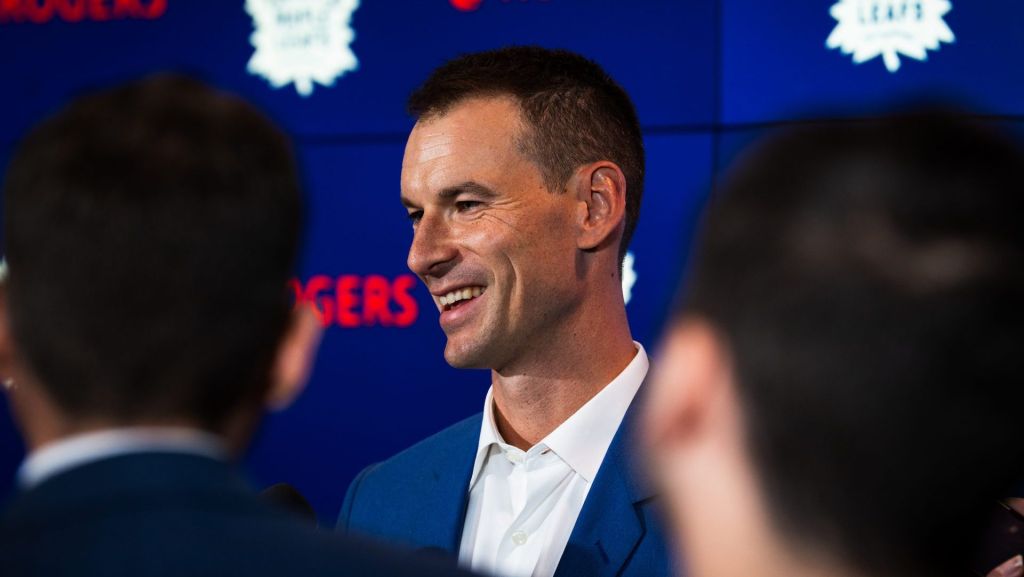
“There were once a lot of Ma and Pa ownership groups, and it’s turned more to corporate and PE ownership,” John Chayka, who got the Maple Leafs job in May, told Front Office Sports. “How they evaluate this job and how they look at the teams has changed. … These jobs become available because there were some deficiencies that ownerships are trying to correct. Maybe Sunny or I value things a little differently and are more aggressive in trying to make those corrections, but I really do think it’s what the situation calls for in each organization.”
Chayka, who became the NHL’s youngest-ever GM at 26 when he took over the Coyotes in 2016, comes fully from the world of analytics, having co-founded hockey-data firm Stathletes with his sister Megan. His first tenure as an NHL GM ended ignominiously after the 2019–20 season, when he was found to have been searching for new jobs while still running the Coyotes. He was also subsequently suspended for a year by the NHL for conducting private workouts for NHL draft prospects.
But Chayka’s analytical experience was so deep that the Leafs, who were run for a decade by Hall-of-Fame player Brendan Shanahan as team president, took a risk and hired him. He’s still the youngest GM in the league at 37.
“When I joined the Coyotes, they were a few years out of bankruptcy and we were in the context of millions of dollars,” Chayka says. “Now, not that many years later, it’s billions in expansion fees and valuations. The game has grown, the values have grown. You need people with diverse skill sets.”
Chayka’s Leafs barely look like the same team that finished 30th last season: Seven trades, including one for Blue Jackets forward Kirill Marchenko on the eve of the regular season; seven free-agent additions, all of whom are on the current roster; as well as 2026 No. 1 overall draft pick Gavin McKenna.
“I didn’t come from the same background as a lot of the other managers, but the fundamentals are still the fundamentals,” Chayka says. “Maybe there are owners who feel you need a Hall-of-Fame career to understand the inner workings of a front office, but it’s really circumstance and situation. You develop a feel for the job. We do also have [Hall-of-Famer] Mats Sundin here in Toronto in our group. I’m a big believer in the power of the room to make decisions.”
Many Paths
Penguins GM Kyle Dubas ascended through the hockey world, having been the GM of the Ontario Hockey League’s Sault Ste. Marie Greyhounds before joining the Maple Leafs as an assistant GM in 2014. But when he took on the role as co-interim GM for the Leafs after the 2014–15 season, he was hardly a long-tenured executive.
He remembers attending his first NHL GM meeting—twice-annual gatherings where the league’s managers convene to discuss rule changes and usually some trades—as a 29-year-old neophyte among NHL giants. The room was packed with former players including Steve Yzerman, Joe Sakic, Ron Francis, and Ron Hextall; and top brass who’d been in the league for decades, like David Poile and Lou Lamoriello.
“Glen Sather, Bryan Murray, David Poile,” recalls Dubas. “And then there were Joe Sakic and Steve Yzerman, Hall of Fame players I’d watched growing up. You have some of the legends of the sport. I was petrified.”
But more than a decade later, when Dubas now gathers with his fellow GMs, things look different.
At the next meeting in mid-March, this season’s new group will include at least 13 men who never played professionally. Alongside Mehta, Chayka, Dubas, and Tulsky are Canadiens GM Kent Hughes and back-to-back Stanley Cup–winning Panthers GM Bill Zito, who were both long-time player agents. (The jury is out on Detroit, whose GM seat remains open after firing Yzerman in July; perhaps unsurprisingly, owner Chris Ilitch is reportedly trying to find an analytics-focused manager to take over.) Twenty-one out of the thirty-one filled positions are also on the job for the first time, with four younger than 43.
Dubas, among that group at age 40, knows a new crop of GMs with backgrounds that buck the norm can be successful.
His time in Toronto came under Lamoriello, the godfather of NHL GMs, who spent 37 years with the title. In a period where teams barely went off-script with their GM hiring, Lamoriello represents just how successful an exception can be. He jumped from being a high-school math teacher to Providence College hockey coach, then athletic director, before attaining his first GM job with the Devils in 1987. Lamoriello turns 84 this month and, after being let go as Islanders GM following the 2024–25 season, still has his hand in plenty of ventures and is still cited as an influence by many of the current crop of GMs.
“It’s a good reminder that there isn’t one path to this job,” Dubas says. “I’ve learned a lot from Lou, and I find I learn a lot from the newer guys who think a little differently. The change that brings to their teams and to the league is really positive.”
Download the FOS App
The business of sports, in your pocket.



Scan the QR code to get the app now.