
Troy Aikman, Dolphins Have No Ongoing Consulting Agreement
Want more from Front Office Sports
in your search results?
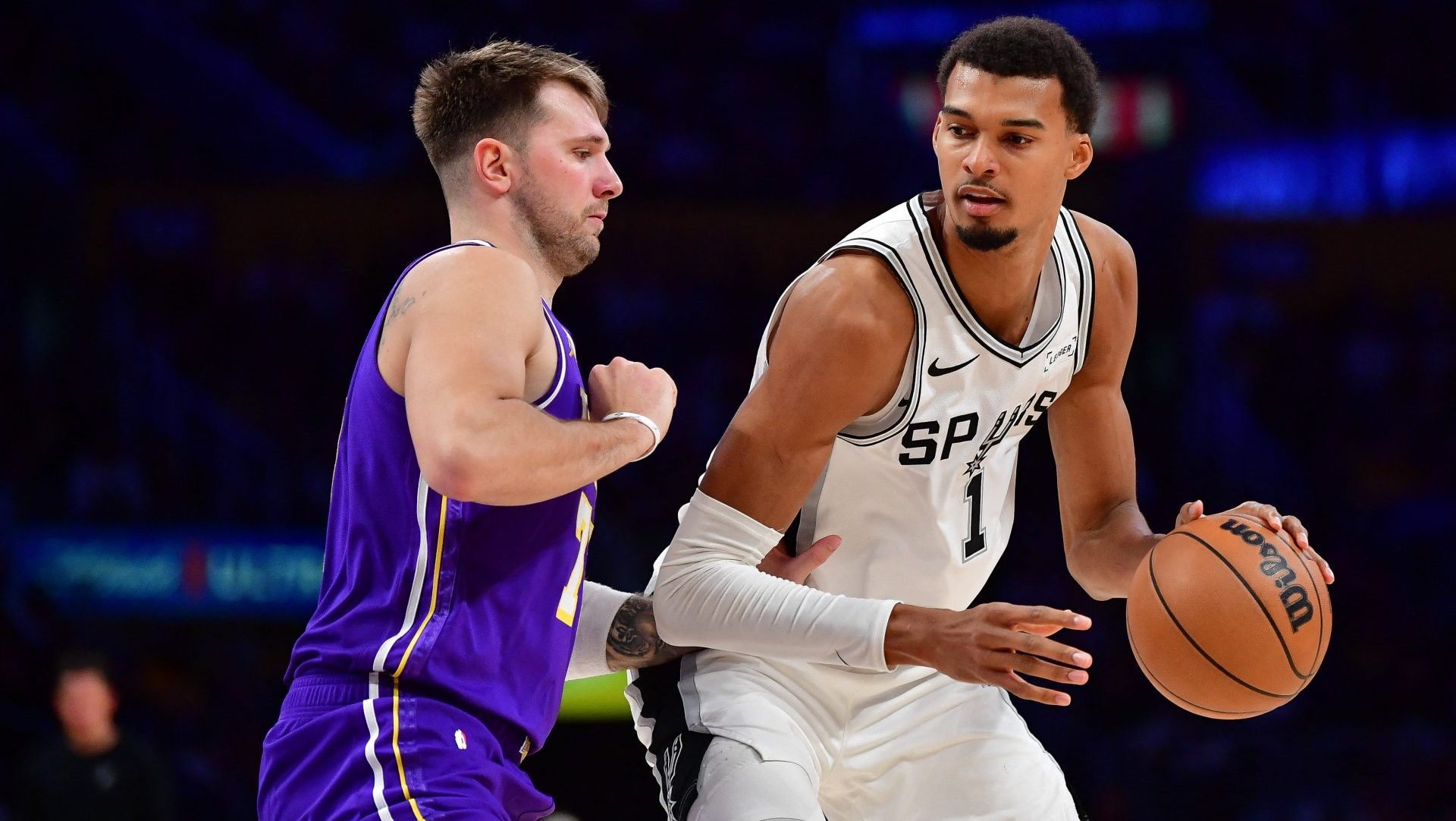
For many of the world’s top basketball prospects, the path to the NBA begins in the youth academy of a professional club. Victor Wembanyama spent seven years with Nanterre 92 in France, Luka Dončić joined Real Madrid at 13, and Deni Avdija began with Maccabi Tel Aviv at 12.
It’s an increasingly lucrative pathway: 17 Europeans have gone in the top 10 of the NBA draft since 2015, and 70 made opening-day rosters as the season tips off Tuesday.
When European players are talented enough to graduate from the youth club, they’ll often sign with the same organization’s professional team. For instance, three years after Dončić joined Real Madrid’s youth system, he began playing professionally for the club at 16. European players compete against older players as teenagers, and developing them is central to those clubs’ business models.
When a player leaves a European club for an opportunity in the U.S., a buyout must be negotiated. Dončić and the Mavericks paid Real Madrid more than $2 million combined after Dallas drafted him fifth overall. Real Madrid has netted more than $20 million in NBA buyouts since 2014.
The connection between American and European basketball has rapidly accelerated over the past couple of decades, with Europe becoming a reliable pipeline for college and NBA players and coaches. European stars became franchise icons, and according to many college coaches who spoke to Front Office Sports, the NIL price of European players has skyrocketed over the past few years.
The Europe-ification of American basketball might have been inevitable given the sport’s global popularity and accessibility, especially after the 1992 Dream Team’s gold medal run in Barcelona. But talking to nearly two dozen coaches, scouts, agents, players, and executives, FOS discovered there is more to the story. Youth development structures, financial incentives to develop players, and stylistic changes to the game have advanced European influence on the NBA.
The NBA went from fewer than 20% of its players born outside the U.S. in 2010 to nearly one in three players born outside the country last season. Four of the top five players among ESPN’s current top 100 are European.
In turn, the NBA has invested more heavily abroad as fandom and interest surged across the continent, with NBA Europe as the latest and most ambitious example.
At the college level, nearly 40% of players on last year’s Final Four rosters were born outside of the U.S. or Canada. There were 482 more men’s international college basketball players during the 2024–25 season than during the 2009–10 season, and 326 more Europeans.
“You’re gonna show up, and you’re gonna work”
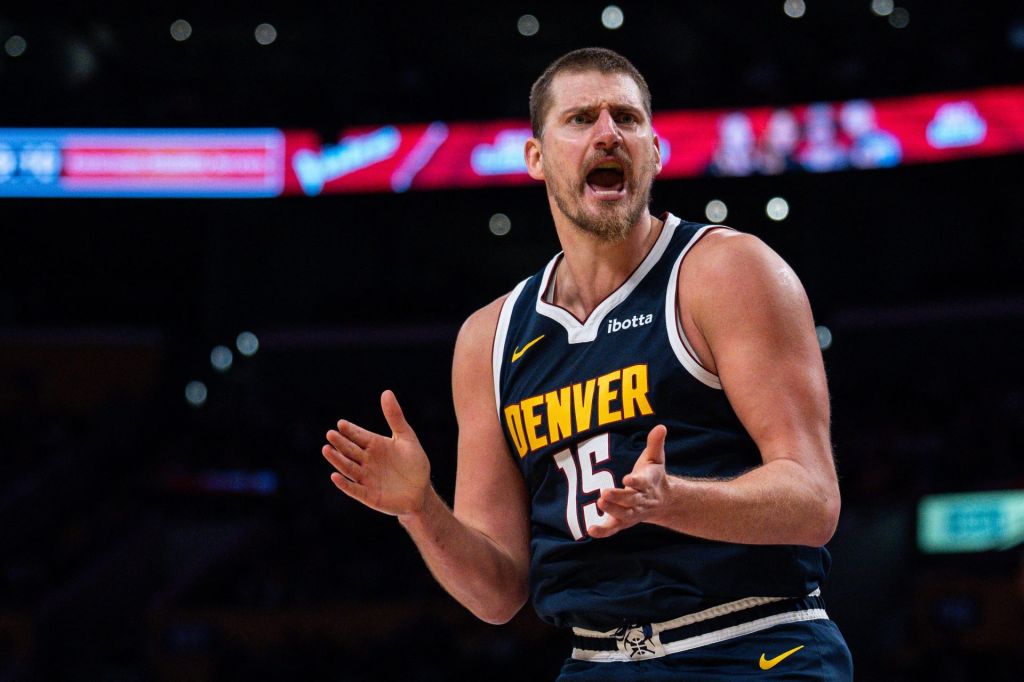
Before Nikola Jokić was a three-time MVP and an NBA champion, he was an overweight, 20-year-old rookie. The Nuggets wanted him to initially play in the G League, according to a Nuggets assistant coach, but Denver didn’t have a G League team. Both the Nuggets staff and Jokić himself were surprised at how seamlessly he transitioned.
“Coach, I can’t believe how easy this is coming for me,” the No. 41 pick told a coach during a practice in his rookie season.
Despite his 17-inch vertical—roughly a foot below the NBA average—Jokić had developed such advanced decision-making and processing skills in Serbia that his lack of athleticism became almost inconsequential in a league renowned for its athletes.
The way Europeans are taught and developed is fundamentally different from the American system. Youth development critiques in American sports aren’t unique to basketball; every four years, an ignominious performance by the U.S. men’s soccer team kicks off another cycle of teeth-gnashing. But the situation is particularly glaring in the NBA.
“The structure’s different, the pedigree of the [youth coaches] was different,” Mike D’Antoni, who spent 21 years playing and coaching in Italy, tells FOS. “I think overall the system is much more beneficial to a European player.”
The examples of Wembanyama, Dončić, and Avdija illustrate the stark contrast between the American model and Europe’s more stable academy system, where players develop with one program for years.
“European players are usually developed in clubs that focus more on team concepts, whereas players in the U.S. are usually developed in more individual settings,” Drew Hanlen, who trains Giannis Antetokounmpo, Joel Embiid, Jayson Tatum, and Tyrese Haliburton, tells FOS.
American players aren’t tethered to contracts in high school or AAU, resulting in part-time American coaches having less leverage to mandate practices and hold players accountable than their full-time European counterparts. Fewer practices—AAU teams rarely practice—means minimal opportunities to teach team concepts. Development instead happens individually, and coaches say AAU events often become showcases to impress college coaches, prioritizing individual performance over team success.
Top players rarely stay at one high school for four years. One top-10 player in the 2028 class has been to three high schools in three years. Five of the top seven players in ESPN’s class of 2027 ranking have attended multiple high schools.
Many kids and families are, as Doug Gottlieb, who previously coached AAU and is now the head coach of the Division I program at Green Bay, describes it, “chasing a check.”
“The only thing that should matter is his fucking development,” Gottlieb says of the young players. “Whether it’s high school or college or AAU, when you change teams, it almost always sets you back in your development.”
Ryan Pannone, the Arkansas State head coach who has coached in high school, Europe, the NBA, G League, and college, sees the European system as having some less tangible advantages, too.
“The ability to deal with adversity is higher because you’re not just getting out of Barcelona. You’re under contract. It ain’t like, ‘I don’t like it here; I’m gonna go here.’ No, the hell you are not,” Pannone says. “You’re gonna show up, and you’re gonna work, or we will find you. And so they have to learn how to embrace the suckiness.”
When Avdija played for Maccabi Tel Aviv’s youth academy, the team had morning development sessions three times a week and team practice in the afternoon six days a week. They played another team only once a week, which is typical for European youth clubs.
European drills and workouts are designed to teach spacing, moving without the ball, passing, pick-and-roll manipulation, and reading defenses.
“The way spacing is taught in Europe from a youth age is totally different,” Pannone says. “The North American game is, from a youth level, brought up as more of an individual game.”
While Hanlen notes that trainers have raised the collective skill level of all players, pre-draft players he works with often struggle with fundamentals like shooting and decision-making. Multiple scouts noted that European players are typically further ahead in those areas.
“If you’re denying the influence of European basketball,” Gottlieb says. “Then you’re just not paying attention.”
Shifting Styles
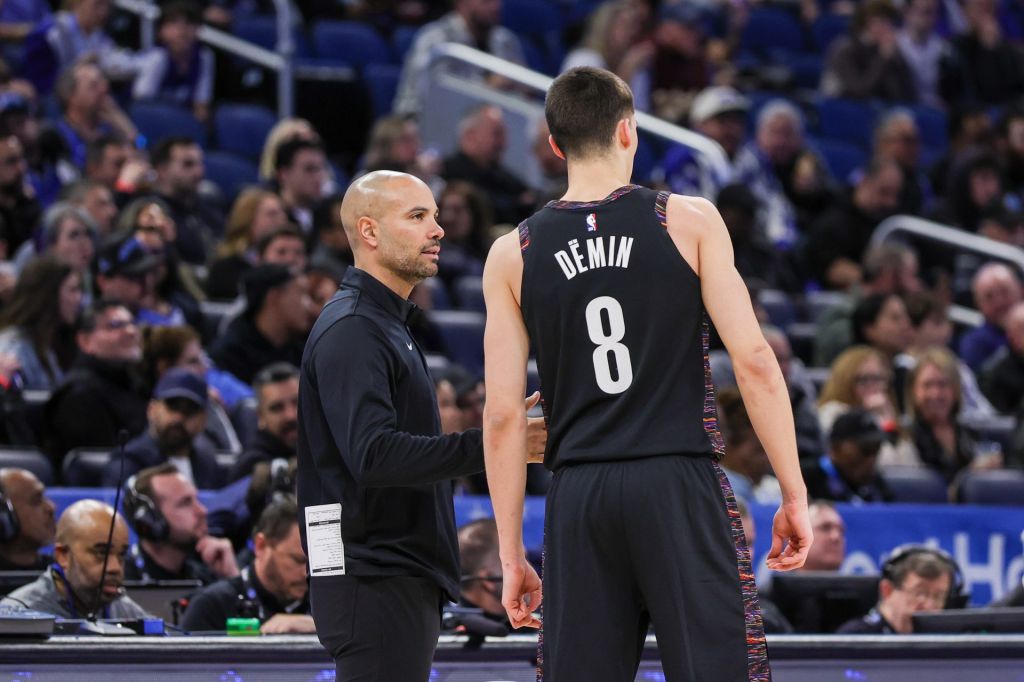
Egor Dëmin could have been made in a European basketball lab. He has positional size, plays with pace, has exceptional pick-and-roll processing ability, and is an elite passer. Born and developed in Russia, Dëmin, like Dončić, joined Real Madrid’s youth academy before playing for its professional team; BYU later bought him out for more than $550,000 as part of his NIL deal. He spent one season there before the Nets drafted him eighth overall in 2025.
While Dëmin had a successful collegiate season and improved throughout his rookie year, he struggled with the increased physicality and athleticism of the American game, a weakness often seen in European players.
“The athletic development is considerably higher [in the U.S.],” Pannone says. “The actual teaching of the game of basketball is much higher in Europe.”
The Nets are coached by Jordi Fernandez, one of a record three European head coaches in the NBA this season. Fernandez coached in Spain before moving to America, making him and Dëmin a natural pairing as Dëmin made a similar transition.
“Having Jordi as a European mind definitely helps a lot because a lot of the things he’s trying to teach us, I already know them,” Dëmin says. “Certain drills that we do in workouts … I’ve done that before. A lot of guys have never seen that before because it’s European drills.”
Despite the adjustment to the physicality and athleticism required of some Europeans, franchises are increasingly willing to take chances on players like Dëmin.
“The style of play in the NBA right now favors a lot of the qualities that international players do have as opposed to many decades ago, where maybe it relied a little more on physicality, toughness, and athleticism,” a director of international scouting for an NBA team tells FOS.
D’Antoni, inducted into the Basketball Hall of Fame this summer, is one of the key figures responsible for ushering in that transition with his “seven seconds or less” Suns offenses, which led the NBA in scoring from 2004 to 2007.
The two-time Coach of the Year emphasized playing fast, spacing, and launching threes, principles that were novel and controversial at the time. He rarely relied on post-ups and implored his big men Amar’e Stoudemire and Boris Diaw—a Frenchman—to space the floor.
“I don’t think you—and I don’t think Mike D’Antoni—get enough credit for revolutionizing the game to where it is today,” LeBron James told Steve Nash, the point guard on those Suns teams, in an April episode of his Mind the Game podcast.
“It definitely had European influences,” D’Antoni, who originally launched the offense as a coach in Italy, says.
More teams—most notably the Spurs and Warriors—later embraced similar principles: playing fast, stretching the big, spamming pick-and-rolls, and emphasizing spacing and movement. The shift has also made teams more inclined to invest in international talent.
“Organizations are more and more comfortable with international players just because they’ve seen the success of some,” the director of international scouting says.
International players’ success has also led to expanded investment in international scouting among NBA front offices. The best organizations have always scouted across the globe, but many franchises didn’t have developed international scouting departments in the early 2010s, according to multiple scouts. Now, every NBA team does.
The gap between European and American talent has narrowed, but some American coaches are quick to point out that the NBA remains overwhelmingly American. Still, the NBA’s booming investment in Europe—most notably its daring NBA Europe project—is a product of the continent’s growing influence on the league.
“The U.S. is by far the best basketball nation on this planet. Not even close,” one scout says. “But the rest of the world isn’t sleeping.”
Download the FOS App
The business of sports, in your pocket.



Scan the QR code to get the app now.