Want more from Front Office Sports
in your search results?
On Sunday, Atlético La Paz and Mineros de Zacatecas will play the second game of a two-leg match to decide the league championship for Liga de Expansión MX, the second tier of Mexican soccer. The first game, played Nov. 21, saw La Paz win, 3–0.
Ordinarily, the winner would be promoted into Liga MX to compete against the giants of Mexican soccer: Club América, Cruz Azul, and Guadalajara. The clubs would also earn broadcasting revenue worth around $10 million a year.
But Liga MX has determined there will be no promotion this year—or ever. In July, it announced it was becoming a closed league comprising the current 18 clubs. The setup mirrors Major League Soccer and the National Women’s Soccer League.
This has not sat well with Liga de Expansión owners and teams, especially when stakes are so high.
The two title-chasing second-division clubs have—along with Leones Negros, Atlético Morelia, and Cancún FC—challenged the decision at the Switzerland-based Court of Arbitration for Sport. A closed, two-day hearing took place in Mexico City in mid-November, with a verdict likely in early 2027.
The decision, which is the second appeal by Liga de Expansión since 2025, will have a major impact on the Mexican soccer pyramid—changing not only who can cash in on those lucrative media rights, but also the overall valuations of Mexican teams themselves.
Atlético La Paz owner Arturo Lomelí tells Front Office Sports that if access to Liga MX is closed off, his club’s future would change dramatically.
“We would have to sell the land we bought to build a new training center. We would drop our plan to expand our stadium, and the investment we had planned to develop our lower-league teams would no longer make sense,” says Lomelí, a luxury tequila entrepreneur, who bought the second-tier club in 2022. “Without the revenue that comes with playing in Liga MX, we’ll have to pull back our investment and look for ways to recover some of what we’ve already put in.”
The idea of scrapping promotion and relegation from the top Mexican soccer league goes back to 2020, during the COVID-19 pandemic. As part of a group of reforms to stabilize the finances of several second-division teams, the Federación Mexicana de Fútbol decided Liga MX would stay closed until the 2026–27 season. After that, the system would return to business as usual.
Domestic and foreign investors alike took the FMF at its word.
Alongside Lomelí’s purchase of Atlético La Paz in 2022, multi-club ownership group Blue Crow bought Cancún FC, another Liga de Expansión team. The group also hoped to make it to Liga MX. But Cancún FC president Giovanni Solazzi tells FOS that some first concerns arose in 2024, when he heard at a conference there were discussions regarding the possibility of keeping the league closed in perpetuity, and converting Liga de Expansión into a U-23 competition, entirely separate from the top league. He says the FMF dismissed them as rumors.
The rumblings of worrisome changes turned concrete when in April 2026, Liga MX announced it was separating legally from the FMF. Two months later, a unanimous vote among the 18 clubs amended the league’s rules to end promotion and relegation permanently. FMF commissioner Mikel Arriola told the press in August that he considered Liga de Expansión a “development league.”
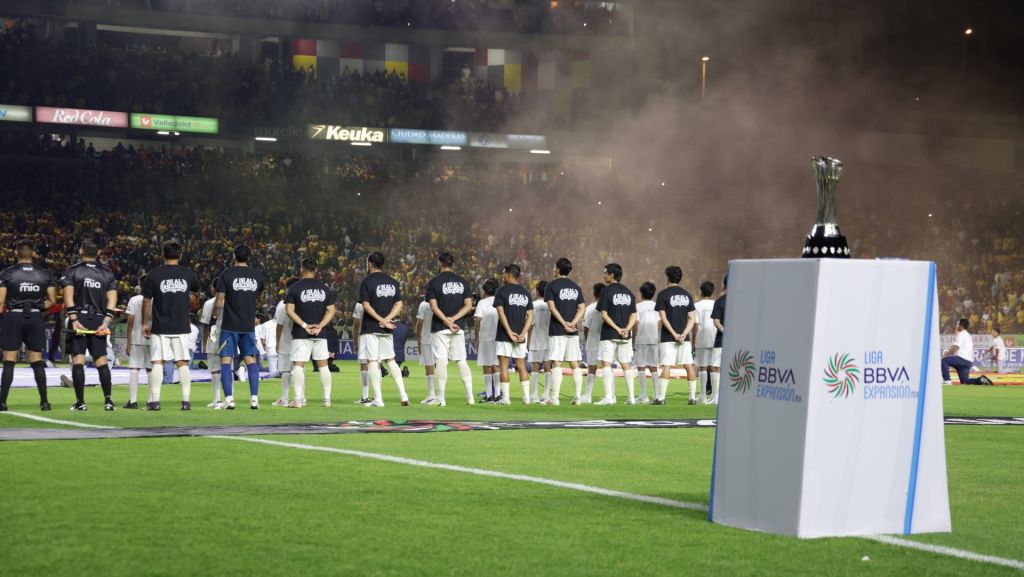
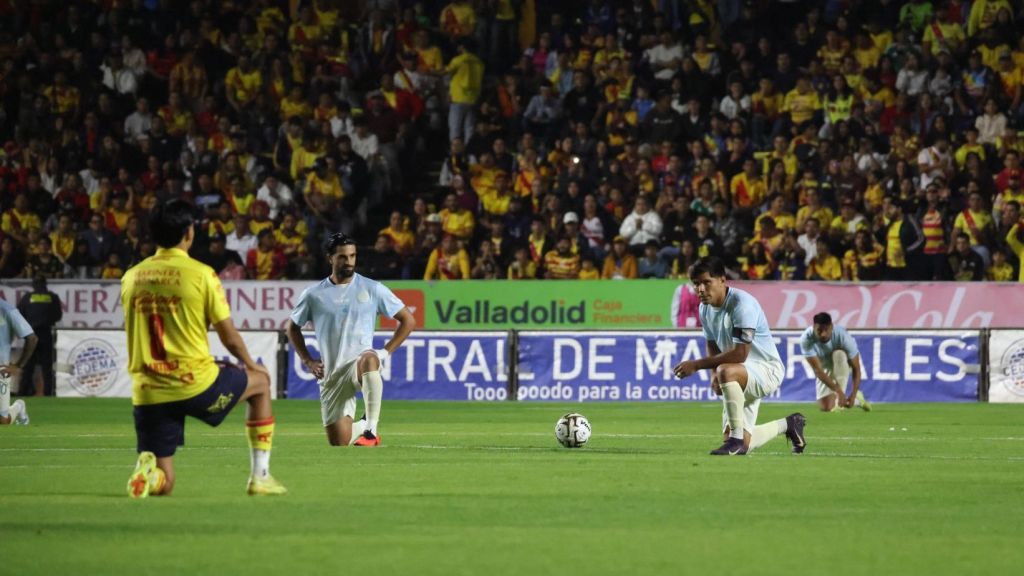
The group of second-tier teams began the 2026–27 season by standing motionless on the pitch in protest of the decision. And now, Lomelí tells FOS that Liga de Expansión and the FMF are at a stalemate.
“Since we went to CAS, the federation has chosen to stop communicating with us,” Lomelí says. “None of the five clubs that filed the appeal has been invited to a meeting. The federation has invited clubs that stayed out of the case to participate in a solidarity fund. In my view, they’re using that fund to buy those clubs’ silence. I think that’s a sad thing for Mexican soccer.”
Neither the FMF nor Liga MX responded to requests for comment.
In the short term, Liga MX clubs have nothing to gain—and everything to lose—by reinstating promotion and relegation. One Liga MX club owner told FOS in mid-2025 that none of the 18 clubs wanted to restore mobility to the system. The possibility of relegation generates additional risks to future revenue in areas such as media deals and ticket sales, and means there is greater constant pressure on owners to spend to avoid it.
All over the world, club price tags are also aggressively tied to staying up in top-tier leagues. The absence of promotion and relegation is a major reason why valuations of teams in MLS and the NWSL are often very high relative to their equivalents in Europe, despite the latter generating much higher revenue. Relegation is considered a major risk to the teams’ ability to grow their revenue in perpetuity—they could lose literal billions of dollars being bumped down a rung.
But despite Liga MX owners digging in their heels, maintaining the value of closed leagues over a long period is difficult.
“Closed leagues effectively disincentivize investment in everyone below them in the pyramid, which is where most talent is discovered and developed,” says Alex Phillips, a former executive at FIFA and UEFA. “The main reason for Europe’s dominance of world football is ferocious competition—from the smallest village teams all the way up to the global behemoths.”
Even if CAS rules against the Liga de Expansión clubs and sides with Liga MX to keep the competition closed, it would not necessarily be the end of the road for the second-tier teams.
Mexico’s antitrust authority has opened an investigation into the FMF and Liga MX for potential monopolistic practices. Senators in the Mexican legislature have introduced a bipartisan bill that would insist upon a mechanism for promotion and relegation in all professional sports with multiple divisions—a move aimed squarely at Liga MX. The legislation will be officially submitted after the CAS verdict and the outcome of the antitrust investigation.
For now, clubs in both tiers can’t do anything but wait for the massive decision that will shape the future of one of the world’s biggest soccer markets.
“It’s almost impossible to run a club in a second division with no promotion or relegation,” Cancún FC’s Solazzi says. “What’s the point?”
Download the FOS App
The business of sports, in your pocket.



Scan the QR code to get the app now.