Want more from Front Office Sports
in your search results?
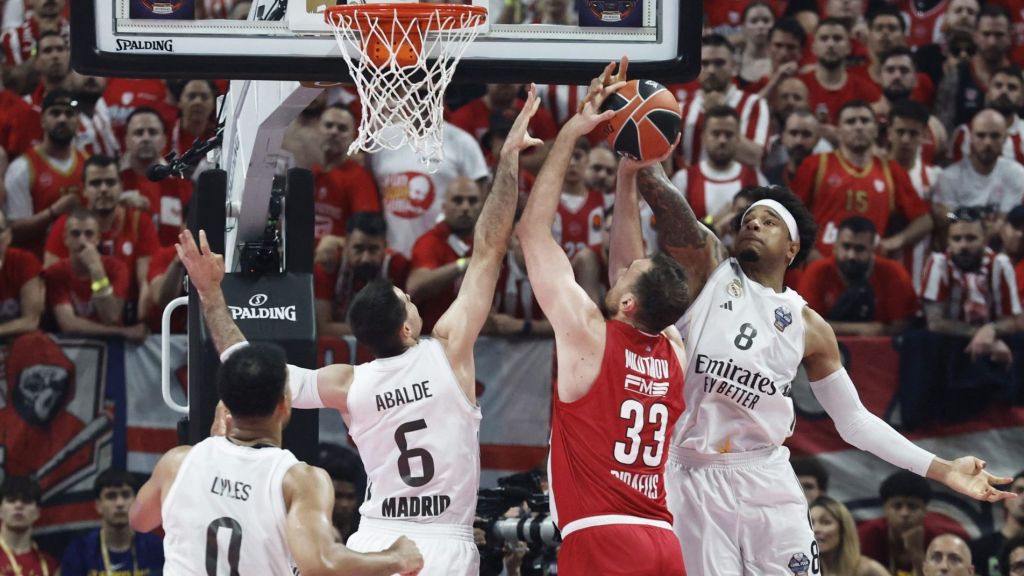
The NBA’s initial proposal to collaborate with EuroLeague has been rejected, in part because it undervalued EuroLeague and would have required it to pause its planned expansion, sources familiar with the matter tell Front Office Sports.
The owners of the 13 EuroLeague shareholder clubs met in Cernobbio, Italy, on Tuesday and a supermajority of owners rejected the NBA’s collaboration proposal, two sources say. Among those that voted against the proposal were Barcelona, Fenerbahçe, and Olympiacos, the sources say. It was not clear how every team voted.
Many specific details of the NBA’s proposal remain unknown, but both sources say EuroLeague owners used the word “colonialist” to describe the NBA’s offer.
“It didn’t sit well with the EuroLeague owners who have invested time and money into their league,” one source says. “They’ve built real brands, real franchises. They just felt like it was very much a power play.”
One aspect of the proposal that particularly irked EuroLeague owners was a stipulation that the league pause its planned expansion, which is something it has no intention of doing. EuroLeague currently has 20 total teams—13 permanent shareholders and 7 others that make the league through other means, like winning the EuroCup or receiving short-term licenses. EuroLeague intends to expand to as many as 24 total teams by the 2027-28 season. The league also aims to get into some markets the NBA is targeting, which is the reason the NBA had a condition about pausing expansion, one source says.
The proposal also valued EuroLeague at far less than $3 billion, the sources tell FOS, which is the valuation it’s seeking in any deal. The NBA’s offer “wasn’t even close to that,” one source says. “The economics didn’t make any sense,” says the other.
Three sources expect that the rejection does not mean the end of discussions between the two sides, but instead the beginning of formal negotiations about some sort of collaboration. The NBA has previously said it will move forward with its European endeavor regardless of whether it reaches an agreement with EuroLeague, with a planned launch as soon as next year. Last month, NBA commissioner Adam Silver said during a press conference that the league was “making progress” in talks with EuroLeague. The NBA is working with FIBA on the venture, which has received multiple bids from teams seeking spots in the league worth between $500 million and $1 billion. Silver acknowledged in January that the planned European league could take years to become a “viable commercial enterprise.”
EuroLeague issued a statement following its meeting that did not name the NBA or specifically state the offer had been rejected. But the statement did say EuroLeague is making progress on its 10-year business plan, including the proposed conversion of current 10-year licenses held by the 13 shareholder clubs into franchises, and the league’s planned expansion. Under the conversion proposal, existing shareholder clubs would be made permanent franchises, giving them guaranteed long-term places in the league without requiring any expansion fee.
A final recommendation for expansion and conversion is expected “in the upcoming weeks,” EuroLeague said.
The NBA did not immediately respond to a request for comment.
There are some European basketball teams for which the NBA-EuroLeague saga is very important and could impact their future. Clubs like the London Lions, Napoli Basketball, and Maxima Roma have all expressed interest in joining either EuroLeague or NBA Europe. A source familiar with the matter tells FOS that Napoli received conditional approval in August to join EuroLeague as part of its expansion, and that the team is expected to receive formal approval within the next 90 days.
Napoli owner Matt Rizzetta previously told FOS he has spent months working with the city of Naples and its mayor to build a new arena near the Amalfi Coast that is being designed to meet the standards of both EuroLeague and NBA Europe. Rizzetta’s company, Underdog Global Partners, also owns Campobasso, which plays in Italy’s third-highest division of soccer; Donna Roma, an Italian women’s soccer team that plays in the country’s second-highest level; and Napoli Women’s Basketball, the sister team to Napoli Basketball which it acquired over the summer.
Download the FOS App
The business of sports, in your pocket.



Scan the QR code to get the app now.