
SportsGrid Up for Sale Amid Revenue Slide
Want more from Front Office Sports
in your search results?
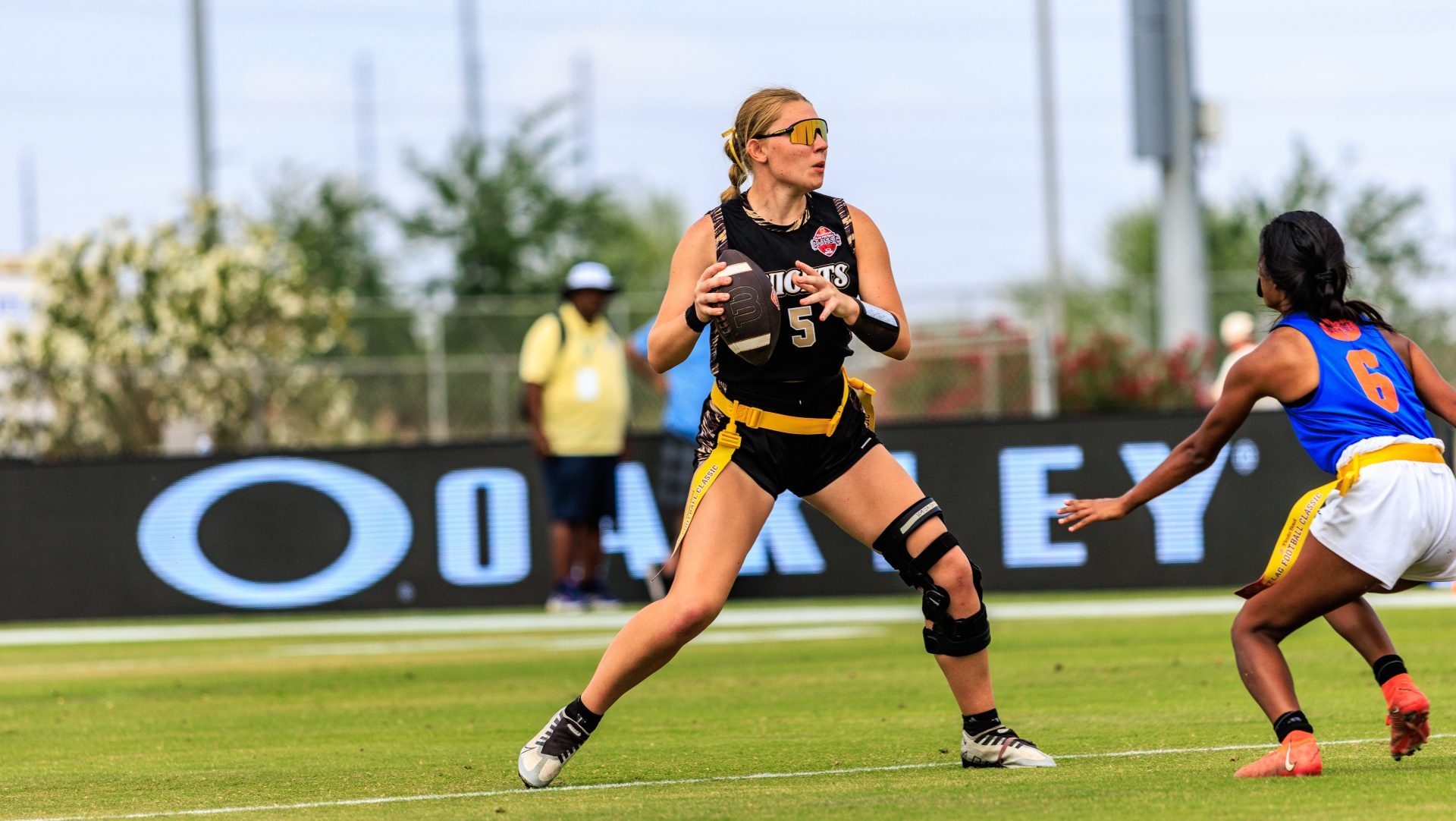
More than 100,000 high school girls played flag football during the 2025–26 school year. That’s almost a 50% jump from 2024–25—which was already up by tens of thousands from just a few years prior.
The growth of the sport is “nothing short of phenomenal,” according to a September report from the National Federation of State High School Associations (NFHS). Approximately 4,000 high schools in 40 states now offer girls’ flag, either as a formally sanctioned varsity sport or through independent pilot programs. Ongoing substantial investments from the NFL and its 32 clubs has played a big part.
Yet the mainstream college athletics ecosystem is playing catch-up.
As of this school year, varsity women’s flag opportunities are still, for the most part, available only at junior colleges, NAIA institutions, and little-known Division-II and -III schools. While the NCAA is voting early next year to make women’s flag a championship sport at all levels, the first title games wouldn’t take place until spring 2028. Even then, widespread adoption by major D-I schools is likely a few years off; Nebraska is the only traditional powerhouse to have announced a varsity flag team so far.
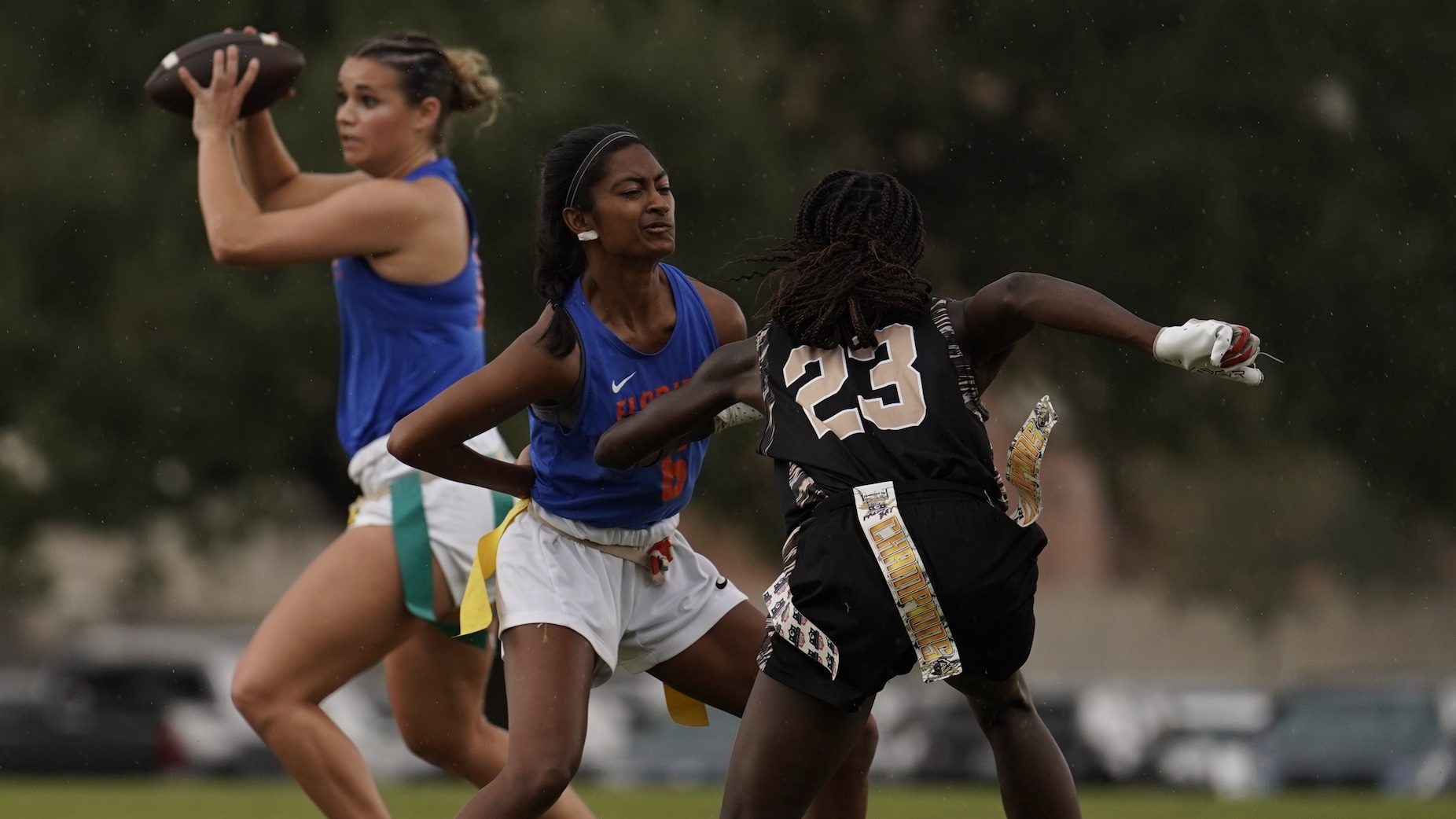
The result is a growing group of women arriving to campuses with years of flag football experience and few places to take it. At name-brand universities, they’ve been DIY-ing their own experiences: starting teams from scratch, cobbling together schedules, and serving as de facto athletic administrators.
In January, the National Intramural-Recreational Sports Association (NIRSA)—a nonprofit that has spent decades building rec sports programs on college campuses—is launching the first-ever national collegiate club women’s flag league. Backed by a multiyear grant from—once again—the NFL, the NIRSA league will feature 86 D-I, -II, and -III teams competing in a 7-on-7 format across 10 location-based conferences. Each team will play a roughly 15-game season between January and April, with NIRSA handling scheduling, facilities, and officiating.
Collegiate club flag leaders from around the country tell Front Office Sports the league’s existence is a “dream come true”—and hope it can accelerate the sport’s path toward full NCAA sponsorship at the highest levels.
Student, Athlete, Administrator
“When I started [at UCLA] in August 2025, I knew they didn’t have a women’s flag team of any kind, so I came in with the mindset that I was going to start one myself,” says Tenley Hill, now a sophomore communications major from Southern California.
She went to UCLA’s club sports council, who told her it was “pretty much impossible” to start a new team before the end of the year. “I just did not accept that. I wanted to play flag my first year, and I did everything—got a board together, prepared a budget and fundraising plan, recruited a coach, completed the application process—as fast as possible,” Hill says. “I’m pretty sure [UCLA club-sports director] Brett Billet was sick of my emails.”
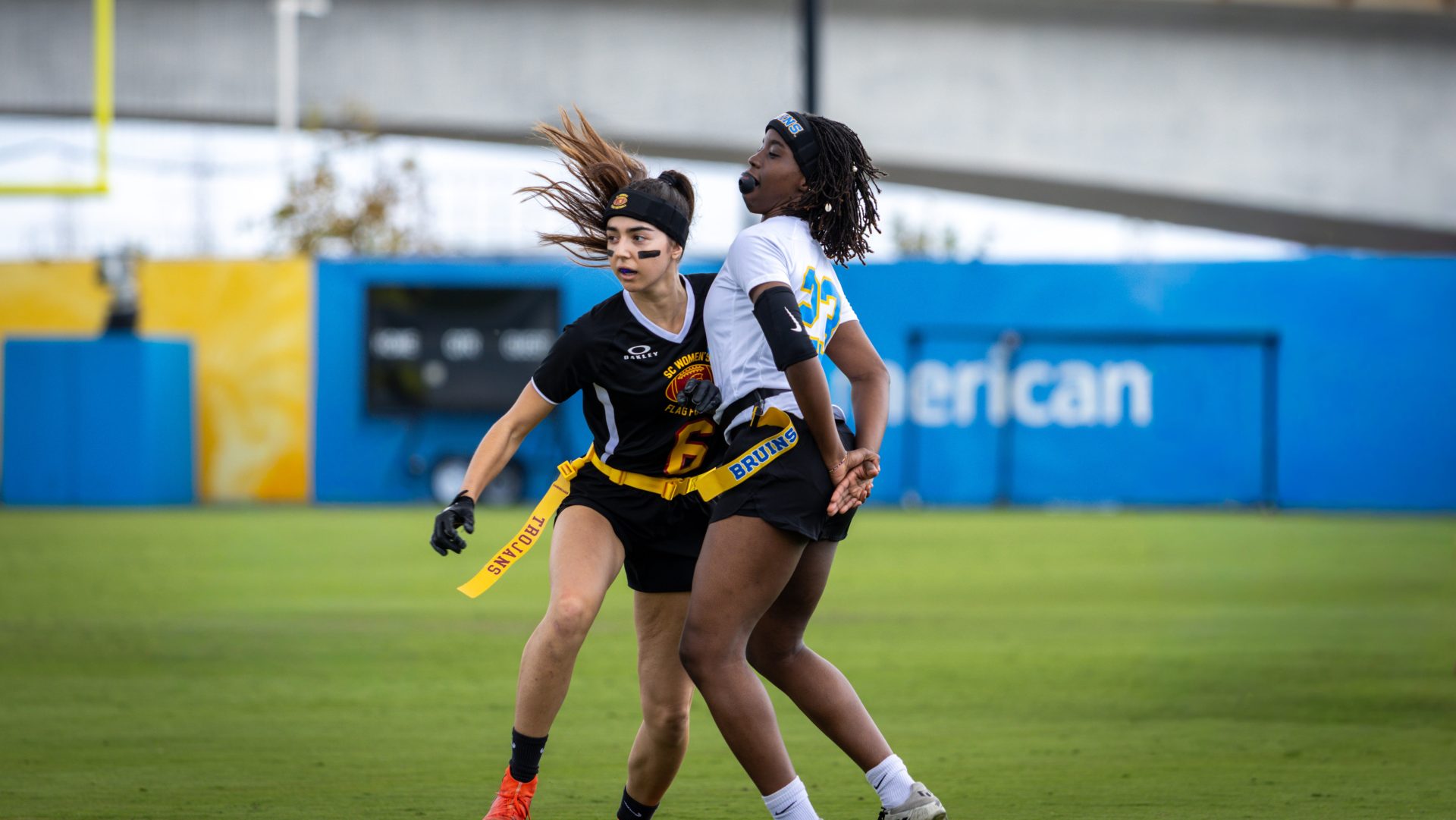
The persistence paid off. By the start of winter quarter in January, UCLA’s women’s club flag team was officially formed and holding tryouts. Hill estimates 60 women turned up that first day, and about 30 kept practicing and playing throughout the team’s inaugural 16-game season, which she organized through a flurry of communication with other club flag presidents and referees statewide. (The Bruins ended up 11–5.)
At nearby USC, Alia Pasternak took a similar approach. “I started working on USC women’s flag football before I even got to campus last fall,” the sophomore tells FOS. Close to 300 people filled out the initial interest form, and 88 came to tryouts after Pasternak jumped through the necessary hoops to formalize the team. Another 66 people applied for volunteer-coaching positions—a group she evaluated via Zoom interviews from her dorm room the same week she was participating in sorority rush.
Pasternak ultimately built an eight-person staff, including a strength and conditioning coach and media director. Like most other college club teams, these coaches generally hail from nearby high schools, but the staff’s size and specialization is unique. And the program is already becoming something of a selling point for the school more broadly: “Interest has grown more this year,” Pasternak says. “Some freshmen have even told me that having the opportunity to continue playing competitive flag football was one of the factors they considered when choosing USC.”
Most college club teams are a mix of players with prior flag experience and those new to the sport, with many newcomers having soccer, basketball, or track and field backgrounds. But that dynamic likely won’t last long: “Every year that passes, there are more experienced players coming on campus,” says Rutgers club flag founder Allison Gandlin, a senior industrial systems engineering major. Gandlin also won the NFL’s inaugural “Flag Player of the Year” award in 2023.
Still, managing disparate personalities and skill levels remains a core task for club leaders—as does fundraising.
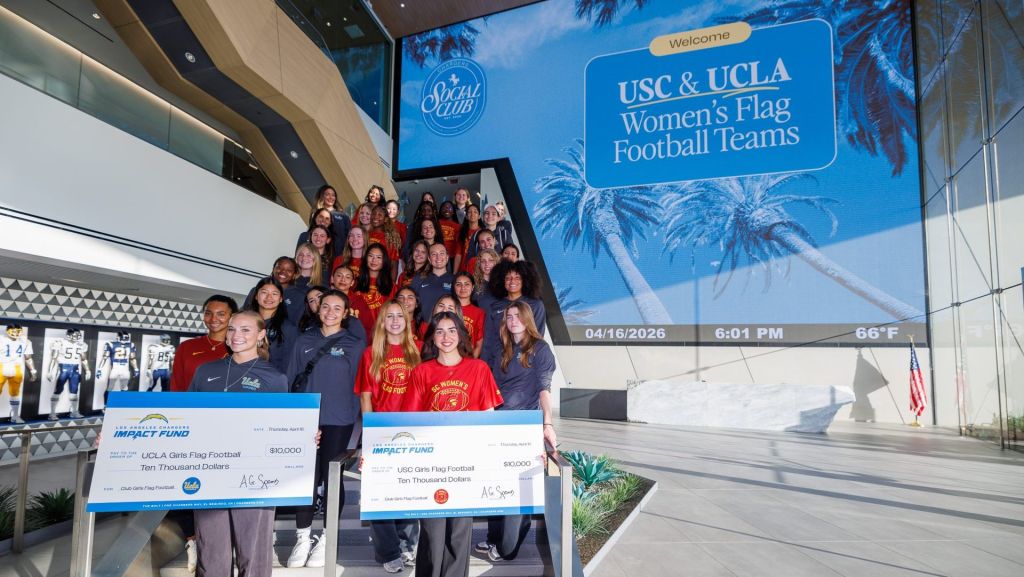
Although some colleges provide annual stipends based on program size or match funds up to a certain amount, a majority of club sports fundraising is self-directed. Teams rely on apparel sales, local business sponsorships, and youth camps; increasingly, though, donors are also providing a boost. The Chargers gave $10,000 to the USC and UCLA club flag programs earlier this year, while the Rams donated an equipment kit to UCLA after Hill reached out.
The NFL’s wider grant supporting the launch of the NIRSA league—which national flag manager Nik Sandona only described as “sizable”—is also offering help.
“A Dream Come True”
Sandona says the NIRSA league will eliminate most administrative burdens and bring structure to a still-patchwork collegiate flag landscape. Club leaders agree.
“When I heard about the league, I signed us up immediately,” says Rylee McDaid, UCF’s club flag team president and a senior health-sciences major. A competitive dancer growing up, she tried flag on a whim when her high school launched a team her sophomore year—and quickly fell in love with it. “Refs, scheduling, fields … it’s going to take all that off my plate.”
McDaid’s counterpart at Florida, Mieke Rowe, calls the league “a dream come true.”
Dozens of other D-I powerhouses are represented in the 86 competing teams, including Georgia, LSU, Alabama, Michigan, Penn State, and Oklahoma. For a $350 per-team fee, they’ll complete their 15-game seasons via a jamboree-style schedule, meeting and playing several other schools at a central location once every few weeks. (Teams are responsible for travel costs.) A national championship will take place in April.
NIRSA is also working with the NFL to plan a “Valentine’s Bowl” in Los Angeles the day before Super Bowl LXI. Several participating student-athletes, including UCLA’s Hill and USC’s Pasternak, will make appearances on Radio Row to promote the league and flag more broadly in the week leading up to the event.
Other marketing channels include a yet-to-be-named streaming platform NIRSA is purpose-building for the league, as well as players’ existing audiences. “Our student-athletes and their respective club team pages have more than 400,000 followers combined,” says Sandona. “They’re so great at telling their own stories, and really the main way people learn about flag opportunities near them at any level these days is social media.”
Planting the Flag
As enthusiastic as club leaders are about playing a (mostly) stress-free schedule this spring, they’re even more excited about the NIRSA league’s potential to spur varsity adoption by big-name schools.
“All of the big universities are going to be involved in this, so we’re going to be able to go to the NCAA and say, ‘Look it’s ready for you. Just press the button, accelerate this. It’s all there now,’” Gandlin of Rutgers says. She and others have made it a habit to send regular notes to their respective ADs, updating them on team participation and performance, as well as individual athlete accolades.
But even once varsity women’s flag is fully up and running, NIRSA expects its league to stick around. “There’s still going to be a need for legitimate club infrastructure moving forward … the sport is simply growing too fast,” Sandona tells FOS. “We’re going to continue being a great partner for [the NCAA] from both a player and referee pipeline perspective.”
He says the NIRSA league will also play an important role in “establishing a statistical baseline” ahead of full NCAA sponsorship and two other key upcoming women’s flag moments: the summer 2027 launch of an also-NFL-backed professional league and the 2028 Los Angeles Olympics. And these aren’t just milestones that current club players will watch from the sidelines. Gandlin is well on her way to qualifying for LA28 with Team Israel, while Hill has attended multiple Team USA selection events.
As the future of flag comes into focus, the club leaders building the college game have a collective appreciation for the unique moment they’re in. Says Pasternak of USC: “One of the things I love about this stage of the sport is that, while we are competitors on the field, there is a sense that we’re building something together. Everyone wants their own program to succeed, but we also understand that the growth of other programs creates more competition and opportunities for all of us.”
Download the FOS App
The business of sports, in your pocket.



Scan the QR code to get the app now.