Want more from Front Office Sports
in your search results?
The state of Utah has become the temporary center of college football thanks to two undefeated Big 12 powerhouses—one of which is flourishing with fresh private equity cash.
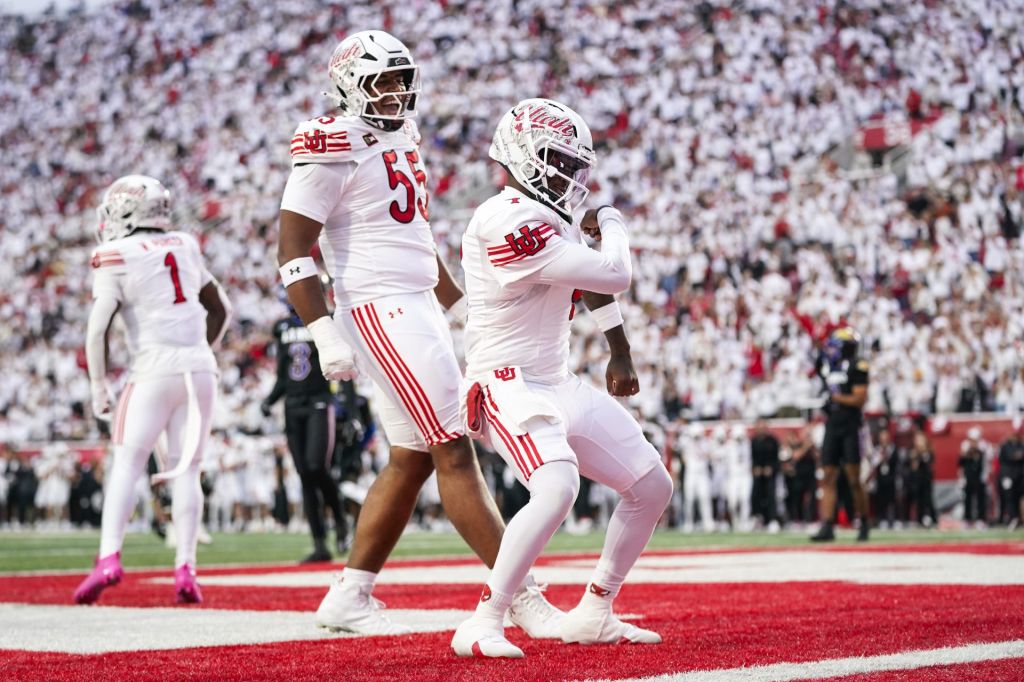
No. 10 Utah hosts No. 14 Houston on Saturday night, and ESPN’s College GameDay will be in Salt Lake City on Saturday morning after drawing its most-watched episode of the season (3 million viewers) last weekend broadcasting less than 50 miles away at BYU, which vaulted to No. 2 in the AP Top 25 poll after beating Notre Dame.
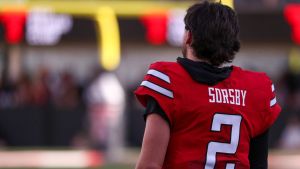
The Utes are 6–0 under new head coach Morgan Scalley, who inked a five-year, $27 million contract just as the university became the first in the country to sign a private-equity deal. Utah spun off key assets into a new for-profit entity called Crimson Brand Partners (CBP), which now manages commercial operations across the athletic department and the broader university. PE fund Otro Capital infused capital into CBP in exchange for an equity stake. The deal’s full financial terms and length are not public, but the venture is expected to generate nine figures in revenue.
“This is a multiple-year journey,” Utah AD Mark Harlan said Wednesday during a press conference ahead of the school’s big weekend.
CBP is led by CEO Mark Webb, a longtime sports executive and former corporate VP for the Saints and Pelicans, and the university approved a $40 million renovation project at Rice-Eccles Stadium earlier this month, funded by CBP.
“This group is primarily all from the NFL, NBA, and MLB,” Harlan said. “They’re up to 70 people. … Quantity is important but quality, too. So, we’re starting to see a lot of lift on that, certainly some of the deals they’ve done have been great.”
Not everyone is a fan of the PE strategy in college sports, though. “It’s one thing to do what the University of Utah has done—kind of sell off their sports program because they want a better stadium and they want a basketball building, and they want it right now,” Utah alum and former NBA executive Dave Checketts told Front Office Sports in May. “So they kind of sold off their future.”
CBP now manages all of Utah’s commercial operations, including non-sporting stadium and arena events, merchandising, licensing, sponsorships, ticketing, and digital media. “We’re trying stuff at football, we’ll start seeing that in basketball,” said Harlan, who is chair of CBP. “Some stuff’s working, some stuff doesn’t work. That’s what you do.”
Like most Power 4 schools, Utah is spending the maximum money allowed for revenue-sharing under the House v. NCAA settlement with players, nearly $22 million this year, although it’s unclear exactly how much additional cash Utes football stars are bringing in through separate NIL (name, image, and likeness deals).
Utah hosts BYU on Nov. 7, and if both teams are still undefeated then, that matchup could be the biggest edition of the in-state rivalry ever.
College Football’s PE Era
While Utah leadership is bullish on its burgeoning deal with Otro Capital, PE money has yet to become commonplace at most college sports programs.
The Big 12 launched a private-equity partnership with RedBird Capital Partners and Weatherford Capital this year that gives its 16 member institutions the option for a line of credit up to $30 million—but no school has yet accepted that credit or signaled that it plans to.
The Big Ten was in serious discussions last year with UC Investments, the University of California system’s pension fund, about a proposal to sell an equity stake in the conference, but that deal ultimately fell apart. The American Conference remains open to exploring private equity options, its commissioner Tim Pernetti said in July.
Editors’ note: RedBird IMI, in which RedBird Capital Partners is a joint venture partner, is the primary investor in Front Office Sports.
Download the FOS App
The business of sports, in your pocket.



Scan the QR code to get the app now.