Want more from Front Office Sports
in your search results?
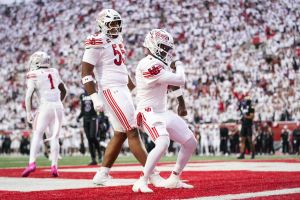
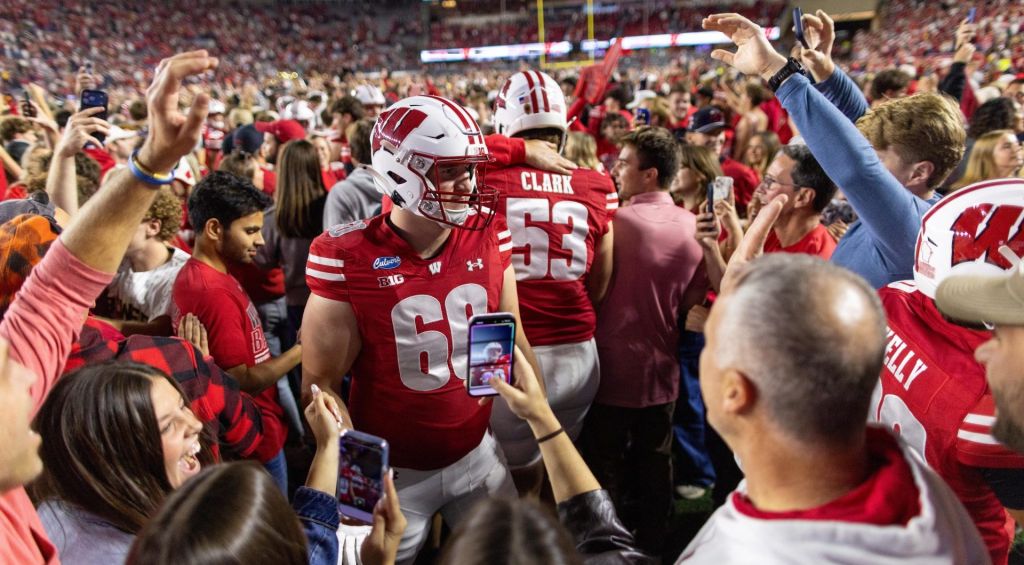
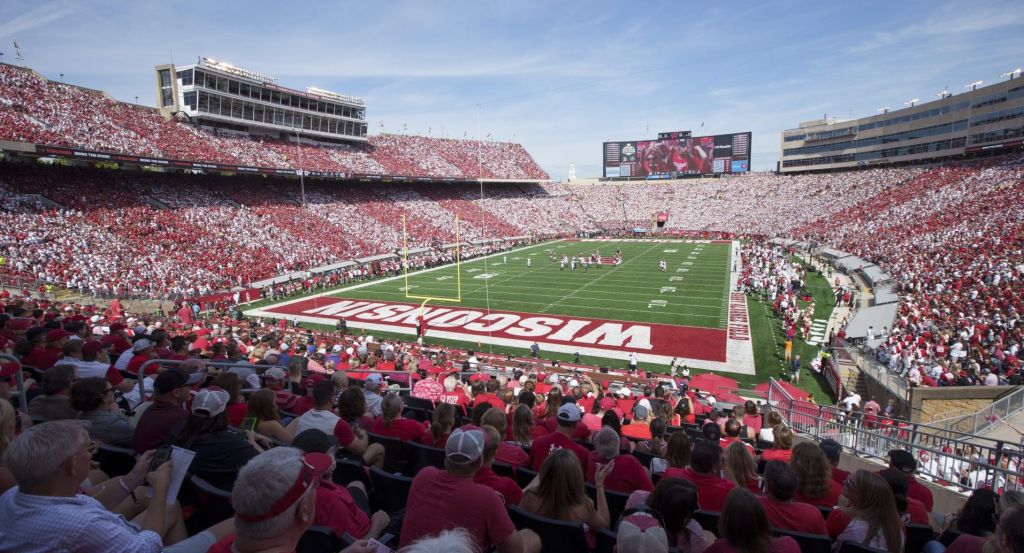
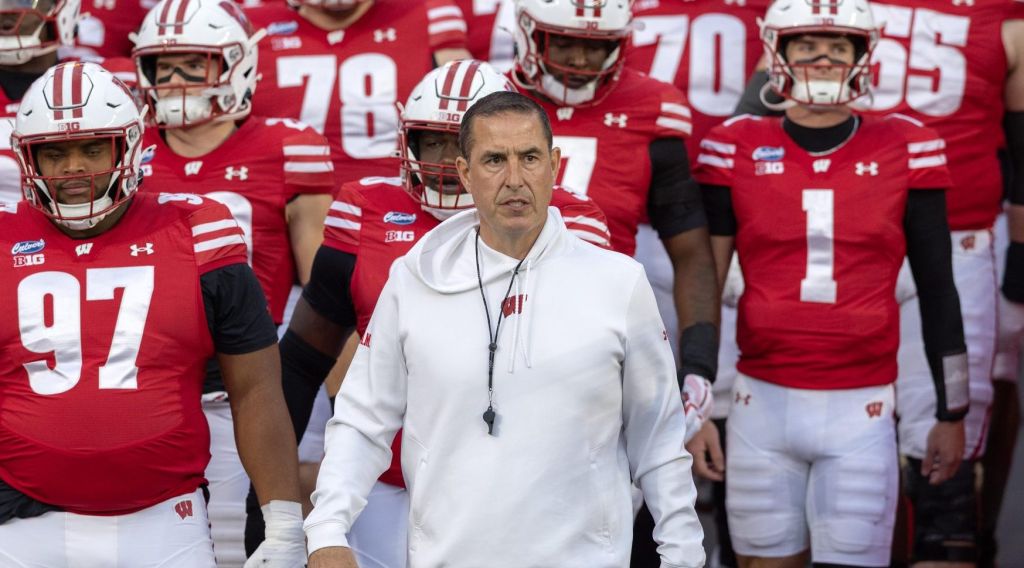
Luke Fickell’s vision for Wisconsin football felt tangible as fans stormed the field at Camp Randall Stadium this past Saturday. The Badgers had just upset No. 16 USC, their first regular-season win over the Trojans in school history, and the first time since 2019 that Wisconsin has beaten at least two ranked opponents in the same season.
Fickell didn’t mince words after the game about what the win meant for the 5-2 Badgers.
“This place needs this,” he told NBC sideline reporter Kathryn Tappen. “This is great for us.”
The win comes nearly one year after former AD Chris McIntosh penned a letter to Wisconsin fans, affirming the job security of Fickell amid a six-game losing streak and eventual 4-8 season. McIntosh vowed to make the necessary investments to re-establish Badger football.
“As a department, we must provide our coaches the tools necessary to succeed,” McIntosh wrote. “That means more athletics-funded investments into infrastructure, staffing and, most importantly, student-athlete recruiting and retention. In this new era of collegiate athletics, the clear reality is that high expectations must be matched with an equal level of support.
“The results of this elevated support may not be immediate, but we are confident that the impact will be positive and long-term.”
McIntosh is no longer with Wisconsin, having moved on to become the deputy commissioner for strategy for the Big Ten. He was replaced by Shawn Eichorst on July 1.
A $14.6 Million Assist
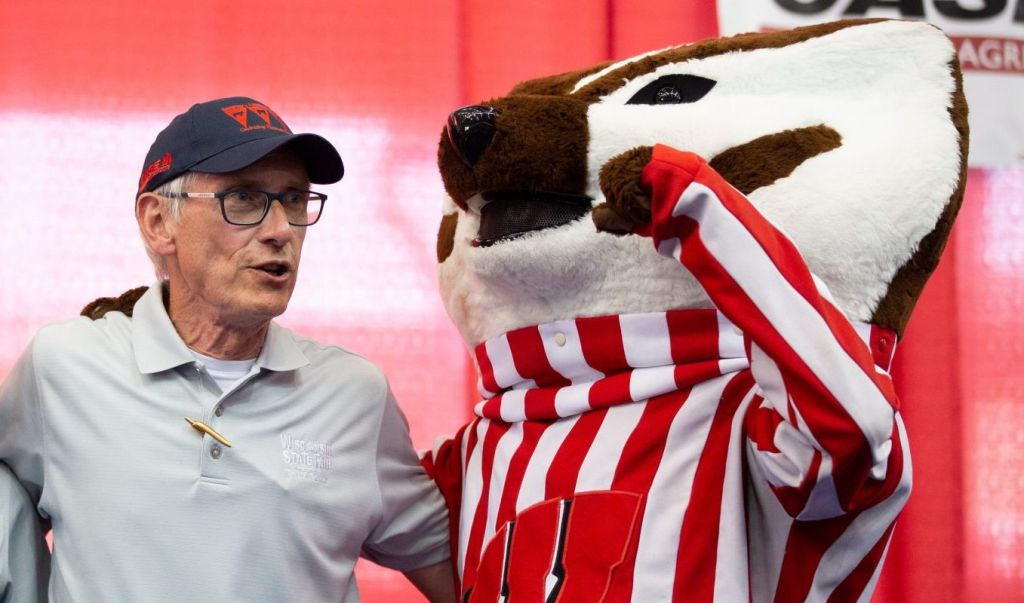
Along with Eichorst, the school made several moves administratively and at the government level that have led to a quick turnaround. One of the biggest, led by outgoing Gov. Tony Evers, was Assembly Bill 1034, signed into law back on April 8. The law allowed for $14.6 million per year from the state general fund to Wisconsin athletics facilities debt. It also included an additional $200,000 each for the University of Wisconsin-Milwaukee and the University of Wisconsin-Green Bay.
The law effectively opened the equivalent amount of money for Wisconsin to fulfill the maximum revenue-sharing allotment to student-athletes under the landmark House settlement agreement of 2025, which introduced a revenue-sharing cap between universities and athletes.
Universities are permitted, but not required, to distribute athletic revenue to athletes up to a cap of 22% of the “average shared revenue” generated by Power 4 member institutions. The official revenue-sharing cap for universities during the 2026–27 academic year is approximately $21.3 million per school, according to the College Sports Commission.
Governor Evers’s bill passed the Wisconsin Assembly by a 95–1 vote on February 19, 2026, but narrowly passed through the Senate 17–16 on March 17 before being signed into law in April.
Wisconsin, 5-2 and 3-1 in Big Ten play, has another big opportunity this weekend: a rivalry game at Iowa, which is also 5-2.
Positioning Wisconsin football more effectively off the field is leading to results on the field, as evidenced by last Saturday’s win. Holding USC’s offense to seven points, its lowest point total under coach Lincoln Riley, was the brand of football Fickell’s been aspiring for since taking over the program in late 2022.
“They understand what grinding looks like,” Fickell said. “I think they think they’ve taken a lot of pride in it. It wouldn’t be that normal for a good Wisconsin football team to not take pride in something like that.”
Dressing for Success
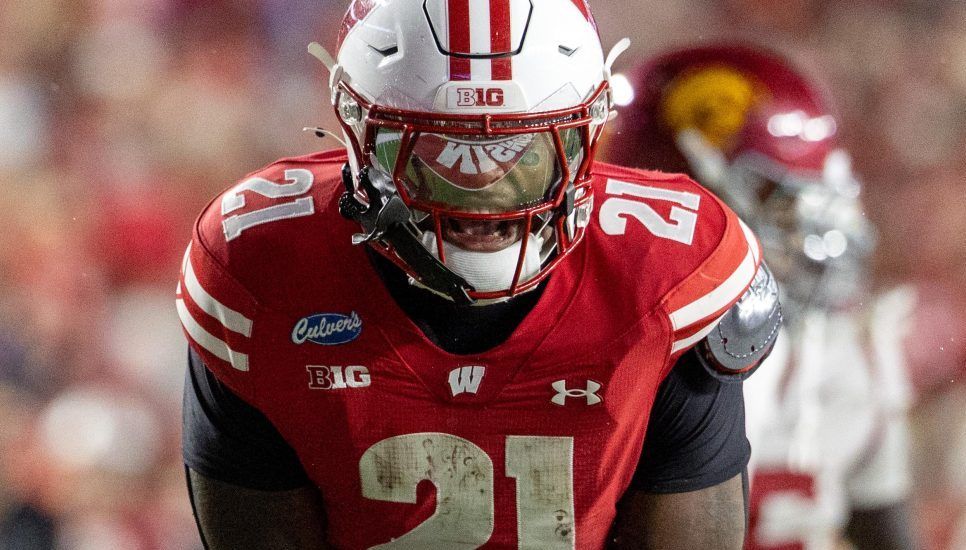
Three weeks after McIntosh officially announced that Fickell would return, the University of Wisconsin board of regents met to ratify a new contract with apparel sponsor Under Armour in November 2025. The new 10-year deal, worth $104.5 million, was more lucrative than its previous 10-year deal worth $96.75 million and included several key components to advance Wisconsin’s NIL efforts.
The deal included a $75,000 annual marketing fund towards promotions involving student-athletes, and Under Armour committed to an annual minimum of $175,000 to NIL contracts for endorsements and appearances. Additionally, the contract provided provisions in which Under Armour and Wisconsin could redirect funds meant for the university directly to NIL, including the $3.8 million annual rights fee, contingent on both sides agreeing to reallocation.
Roster Reload
Wisconsin carried this momentum into a busy period of roster construction. The Badgers signed 33 players from the transfer portal, the most ever under Fickell, which was the third-highest number behind UCLA (41) and Penn State (36).
The class ranked 14th nationally according to On3, the third-highest ranked class in the Big Ten behind Indiana (1st) and UCLA (11th).
Wisconsin also added several staffers, including former Indianapolis Colts executive Morrocco Brown as GM, Darius Hicks as director of scouting and player personnel, and Marcus Berry, senior director of personnel strategy.
Facilities Arms Race
Wisconsin is in the midst of its largest construction project in history—the Kellner Family Athletic Center, a $285 million facility that will serve all Wisconsin sports. It will feature a full-length indoor football field that is surrounded by a track and includes a weight room, coaches’ offices, dining hall, a sports medicine center, and more.
“There’s a lot of things that have changed even within the last year in our program,” Fickell said at Big Ten media days in July. “Over the last nine months, there’s been a hell of a lot of changes. To the naked eye, to the fan, I don’t know that you could see them all. But to the people from within the program—meaning the players, the coaches, the people that are really close to this team—have seen and felt a difference throughout this entire program.
“I’m standing here today in a lot different place than I was in the last three years.”
Still More to Prove
Fickell’s overall record at the school is now 22-23. He was hired in 2022 after a dominant six-year run at Cincinnati, including becoming the first coach to lead a non-Power 4 program to the College Football Playoff in 2021 when the Bearcats, now a member of the Big 12, were in the American Athletic Conference.
Fickell originally signed a seven-year contract, and his current deal runs through 2032, as Wisconsin extends customary one-year extensions to its coaches to maintain the length of the original deal. However, Fickell declined to be added to the extension list this past spring. The decision came after consecutive losing seasons in 2024 and 2025, which Wisconsin had not had since 1991 and 1922.
At $7.8 million annually, Fickell is the eighth-highest paid coach in the Big Ten. If fired this year, Fickell’s buyout would’ve been roughly $21.3 million. His contract dictates an 80% buyout of remaining compensation of the initial contract or $6.48 million– whichever number is higher at the time of termination. Because the original contract runs through March 31, 2030, Fickell has $24 million remaining through the 2029 season.
“There’s a lot of things that haven’t gone well for us in this rivalry game,” Fickell said of this week’s opponent, Iowa, which has four straight wins over the Badgers. “We need to do a whole lot to change that, and it’s not going to be easy.”
Download the FOS App
The business of sports, in your pocket.



Scan the QR code to get the app now.