Want more from Front Office Sports
in your search results?
The U.S. men’s national team’s 4–1 loss to Belgium in the round of 16 on Monday offered yet another sobering measure of how far the program remains from soccer’s elite.
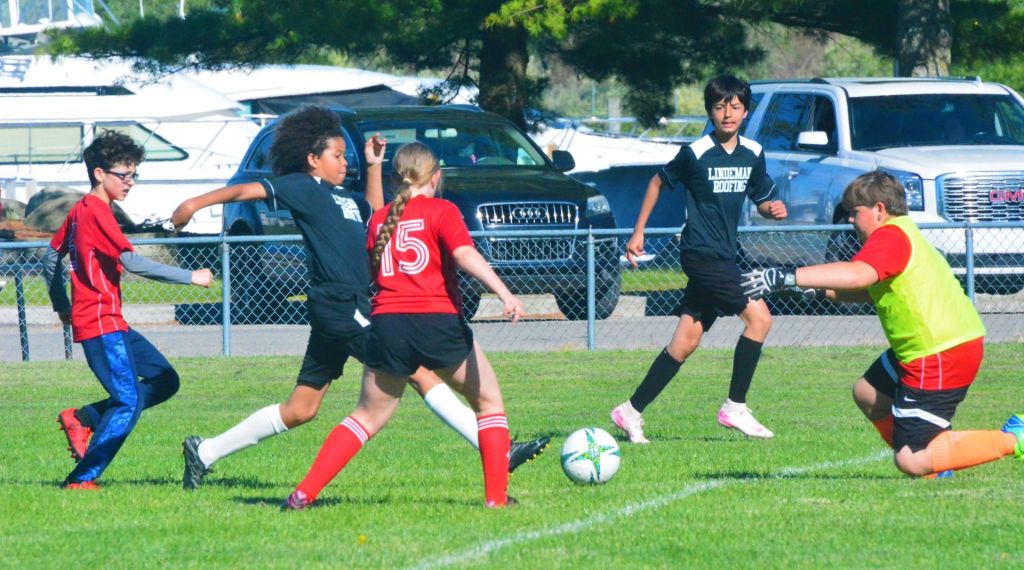
After the Americans’ disappointing performance, former players, writers, and commentators grasped for an explanation. They quickly pointed beyond the result to the cost and structure of youth soccer—and youth sports in general—arguing that pay-to-play clubs price out talent and fuel burnout.
“Only 2% of kids who were playing organized soccer in America came from households that made less than $50,000,” former USMNT player Landon Donovan said in an interview with Junior Rodigan. “Think about how many kids you are missing out on in this country because they can’t afford to play the game.”
In a recent interview with Front Office Sports, Donovan lamented youth sports’s emphasis on winning, saying parents should make sure their kids “love the sport first and foremost.”
“And then make sure they’re getting better. Throw the winning—throw all that crap out the window. When they get older, yes, I agree. But these are 8-year-olds, 10-year-olds, 6-year-olds. We need to stop; it’s not worth it,” he added.
The costs extend far beyond soccer. U.S. families spent an average of $1,016 on a child’s primary sport in 2024, a 46% increase since 2019, according to Project Play, a youth sports research initiative at the Aspen Institute. That increase was twice the rate of U.S. inflation over the same period.
Soccer parents spent 69% more in 2024 than they did five years earlier, driven by rising registration fees, travel, lodging, camps, and private instruction. Project Play estimates parents now spend more than $40 billion annually on youth sports in the U.S.
In a post on X, OutKick founder and commentator Clay Travis wrote that one of his children plays travel soccer at a cost of at least $5,000 a year. “We can afford it, thankfully, lots can’t,” he wrote. “Youth sports costs in the US are out of control, soccer more than most.”
For many parents, the spending is viewed as an investment. Families may see club soccer, private training, and travel tournaments as a potential path toward a college scholarship.
But according to the NCAA, only 5.9% of boys who play high school soccer go on to compete at the collegiate level, including just 1.4% at Division I schools. Among girls, 7.9% advance to NCAA soccer and 2.8% reach D-I. That can create pressure to specialize at an early age and remain on year-round teams, even as children lose interest.
U.S. Soccer found that almost half of players ages 9 to 11 are likely to quit the sport within the next year. Around 70% of children stop playing by age 14.
The Diamond Hill North Side Youth Association in Fort Worth, Texas, said participation doubled over the past year after it waived 75% of registration fees, allowing most children to play at little or no cost.
Who Pays for Free Soccer?
Jay Caspian Kang, a staff writer at The New Yorker who wrote a book on the subject, argued youth soccer in the U.S. has largely erased the distinction between elite development and ordinary participation. In other countries, there is a clearer distinction among players based on skill levels: The best players enter academies, while most children play in relatively inexpensive grassroots programs.
“In the USA, MLS academies are much smaller in number and also less part of the culture, you have no system to definitively separate the 1% from the 5% or even the 50% at, say, u9,” he wrote on X. “That isn’t really a problem in of itself but what it has encouraged is the expansion of pay to play, which has coincided w the gutting of rec leagues.”
Former USMNT player and Fox studio analyst Alexi Lalas offered a different view, describing youth soccer as a competitive market in which businesses sell a product that parents are willing to buy.
“I’d love if soccer was free to all,” Lalas wrote. “But who is going to pay for all this free soccer?”
The debate has also reached Congress.
In May, Sen. Chris Murphy (D., Conn.) and Rep. Chris Deluzio (D., Pa.) introduced the Let Kids Play Act alongside other Democratic lawmakers. The bill would force certain private-equity investors to divest from youth sports businesses and prohibit hidden fees, restrictive hotel contracts, and data collection through league apps. It would also create a youth sports fund to pay for scholarships and preserve local facilities.
The legislation has not advanced since it was introduced May 13.
Download the FOS App
The business of sports, in your pocket.



Scan the QR code to get the app now.