Want more from Front Office Sports
in your search results?
SEATTLE — The U.S. men’s national team fell flat Monday night, suffering a deflating 4–1 loss to Belgium and once again getting knocked out in the round of 16.
While the U.S. squad wasn’t able to put on a show, host city Seattle did.
Seattle is widely regarded as a premier soccer city, home to MLS’s Seattle Sounders and the NWSL’s Reign, both of which play at the Seahawks’ Lumen Field. Earlier in the World Cup, fans packed the streets and the stadium for the U.S. group-stage match against Australia earlier in the tournament. Monday was the last of the city’s six World Cup matches.
Seattle shines as a soccer city for a number of reasons. One is that the stadium is centrally located and easily accessible by both foot and public transit. While getting to a World Cup match in most other U.S. host cities means a long trek via car down highways, many fans walked to the stadium Monday.
Coworkers Greg and Patrick walked to the match from their office downtown. “We came down, we’re hanging out, we stopped at bars on the way. … It’s been a great experience,” Patrick told Front Office Sports.
Another reason is the crowd. Lumen Field—dubbed Seattle Stadium for the duration of the tournament—is widely regarded as one of the toughest atmospheres in the NFL for visiting opponents. Seahawks fans are called the 12s, alluding to the deafening crowd as an extra, 12th player for the football team.
“This is going to be insane,” Greg told FOS before the match. “This is going to be so loud; it is going to be louder than a Seahawks [game].”
Along the city’s waterfront, Seattle underwent a major aesthetic transformation just in time for the World Cup. It took decades to rebuild the area from a viaduct that separated downtown from Elliott Bay into the sprawling public park and commercial district that opened in September.
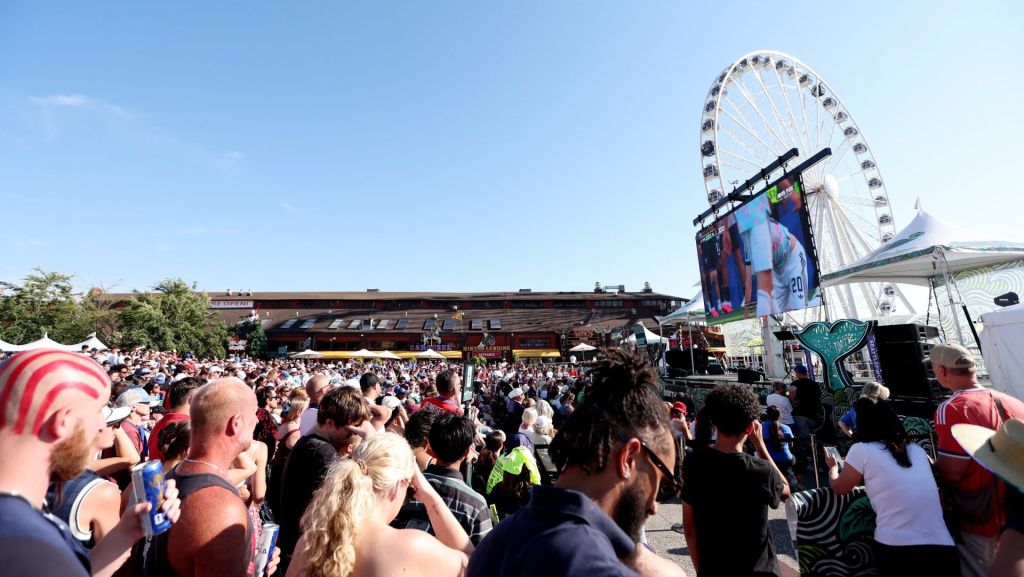
Seattle put its new gem center stage for the tournament, installing a big screen to show matches on the pier.
On Sunday night, Mexico fans packed the giant steps leading down to the pier for a viewing party of the Mexico-England match. Fans looked out toward sailboats on the water and the Olympic Mountains in the distance, shielding their eyes from the early evening sun. In the opposite direction, they saw the rest of the waterfront walkway and its Ferris wheel, the sweeping arches of the football and baseball stadiums, and the snowy peak of Mount Rainier.
The next day, downtown Seattle turned into a total party.
On a sunny, breezy afternoon, supporters in red, white, and blue strolled down the streets toward the stadium, passing fans sitting outside at bars and restaurants and gathering under trees for a watch party in Pioneer Square. Others gathered in a large crowd, singing and waving flags, before marching toward the stadium. Beer gardens, food trucks, and tents selling Seattle dogs greeted fans outside the match.
Why the Turnout Matters
One of the biggest questions leading into this tournament was whether it could grow soccer fandom in the U.S. The line of thinking is that bigger fandom can foster a more elite soccer ecosystem, which would then produce a future USMNT that can compete with the best soccer powerhouses in the world.
But in between the 2022 and 2026 World Cups, it wasn’t clear whether the USMNT had that kind of draw. The U.S. played twice in front of a concerningly empty SoFi Stadium in Los Angeles during the Concacaf Nations League, and completely lost home field advantage during the Concacaf Gold Cup.
The U.S. also wasn’t helped by FIFA setting high ticket prices for its matches. In Seattle, some fans told FOS they paid $700 each for their tickets, while others paid $3,000 apiece.
But from the team’s opener in L.A., it was clear U.S. fans were bought in for the World Cup. Fox and Telemundo averaged NFL playoff–level viewership for all U.S. matches, and the team had distinct home field advantage in L.A., Seattle, and San Francisco.
That’s part of why the loss in Seattle stings so badly. The atmosphere held its own against that of countries where soccer is closer to a religion than a sport, like the Argentine celebrations in Kansas City and the Dutch takeover of Houston.
“I’m grateful for the support that they gave us this summer,” U.S. star Christian Pulisic said after the match. “It felt that they took a step up, and just the support behind us, I don’t know, it felt incredible.”
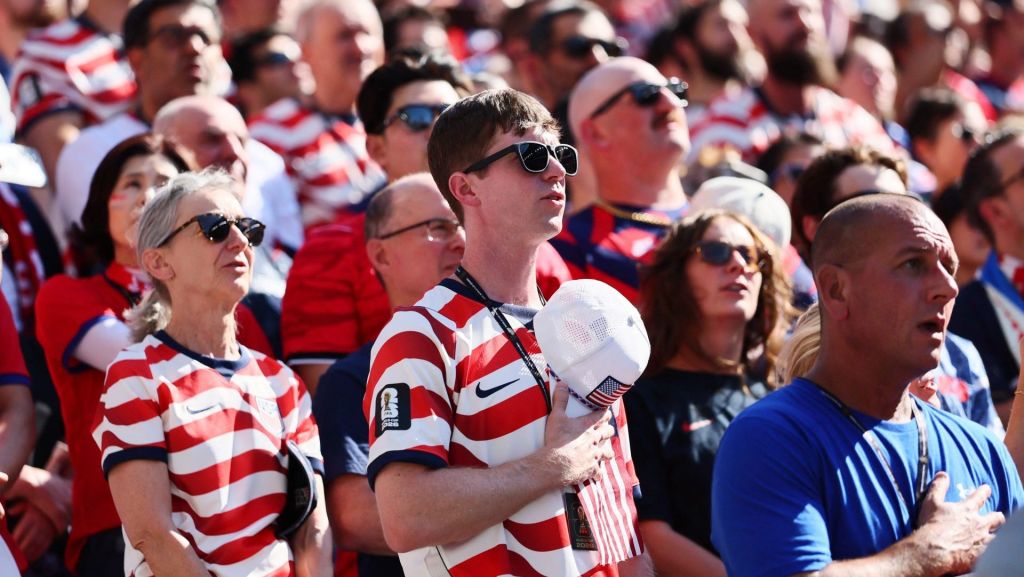
Perhaps the most vivid images of the fandom were displayed in the headgear. Fans wore red, white, and blue cowboy hats, giant foam cowboy hats, tall Uncle Sam hats, bucket hats, jester hats, wigs, and a giant tricolor Afro wig. Two fans walking together wore a U.S. Soccer sombrero and a mitre, or Pope hat. One person dyed stars and stripes into a buzz cut.
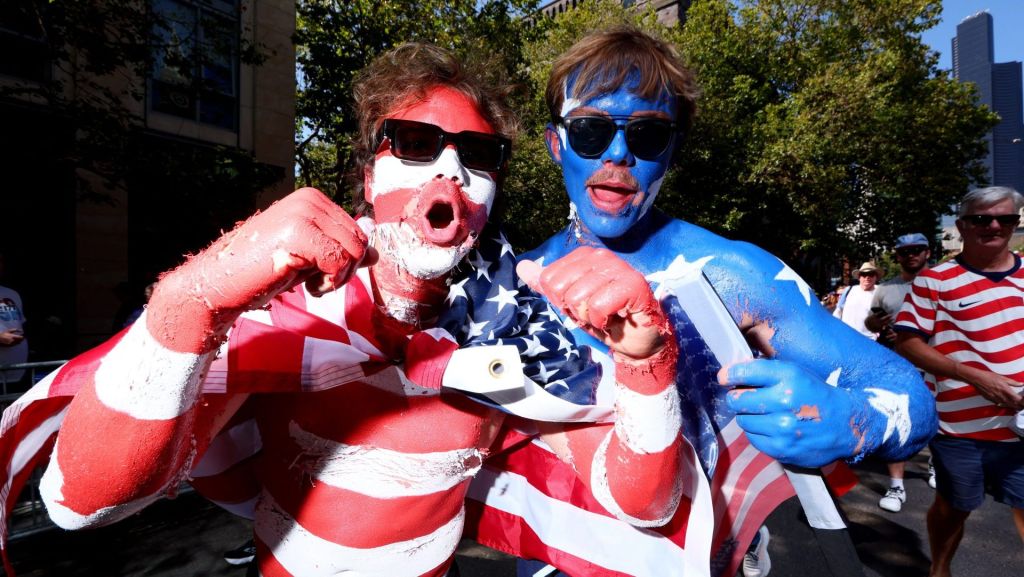
While the scene looked like the Fourth of July, the patriotism still had a distinctly liberal, Seattle undertone. One fan’s baseball cap said “Fuck Trump,” while another’s said “Protect Birthright Citizenship.”
For all of those fans, the hours before the match felt dreamy. Looking out from the open-air upper concourse, the sun glistened on the water. Only small sections of the stadium were filled with Belgium supporters; the vast, vast majority of the sold-out 66,925-person crowd were there for the U.S. The crowd roared when stadium hosts called upon U.S. fans to make some noise, and they belted “The Star-Spangled Banner.”
Things quickly went downhill as the USMNT put on a dismal performance against Belgium. The crowd still broke out into chants, and particularly found some life after Sebastian Berhalter provided a spark of energy in the second half, but the festive, hopeful prematch bubble had popped.
Leaving the stadium later Monday evening, the sun was setting over the bay in a bright orange ball, and soon afterward, pink clouds dotted the sky. The USMNT’s breakdown stole the spotlight, but Seattle still got its curtain call.
Download the FOS App
The business of sports, in your pocket.



Scan the QR code to get the app now.