Want more from Front Office Sports
in your search results?
INGLEWOOD, CALIF. — The U.S. may not be a soccer country, but on a breezy Friday evening in Los Angeles, you would never know it.
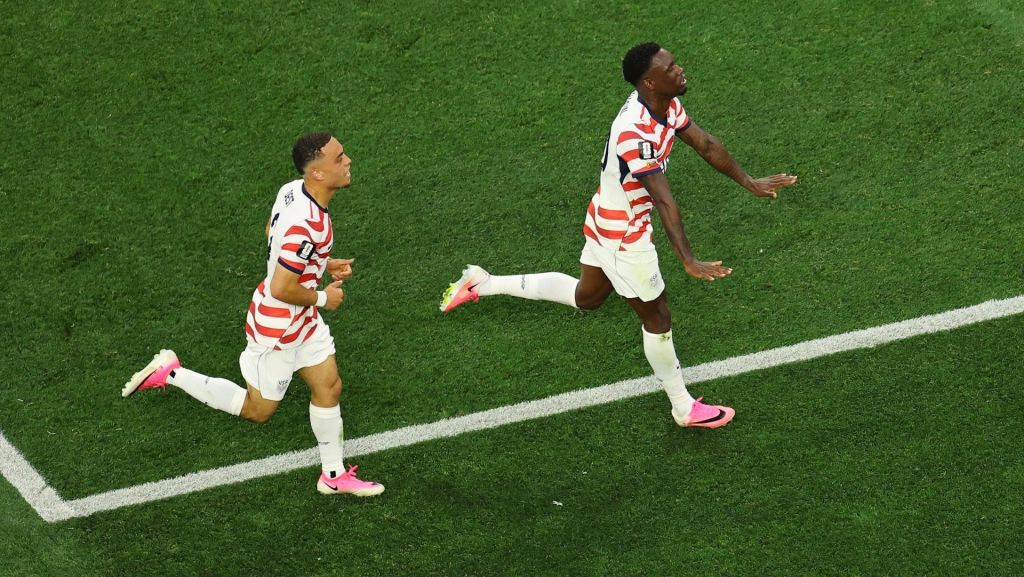
The atmosphere of the U.S.’s World Cup 4–1 opening match victory over Paraguay was everything the U.S. Men’s National Team could’ve wanted. The stadium was full and it was loud, an electric home field advantage befitting a host nation.
“The tickets cost us $1,500 each,” Juan Luis, a Guatemalan from L.A. attending the match with his wife, Blanca, told Front Office Sports in Spanish. “It’s very expensive, but this happens once every four years, and it’s worth it, I think.”
“It’s very emotional to be here,” Blanca added, also in Spanish.
The feeling in the building was by no means a given.
FIFA set World Cup ticket prices at record-setting levels, particularly for the opening matches in each of the three host nations. FOS spoke with a number of fans on Friday who all said they paid more than $1,000 each for their ticket to the match.
On the day of the U.S. opener, ticket prices were still climbing on the secondary market, and the more than 150 tickets available on FIFA’s primary site had a get-in price of $1,120. With so many tickets still available on secondary sites, many wondered whether the stadium would be full, especially after sections of empty fans at Thursday night’s match in Guadalajara.
Then there was the question of whether a passionate fanbase would take over the stadium. In March 2025, the U.S. played in this same stadium during the quarterfinals and third-place game of the Concacaf Nations League. So few fans attended that Concacaf didn’t post the attendance figures. U.S. Against The World, the HBO docu-series following the U.S. team over the past four years, includes a moment where head coach Mauricio Pochettino cries and tells the players they deserve better after feeling like away teams on their own soil in the Concacaf Gold Cup last summer.
Flash forward, and Friday’s match was undoubtedly a home game.
Fans marched toward the stadium three hours before kickoff, carrying a large U.S. flag overhead, waving red smoke bombs, and belting out supporters’ songs.
“Being in America, having this crowd around us, seeing the red, white, and blue, all our red-and-white-striped shirts in the crowd, it’s awesome,” Christian Pulisic said after the game. “I mean, hearing the “USA” chants, it’s really pushing us forward. So we just hope it continues like that, and I’m sure it will. We’re just thankful for it.”
Pulisic was subbed off at halftime, which he said was merely a precaution.
Husband and wife Barbara and Sergio from Phoenix told FOS they decided to drive to the match Thursday after watching the Mexico–South Africa opener.
Frank and Francisco from the Chicago suburbs, dressed literally head-to-toe in stars and stripes, told FOS they paid over $2,000 per ticket to the match, calling it “a once-in-a-lifetime opportunity.” The father-and-son duo said they’re attending 14 World Cup matches, totaling more than $34,000 for tickets.
“My wife is a little upset, but we’ll be fine, we’ll get through this,” Frank said. “Mine too,” his father said.
Many fans had to wait in long lines to enter the first FIFA security perimeter in the parking lot—and pass by horse droppings left behind from mounted law enforcement officers—but the atmosphere was still buzzing as “USA” chants rang out.
Once through security, fans snapped photos in the L.A. sun along Lake Park with the stadium in the background, then showed tickets at additional entry gates to get into the venue. FIFA’s multi-stage security process that takes up parking lots and extends far beyond the stadium doors is the reason why tailgating is not officially banned, but effectively extinct outside at World Cup venues.
Inside the stadium, a lengthy opening ceremony featured the same flag procession done at both of the other opening matches in Mexico and Canada, a centerfield message from Ted Lasso star Jason Sudeikis, and a performance by Katy Perry. There were some empty seats scattered about, but the stadium was mostly entirely full as soft golden hour light poured into the stands. “This is the biggest event I’ve ever been to,” one fan remarked on the concourse.
FIFA announced a sell-out crowd of 70,492 fans.
“I didn’t know what to expect coming into the stadium today,” Tyler Adams said after the game. “Last time we played here, it was Nations League, and it was empty.
“So to come here today and have however big the stadium is completely full with those jerseys, like we created those jerseys with the Nike team in order to look into the stands and be like, ‘That’s us,’ and it felt like it was us tonight.”
After kickoff, the good vibes only continued. The supporters started their traditional slow-clap “U…S…A” chant, and just a few minutes later, the stadium erupted as Panama committed an own goal to give the U.S. the lead.
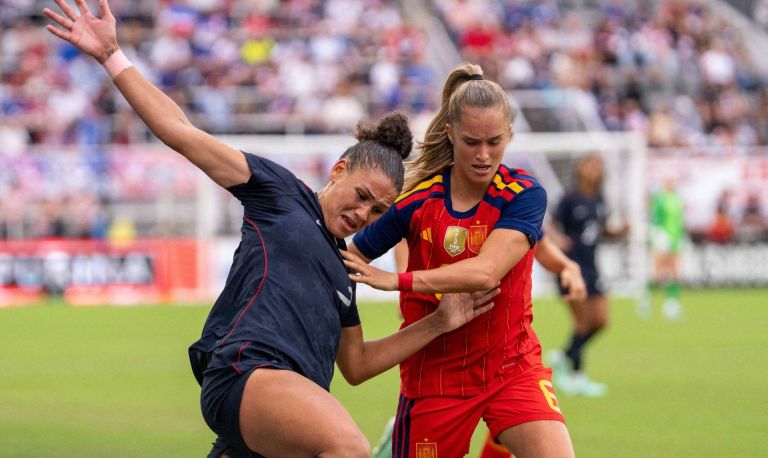
The crowd was briefly muted following a scary incident about 16 minutes into the first half when a player from each team collided while going for a header and both fell to the ground. Two more U.S. goals before halftime, both scored by Folarin Balogun, brought the energy back.
The second half was mostly quiet, aside from a VAR review overturning a yellow card on U.S. defender Tim Ream. Pochettino used the second half to rest some of his starters and try different looks; Paraguay scored shortly after one of those substitutions.
As a cherry on top, in the final moments of extra time, Gio Reyna fired the ball into the back of the net to restore the madness in the stands. With many doubting this U.S. team (including Reyna), its dominance was something wholly unexpected, a decisive first World Cup victory for Pochettino as a manager, and a dream way to start the tournament.
The U.S. next plays Australia in Seattle on June 19, followed by a return to L.A. to face Turkey on June 25.
The collective American sports conscience might be focused on the NBA Finals, or still warming up to the idea of the World Cup on home soil. But on Friday night in L.A., in every sense, it was truly a “Party in the U.S.A.”
Download the FOS App
The business of sports, in your pocket.



Scan the QR code to get the app now.