Want more from Front Office Sports
in your search results?
In the state of Texas, there’s no shortage of big-time FBS college football programs. Tarleton State wants to be next.
The Texas A&M university system school in Stephenville, Texas, about an hour away from the Dallas-Fort Worth area, made the jump from Division II to Division I just six years ago in 2020. But after spending tens of millions of dollars on facilities, drastically increasing their athletics budget, and participating in revenue-sharing, it’s looking to make another leap from the FCS to the FBS level.
“From the very first day I interviewed here, and even during the process, [Tarleton State President] Dr. Hurley, the institution as a whole said our ultimate goal is to be FBS,” athletic director Steve Uryasz told Front Office Sports. “And we’re trying to put ourselves in a position to be there.”
To make the leap, the school would need an invitation from an FBS league and approval from the NCAA. Uryasz said he had conversations with multiple FBS league officials about what those conferences will be looking for when considering adding more members. While the school doesn’t have a definitive timeline, Uryasz said it “would be great” if the transition could be made within the next five years.
Keeping Up With the Arms Race
Dr. James Hurley became Tarleton State’s president in 2019—the same year the school applied to go from Division II to Division I. Tarleton State, which boasts more than 21,000 students across campuses and online enrollment, landed an invitation to join the Western Athletic Conference in November of that year, and the school officially became a D-I member on July 1, 2020.
Hurley said the school was given the option to delay given the timing coincided, unluckily, with the global pandemic. But they declined. “We felt more than ready,” he told FOS. “We had the resources.”
Since 2019, the university as a whole has spent $1.5 billion on school-wide campus development—$200 million of that earmarked specifically for athletics. “Every single athletic program on this campus is either in a brand new facility or a completely refurbished or repurposed [facility],” Hurley said.
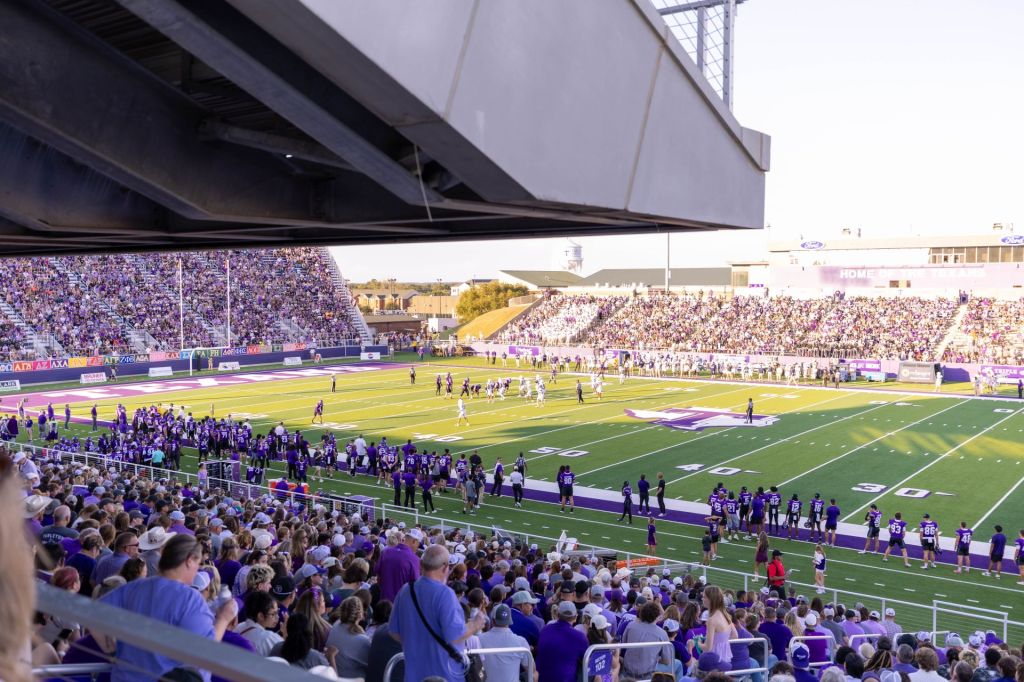
By the time Hurley took the helm, the school had already launched a $30 million+ renovation of Memorial Stadium, which now seats 24,000. The stadium has undergone multiple additions since then.
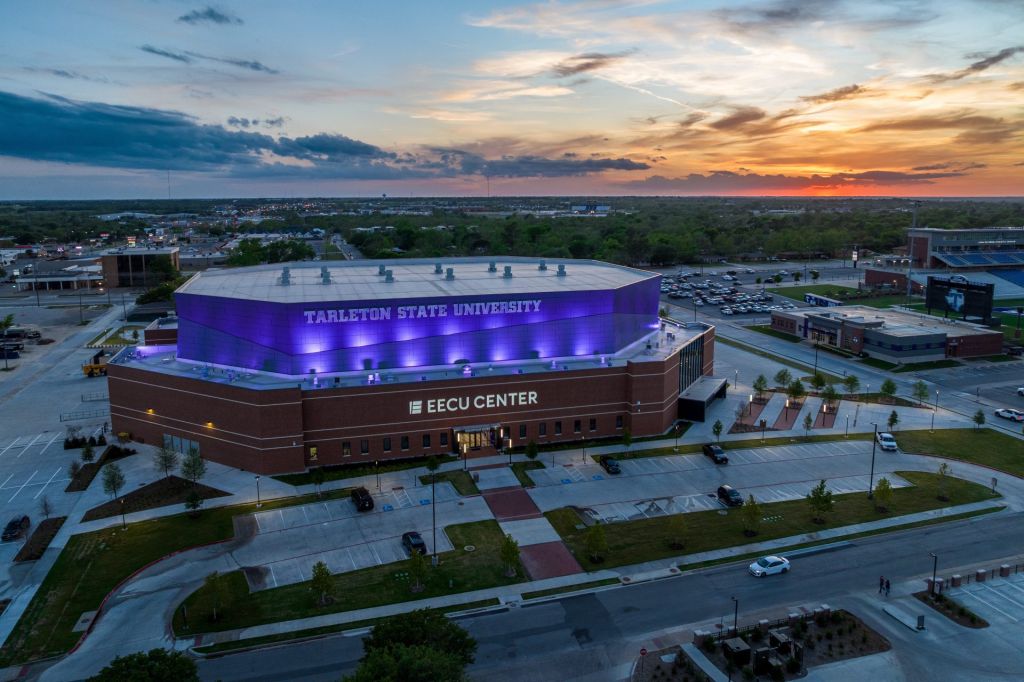
About the school’s new basketball arena, Uryasz said: “If you were to take that building and put it in any city—in the Big 12 conference, which I’m familiar with—it would be the nicest. Wouldn’t be the biggest. Doesn’t need to be the biggest. It would be nicest.”
Uryasz has seen firsthand what it takes to run an FBS (and even power conference) program, and has had leadership roles at both West Virginia and Texas Tech. He took the athletic director role at Tarleton State in 2024, just a few months before the House v. NCAA settlement was approved and college sports changed yet again.
With the advent of NIL (name, image, and likeness) deals and the House settlement, facilities were no longer the biggest funding need in the recruiting arms race. The school opted into the first year of rev-share, and Hurley said it was not able to participate up to the full $20.5 million rev-share cap, but the department offered rev-share to multiple programs outside of just football and men’s and women’s basketball; Uryasz said tennis, track and field, and golf athletes have all received rev-share.
Overall, the Texans’ budget for this year is around $45 million, putting them well within the budget range for the lower end of FBS programs.
Another advantage the Texans tout: their location. The state is obviously a hotbed of high school and college football, which helps with recruiting and offers a media market.
The Texans aren’t yet at the top of the FCS football mountain—they lost in the FCS quarterfinals to Villanova in December. But they did notch a key FBS win when they upset Army last August. Overall, they can boast success: Just six years into its Division I membership, the Texans secured the WAC Commissioner’s Cup, winning eight conference championships.
An Expensive Leap
Making the jump from FCS to FBS membership requires millions of dollars worth of an NCAA transition fee, as well as an invitation to an FBS conference and requisite entrance fees. And at a time when FBS membership is less likely than ever to want to add schools—because of fears of further diluting College Football Playoff revenues—that’s arguably never been more difficult.
But it isn’t impossible. In the past year, Sacramento State and North Dakota State have both been able to secure FBS bids in some form. James Madison, which transitioned a few years ago, even became one of just three Group of 6 programs to make the CFP.
When Uryasz speaks with FBS leagues, the conversations center around “making sure that we remain on the radar. So that when the time is right, not only for them, but it’s right for us,” he says.
“One of the things that I’m constantly concerned about, and how I monitor is, at what point do we stay, collectively, do we remain as a whole at the NCAA level?” Hurley said. “Meaning, how much longer do we get to play in the same sandbox with the Power 4 conferences, or even the Power 2 conferences?
For now, however, the program will compete in the United Athletic Conference, which was born out of the WAC. “I don’t know what the future holds,” Hurley said. “But whatever it holds, and whatever level we’re at, we’re gonna invest to be the very best.”
Download the FOS App
The business of sports, in your pocket.



Scan the QR code to get the app now.