Troy Aikman, Dolphins Have No Ongoing Consulting Agreement
Want more from Front Office Sports
in your search results?
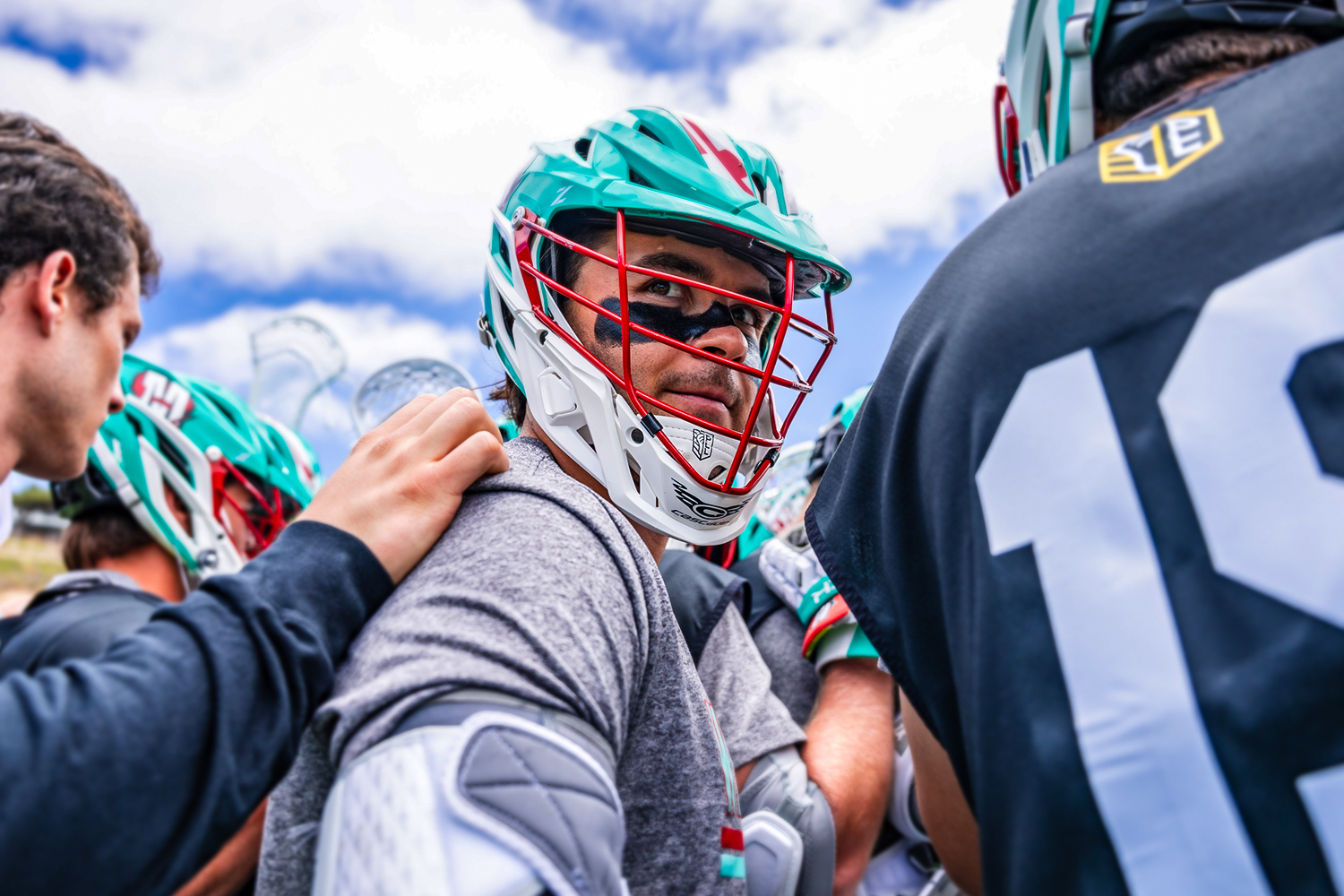
The summer sun was high in Fairfield, Connecticut, as the Maryland Whipsnakes prepared to face the California Redwoods in a Premier Lacrosse League matchup. Before taking the field, star rookie Joey Spallina smeared his face with eye black: huge cheek triangles thickly connected across his nose bridge. The glare wasn’t the reason.
Spallina, who’s been wearing some kind of eye black since his days playing youth football on Long Island, picked up his current, signature routine from 2000s Syracuse lacrosse star Mike Powell, who also wore the vaunted No. 22 for the Orange.
“I stole what he was doing and created it into my own. One game in high school, I went across the nose, and I had 12 points. I was like, ‘All right, we got to keep this,’” says the Whipsnakes attacker, who broke Powell’s all-time career points record at Syracuse in April. “It’s become part of my identity, especially because most of our games are at night.”
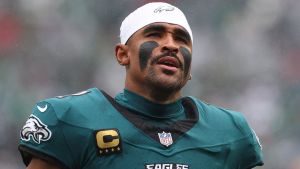
Eye black has gone from a decades-old, scarcely used utility product to full-on field staple—and ritual—across the biggest leagues including MLB and the NFL, to smaller ones like the PLL, down to college and youth sports. Phillies first baseman Bryce Harper, Falcons quarterback Tua Tagovailoa, and Lions defensive end Aidan Hutchinson are among the dozens of pro athletes with distinctive looks.
Even with its efficacy still up for debate, the greasy stick is essential to athletes’ style and superstitions, especially as uniforms are increasingly custom, and player visibility has never been higher or more lucrative.
“Strikes Fear in the Opponent”
Babe Ruth is associated with the first appearance of an eye black–esque product. In the 1930s, he’s said to have burned the end of corks to create a soot he wiped under his eyes. Modern eye black is mostly made out of different kinds of wax, including beeswax and paraffin, combined with dye. Precut strips are also increasingly common.
Its intended use is to reduce glare to see objects under bright conditions, says Adam Annaccone, a clinical associate professor in kinesiology at the University of Texas at Arlington. But he also tells Front Office Sports there’s limited research that the product actually works as well as intended. Plus, with so many games played at night and indoors, its practical utility is limited.
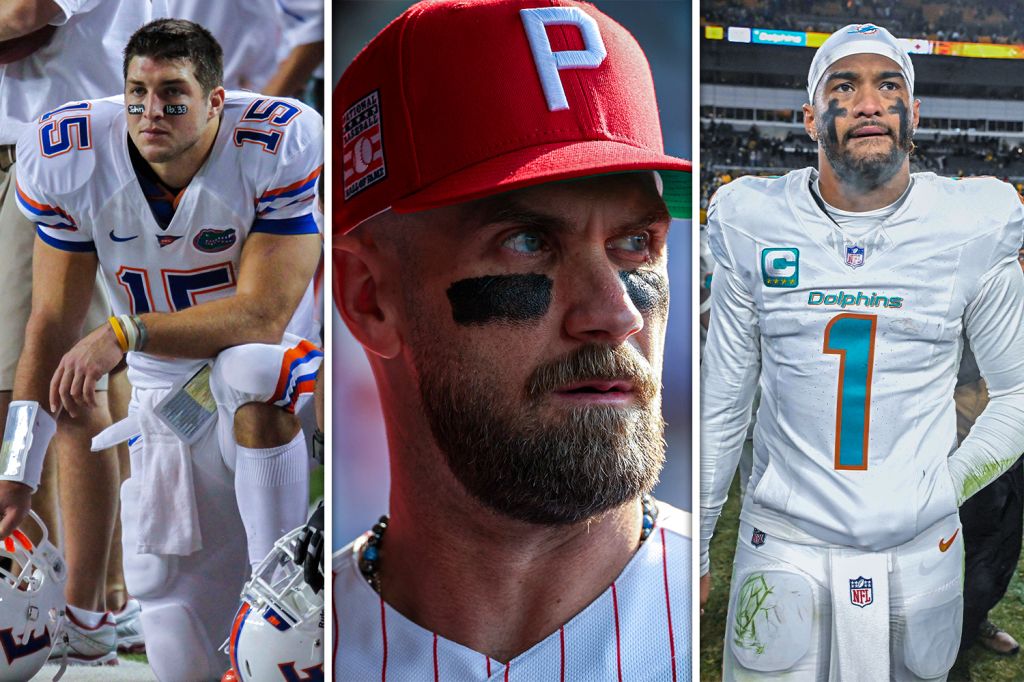
Still, players slather on eye black. In the past couple of decades, efficacy has become a second thought, if one at all. “I’ve never had a conversation with an athlete asking, ‘Hey, what are the benefits of this? Or should I try this?’” Annaccone says. “It’s always just kind of been this individual undertaking to express themselves as they see fit.”
Some athletes, like Spallina, have developed recognizable looks to put a stamp on their style; others have used it for messaging, including Bible verses printed on strips, as Tim Tebow did in the 2009 BCS championship game.
Baseball is eye black’s classic pairing, with afternoon games under the sun and evenings under bright stadium lights. But as the product has spread, especially in helmet sports, Annaccone says the desire to wear eye black is more about a “primitive” psychological impulse to dominate the competition.
“It’s like war paint. You’re going into battle, doing something that you only do on game days,” Women’s Lacrosse League star Charlotte North tells FOS. “It kind of strikes fear in the opponent.”
From Ruth to Youth
Across many sports, especially in MLB, uniform guardrails have loosened—for example, relaxed rules around colors on accessories like batting and sliding gloves, even cleat designs. Eye black has been swept up in that change, enabling athletes to push the boundaries of a single undereye swipe.
“Associations recognize that this is no longer just additive; it is a part of the uniform code that has to be regulated, because that’s how much it has taken off,” Annaccone says. Some teams, including in the NFL and PLL, often supply eye black sticks in locker rooms just like tape or towels.
The product itself has evolved in step.
At Franklin Sports, eye black has been in the sporting-gear company’s portfolio for 30 years. It declined to share sales figures, but Shaun Krieger, senior director of product and brand strategy for baseball and softball, says the company has sold “millions” of sticks in that period, with sales rising. It has updated formulations throughout the years, but the biggest change has been the introduction of its color product in 2018.
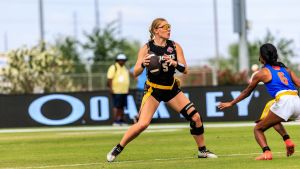
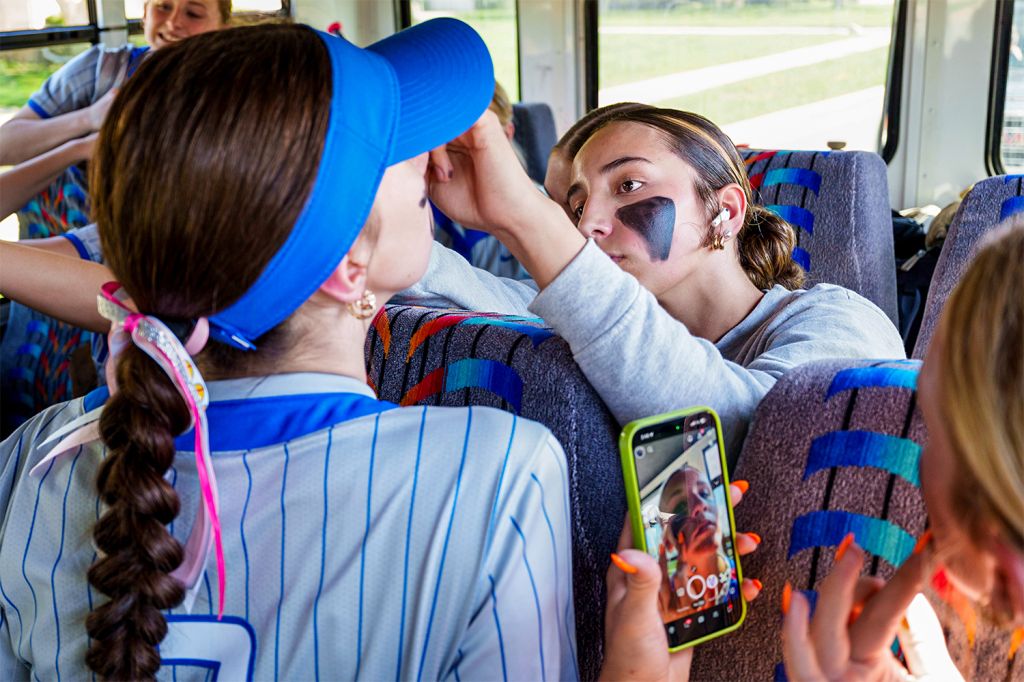
Adoption was slow at first, Krieger says, but the color segment has now “grown exponentially”—especially because of its increasing uptake by women athletes, largely in softball. Alongside the classic red-white-and-blue “firecracker” stick, Franklin Sports’s bestseller is its “cotton-candy” palette of shocking blue and neon pink. A glitter product was also added last year, and newer brands like Fazit are also entering the space, making colorful metallic “game day” under-eye patches for mostly female consumers.
Youth sports is a big part of this strategic expansion, too. “I’ve gotten some pictures sent to me of kids at tournaments with the exact same eye black on [as me],” Spallina tells FOS. But for as much as kids look to their player idols for inspiration, Krieger says a lot of eye black style is trickling up, too.
As youth athletes who experiment with new patterns and colors move up the ranks into elite club, college, and eventually pro sports, they’re also changing how eye black is factored into on-field individual style. That can be big business: Athletes’ signature looks are monetizable all the way down the chain, with even high schoolers now able to capitalize on their name, image, and likeness in 46 states.
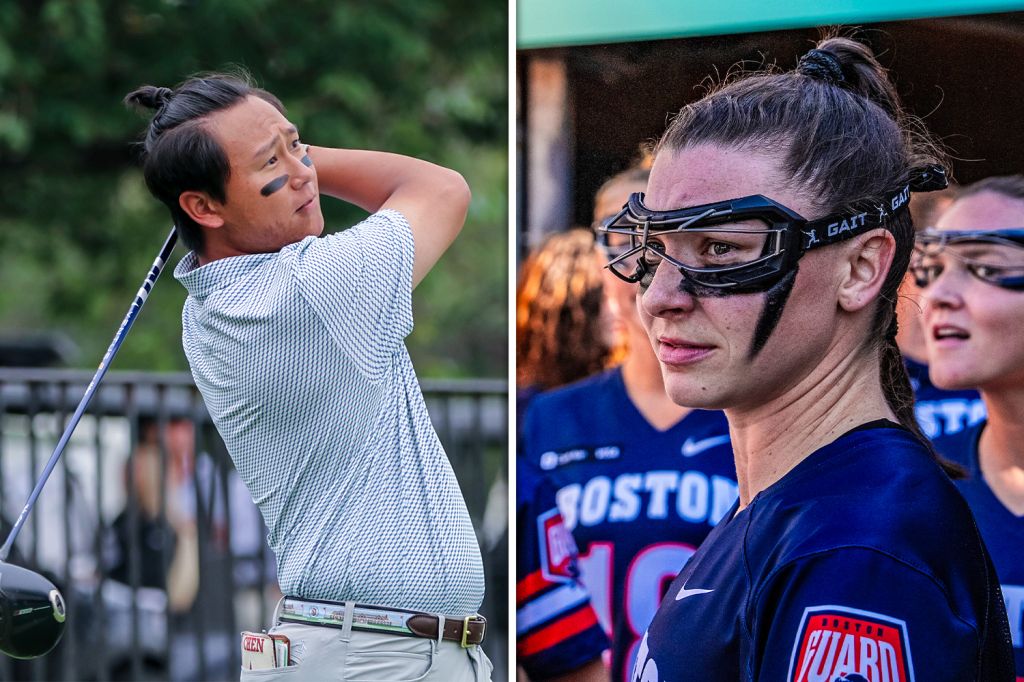
As eye black becomes increasingly personal, it’s finding its way into unexpected corners of sports, too. Peicheng Chen, a pro golfer still aiming for a tour card, recently went viral for winning the 2026 New York State Open clad in eye black.
The 23-year-old first picked up a stick while playing college golf for St. John’s. “I got really into baseball during my sophomore year of college, and I saw a lot of Yankees wearing eye black. I was like, ‘Damn, that looks cool. I want to do that on the course,’” he tells FOS. Like many athletes, he kept the look because he won: His swing coach insisted on it.
Chen, who wears a distinctive man bun, also sees the eye black as “war paint”—he uses it to get himself “ready for a battle with golf.”
—Ellyn Briggs contributed reporting to this story.
Download the FOS App
The business of sports, in your pocket.



Scan the QR code to get the app now.