Want more from Front Office Sports
in your search results?
World Cup tourists arriving at Kansas City International Airport this summer are being greeted by a bright red photo booth bearing a simple message: “Come for the fútbol. Stay for the football.”
Installed by the Kansas City Chiefs, the activation lets visitors take home a keepsake of their trip—and helps the Chiefs build up a list of potential new fans.
“It’s a really fun way for us to do some data capture with fans from all over the world and be able to funnel them into communications about Chiefs opportunities in the future,” says Lara Krug, the team’s chief media and marketing officer. Travelers and fans who interact with the installation—as approximately 4,000 already have—enter their name and contact information, providing the Chiefs with a direct line of contact.
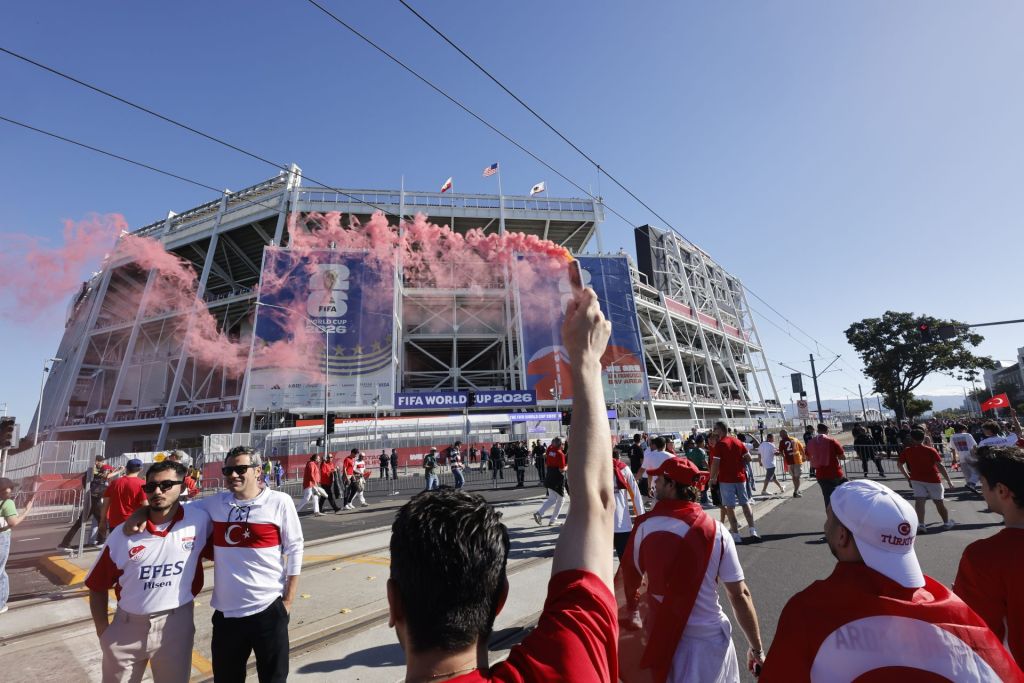
The photo booth is one of several initiatives that NFL teams in World Cup host cities are deploying in hopes of making lasting connections with soccer-supporting visitors.
Since the NFL introduced its Global Markets Program in 2022, building an international fan base has become a focus for individual franchises, following the league’s desire to grow internationally. (Of the 22 countries currently represented in the Global Markets Program, 16 are participating in the 2026 World Cup.)
Fandom, however, is a tricky and time-consuming thing to cultivate from afar. But with 11 NFL stadiums hosting World Cup matches this summer, team executives tell Front Office Sports they have a “once-in-a-lifetime opportunity” to accelerate that process.
Global Fan Facetime
Teams’ efforts to introduce the high-level production of NFL games to fans who are here to watch an entirely different sport has led to something that resembles an extended college orientation, featuring everything from spirit squads—a novelty to many international fans—to country-specific, customized merch.
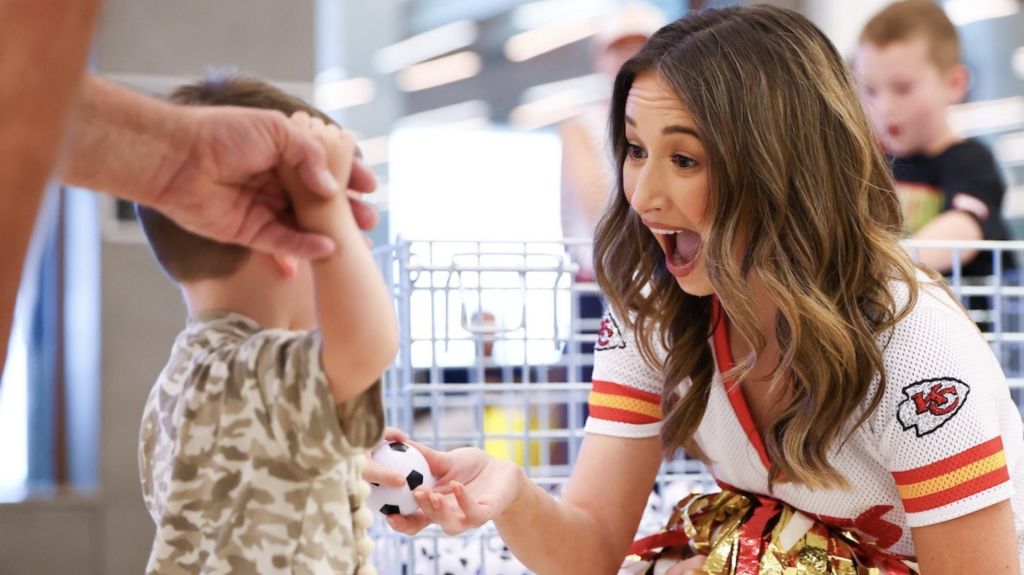
The New York Giants “G-Line” drumline is performing at the plaza outside of New York–New Jersey Stadium (temporarily renamed from MetLife Stadium) before most matches played there. Miami Dolphins cheerleaders are doing the same during halftime at Miami Stadium and at special events around South Florida like “Casa Rede Ronaldo,” a 39-day pop-up celebrating Brazilian soccer. (Brazil is one of six countries where the Dolphins have marketing rights through the Global Markets Program.) Chiefs cheerleaders, meanwhile, are welcoming visitors at Kansas City International Airport on select high-traffic days, passing out team-branded foam soccer balls.
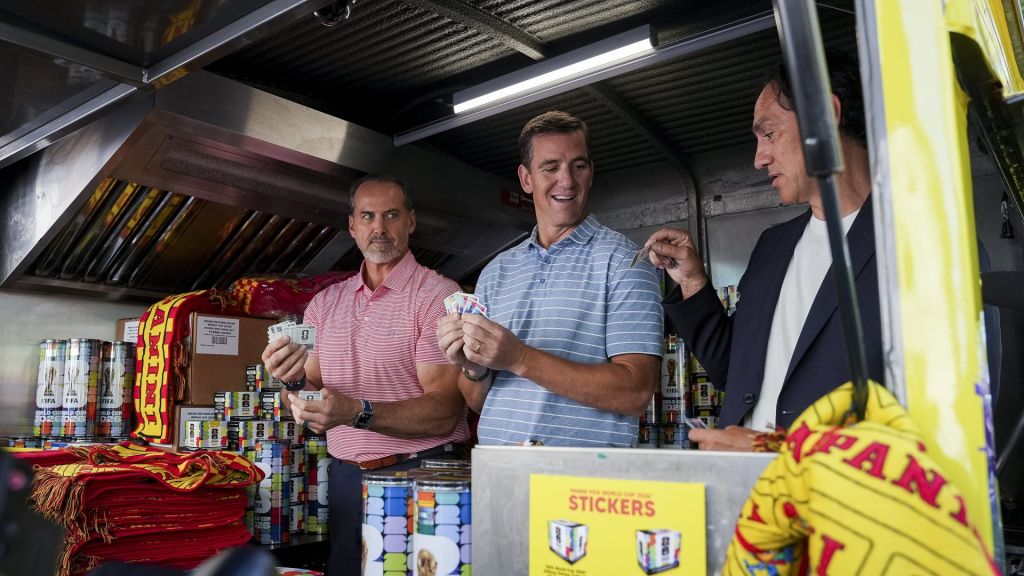
Several clubs have held temporary “takeovers” of existing World Cup activities around their stadiums. June 19 was “Giants Day” at the American Dream Fan Fest in East Rutherford, N.J., where soccer fans could mingle with current and former players and take photos with the team’s Super Bowl trophy. Marissa Soto, the Giants’ director of integrated marketing, says the team captured attendee information throughout the event, which it will use to stay in touch down the road.
The rituals of facilities tours and jersey swaps, too, are being widely employed. Most sources tell FOS their NFL teams have hosted national soccer teams staying nearby, with visits typically including informal cross-team training sessions, exchanges of merch, and social media shoots—the output of which travels far. A link-up between the mascots of the Miami Dolphins and the Brazilian national team last week was particularly popular; after six days, the video has approximately 100,000 views and hundreds of comments.
“We’ve created custom jerseys for visiting soccer players and dignitaries, and it’s sparking content in countries like Switzerland, Jordan, and Australia,” says Stephanie Rogers, chief marketing officer for the San Francisco 49ers. Increased visibility in Australia is a particular boon for the Niners, who will play the Los Angeles Rams in Melbourne on Sept. 11, the league’s first trip down under.
Speaking Soccer’s Language
Rogers adds that the 49ers have been leaning in to their World Cup duties on their Spanish-language social channel, @49ersESP. Many teams have stood up similar second-language pages in recent years.
On @chiefsespanol, the Chiefs are pumping out behind-the-scenes content about matches held at their stadium and playing up Kansas City’s broader soccer ties. Chiefs quarterback Patrick Mahomes—an investor in the NWSL’s Kansas City Current alongside his wife, Brittany, a former college soccer player—features prominently.
The team is also doing something more novel: releasing a nine-episode, Spanish-language scripted comedy series titled “El Offseason” across their social channels throughout the summer. Modeled after telenovelas popular in Latin America, the show follows the offseason trials and tribulations of four fictional Chiefs staffers.
“El Offseason” is not explicitly tied to the World Cup, but the timing doesn’t hurt. Its presence alongside World Cup content may give international viewers coming across the Chiefs for the first time because of the tournament a “reason to stay around longer,” Krug says. The show’s nine-week run will end just as the NFL season begins.
The Giants have woven soccer into programming in a major way, too.
Ahead of the World Cup’s opening match, The Eli Manning Show—produced in-house by the Giants’ marketing team—taped an episode atop Rockefeller Center with Italian soccer legend Alessandro Nesta. Manning and Nesta chatted about the similarities between their sports (among other things) while playing foosball.
Soto says the team’s full slate of fútbol-focused content—which also includes plenty of clips of Giants players attending matches and getting quizzed on soccer topics—has garnered roughly 1 million views to date across platforms.
Playing the Long Game
Teams are monitoring crossover engagement beyond social media.
The Chiefs expect increased sign-ups to their Mexico- and Spain-specific newsletters this summer—behavior that Krug says indicates legitimate fandom formation. The 49ers also expect increased international downloads of their team app (which launched in April).
While teams are bullish, Marissa Solis, SVP of global and brand marketing at the NFL, tells FOS it’s “too early to say whether [the league] can expect a demonstrable impact on international game attendance and viewership this fall.”
Nonetheless, funneling millions of international fútbol fans through various homes of American football has already linked the two sports at home and abroad.
Scottish soccer fans’ takeover of Boston during the first week of the tournament reportedly charmed Patriots owner Robert Kraft so much that he is now pushing for his team to play a regular-season game in Scotland. (Boston Mayor Michelle Wu was similarly moved, signing a sister city agreement with Glasgow.) And the affinity appears to go both ways: Some European tourists have started planning return trips to attend NFL games later this year.
Solis says the NFL and FIFA have a “strategic mutual interest in collaborating for fan engagement” throughout the tournament and possibly beyond—pointing to the fact that U.S. men’s national team rising star Alex Freeman, who scored a goal versus Australia on June 19, is the son of Super Bowl–winning wide receiver Antonio Freeman.
“Sports is not a zero-sum game. The more sports fans consume, the higher the engagement all around,” she adds. “Overall, it’s been incredible to see [fútbol and football] come together in such an exciting and natural way.”
Download the FOS App
The business of sports, in your pocket.



Scan the QR code to get the app now.