Want more from Front Office Sports
in your search results?
New proposed federal legislation would effectively ban private-equity investors from owning or operating youth sports businesses by forcing existing owners to sell assets and penalizing those who engage in predatory practices.
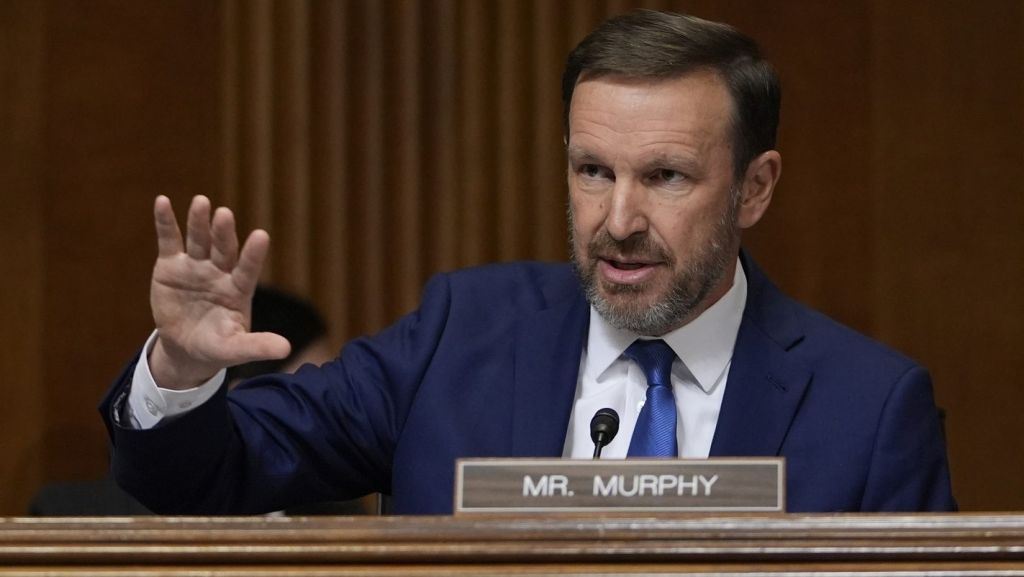
The “Let Kids Play Act” was introduced Wednesday by Sen. Chris Murphy (D., Conn.) and Rep. Chris Deluzio (D., Pa.), alongside several other Democratic lawmakers who make up the “Monopoly Busters Caucus,” including Sen. Cory Booker (D., N.J.), plus Reps. Pat Ryan (D., N.Y.) and Pramila Jayapal (D., Wash.).
The bill would force “vulture” investors to divest from youth sports businesses within two years. It would also ban several practices that have become increasingly widespread:
- Restrictive participation contracts that compel parents to book particular hotels for away games
- Hidden junk fees that are charged after a child has already signed up to play
- Data collection through league apps
The bill would require “vulture” investors to refund any junk fees imposed on customers and create a “Youth Sports Fund” with the money from penalties. That fund would be used to pay for scholarships and preserve local sports facilities.
“The good news is that private equity’s takeover of youth sports is in its early stages,” Murphy said during a Wednesday press conference. “We can stop it.”
The cost of participating in youth sports has gone up by 46% in “just a few years,” and the average cost currently exceeds $5,000 a year per child for club sports, according to the lawmakers.
“Big money vultures have turned youth sports into a luxury item,” Deluzio said at the press conference.
U.S. families spend a total of between $30 billion and $40 billion annually on sports activities for their kids, according to research from the Aspen Institute, and private equity has taken notice. Unrivaled Sports, the youth sports holding company of PE billionaires Josh Harris and David Blitzer, has been building a sprawling portfolio of more than 20 companies that includes flag football. Maple Park Capital–owned Prep Network runs hundreds of youth sports events each year, including basketball, football, and volleyball. Last year, KKR-backed PlayOn bought high school sports information provider MaxPreps, which features information about 29 different sports and covers roughly 28,900 high schools across all 50 U.S. states.
Although the bill has only Democratic support for now, the lawmakers believe they can get Republicans on board. “This is about as nonpartisan a thing as you can possibly imagine,” Ryan said.
Black Bear Blues
While the bill is aimed at all “vulture” investors, the only firm mentioned by name at the press conference was Black Bear Sports Group, the youth hockey business that came under fire last year following a story from The Lever headlined “Wall Street Is Paywalling Your Kids’ Sports.” In that story, Murphy recounted being told he could not livestream his child’s hockey game.
In response to the legislation, Black Bear spokesperson Evan Nierman said in a statement that “we look forward to engaging with lawmakers and sharing all the ways we are growing youth hockey at four times the national rate, providing free and low-cost programs, and letting more kids play by saving and revitalizing ice rinks.”
Black Bear, which has described itself as the “largest owner/operator of ice rinks in the U.S.,” owns more than 40 rinks across 11 states. The company was founded in 2015 by private-equity veteran Murry Gunty, who has faced increasing criticism in recent months. On May 8, USA Today published the results of a nine-month investigation into Black Bear and Gunty, concluding the firm has “consolidated much of youth hockey, turning what was once a community-based activity into a profit vehicle for wealthy investors.”
Gunty’s firm has been trying to repair its image. In February, Black Bear announced the acquisition of two new rinks in Michigan and pledged “significant repairs and improvements” that it says will not disrupt the 2025–26 season.
The politicians aren’t buying it. “Black Bear ownership’s roots are in private equity,” Murphy said at the press conference. “They see my son’s hockey experience as a chance to make a massive amount of money. They are using youth sports to get rich.”
Speaking to Front Office Sports in December, Gunty said, “I feel very good about our role in the sport of hockey. We believe we are the protector of youth hockey.” He also said Black Bear “isn’t private equity” and that he hasn’t worked in private equity for years.
In many cases, he claims, his company has purchased rinks that otherwise would likely have gone out of business.
“I’ve had countless people sell us rinks because they know that as long as I’m alive, those rinks will stay as ice rinks,” he told FOS. “They will not be converted into housing developments, or data centers, or apartments, or anything like that.”
He said he tried reaching out to Murphy through intermediaries to apologize, but he has been unable to get in contact with the senator. “I would very much like to have the chance to apologize to Senator Murphy if he was treated in that way by our people,” Gunty told FOS.
As of Friday, Black Bear has not heard back from Murphy’s office “and would still be glad to connect with him,” a representative for the firm tells FOS.
A representative for Murphy did not respond to requests for comment on whether his office received that outreach.
Download the FOS App
The business of sports, in your pocket.



Scan the QR code to get the app now.