Want more from Front Office Sports
in your search results?
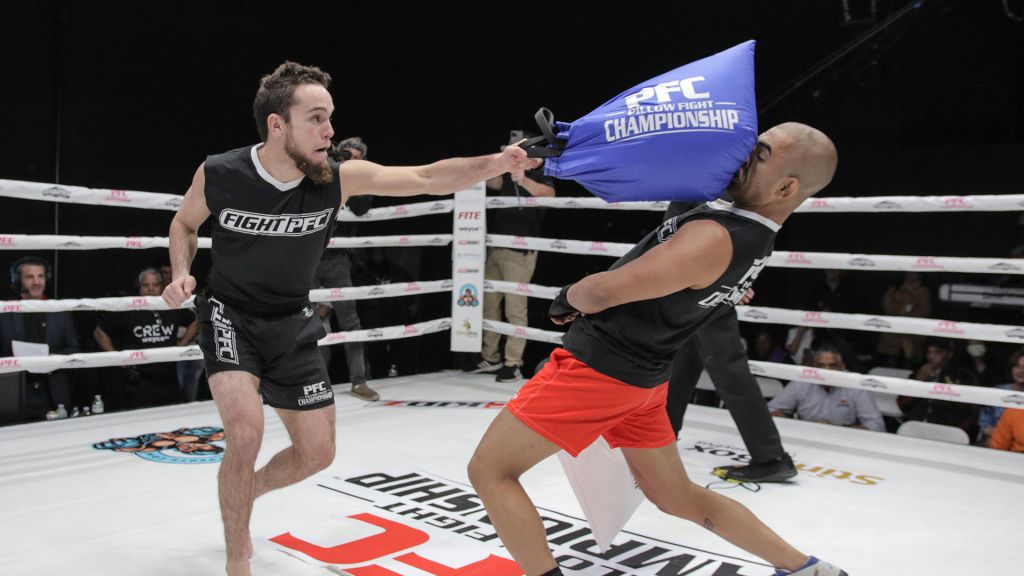
Steve Williams never intended to build a pillow-fighting league. His original concept was a traveling MMA attraction built around a mobile “Fight Truck” venue, but he pivoted to pillow fighting after his brother told him it had been the highlight of a Burning Man gathering. Now, he’s the founder and CEO of Pillow Fight Championship.
The league’s inaugural event took place in August 2020. It slowly grew through a series of improbable steps, including fights in Brazil, a development deal with Kevin Hart’s production company, and eventually a spot on ESPN8: The Ocho. Over the past three years, ESPN has aired and re-aired PFC events more than 100 times.
Media-rights deals in sports have never been more valuable. The NFL wants to renegotiate its existing $111 billion package early so it can get more money; the NBA just concluded its first season under a $77 billion series of agreements with networks and streamers; and UFC has a seven-year, $7.7 billion pact with Paramount.
Below the top tier, though, the mechanics of media-rights deals for obscure and emerging sports—from pillow fighting and Wiffle ball to competitive fishing and pinball—are very different. Leagues like those typically aren’t getting rich from television; in many cases, they’re simply trying to get on it.
“Just because there’s a deal with ESPN, that doesn’t mean there’s a license fee paid or any money,” says Bobby Hacker, longtime VP of business and legal affairs for Fox Sports. But although cash isn’t exchanging hands, there’s payoff for both the small-time sports and the networks that make the deal worth it.
“Seldom-Seen” Sports
Niche sports appear across several networks and streamers, but the ESPN networks are especially home to all sorts of obscure—and often peculiar—sports. Many of them are broadcast during The Ocho, a special programming block that showcases obscure sports for about a week during the summer: think Swiss stone tossing and the National Bubble Gum Blowing Championship. This year, The Ocho marks its 10th anniversary.
“We’ve built a destination around 40- to 50-plus hours of live events featuring ‘seldom-seen’ sports,” says ESPN VP of programming and content strategy Brent Colborne.
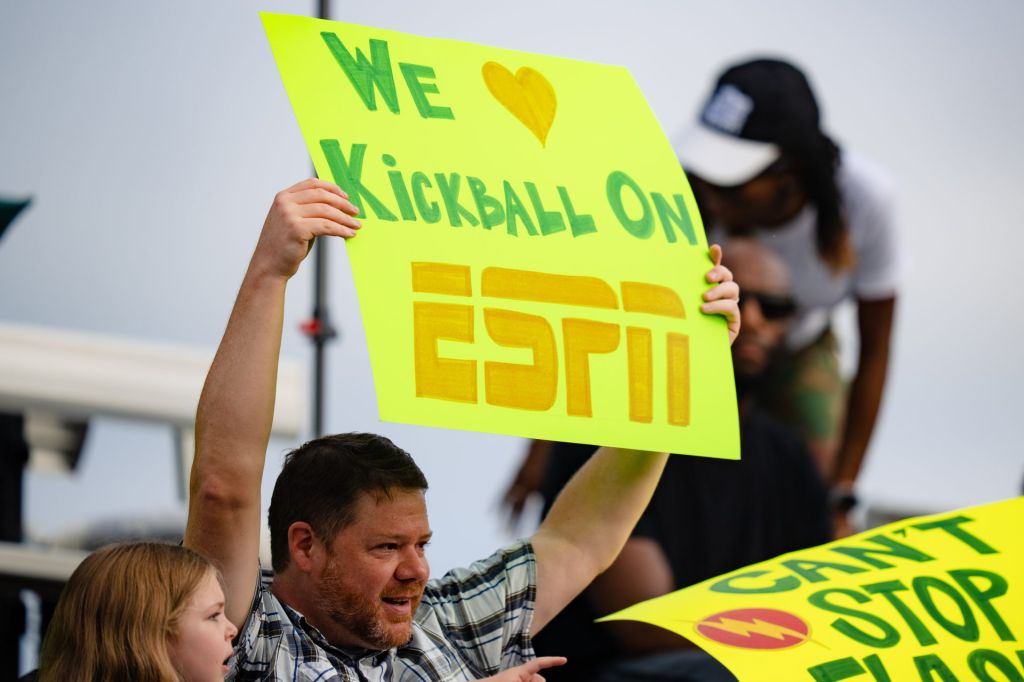
But some are increasingly finding their way onto ESPN platforms outside the small window of The Ocho.
For example, on June 16, ESPNews re-aired recent World Juggling Federation and Pop-A-Shot championships at 3 a.m. and 4 a.m. ET, respectively. On June 20, viewers could catch the 2025 Washington Roofball Regional—a sport that involves tossing a ball onto a roof and then trying to catch it as it falls to the ground—at 12 p.m. on ESPN2, followed by a replay of one of last year’s DØDS Diving League events at 1 p.m.
“They’ve got real estate, and they need to put housing on it,” Hacker says.
Big League Wiffle Ball, which has a slew of celebrity team owners including actor Kevin Costner and 76ers and Devils part-owner David Adelman, launched its latest season June 7. It has multiple media partners: Games played between 1 p.m. and 4 p.m. stream on YouTube, Fubo, and regional sports networks, while the evening slate airs exclusively on ESPN+.
“It was all formulated because we don’t want to be behind a paywall for the entirety of the season,” BLW commissioner Logan Rose tells Front Office Sports. He says the league has separate agreements with each distribution partner, but ESPN carries special significance. “ESPN is kind of that stamp of approval. For niche sports leagues like us, it’s a stepping stone.”
There’s a kind of hierarchy among these small sports. Some, like the World Pinball Championship and Corunna Belt Sander Races, mostly aren’t looking to eventually grow to the point that they’ll secure lucrative media deals. They’re just happy to be on in the first place.
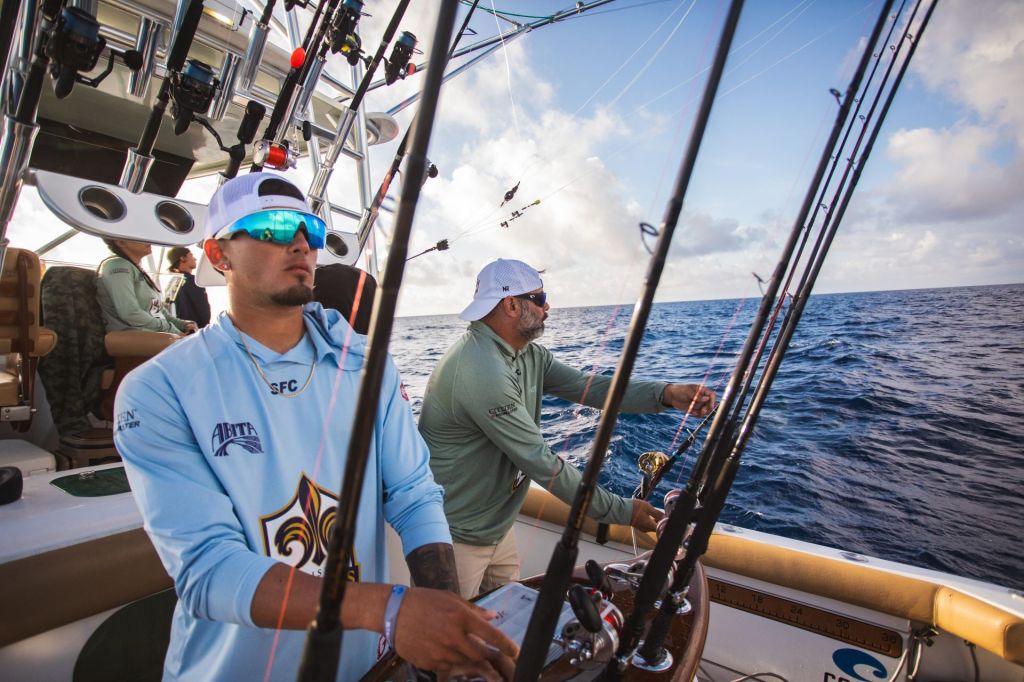
Others, like the Sport Fishing Championship, bristle at the comparison to such small-time contests. “Fishing is the largest recreational sport in North America,” says commissioner Mark Neifeld.
The emerging sport—which features celebrity team owners including 2017–18 NBA Rookie of the Year Ben Simmons and former NFL great Randy Moss—currently holds tournaments in various fishing towns across the U.S. and Mexico. After its first few seasons, the league moved from CBS and Viacom to work primarily with ESPN and Disney.
Neifeld sees SFC less as a novelty act and more as an emerging media property. “Like everybody, we’re just trying to get the most eyeballs on our sport,” Neifeld tells FOS. “We’re trying to build a 100-year league.”
He says SFC still has a strong relationship with CBS and that “we love working with ESPN,” while teasing bigger things to come. Neifeld says SFC self-produces 150 hours of live TV every year from a “state-of-the-art,” half-acre facility in Fort Worth.
The league strategically schedules its regular season to begin in mid-April and end before Labor Day weekend so that it avoids MLB Opening Day, the Final Four, and the Masters, as well as the start of NCAA and NFL football. Every SFC event will be streamed on ESPN+ this year, and ESPN2 will offer some live coverage of its Oct. 18 championship.
“There aren’t a lot of live sports properties during that window,” he says. “We can actually be a real material media property for a network that wants to have access to the fishing community.”
Emerging From Obscurity?
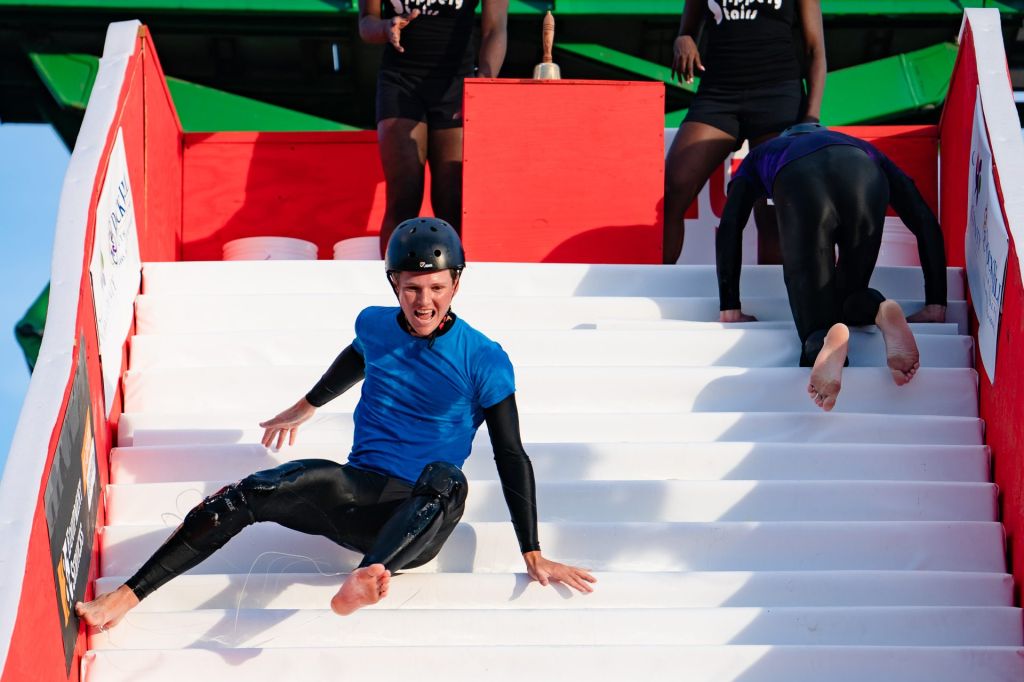
Some of these sports have an unlikely trajectory to mainstream uptake—apologies to Slippery Stairs, which sees contestants scramble up soap-slathered staircases. But for others focused on true growth despite their niches, the challenge is turning distribution into leverage.
Currently, networks and streamers have the advantage and can “drive pretty good bargains,” says Ed Desser, a sports media expert and former NBA executive who now runs his own advisory firm.
Among these bargain-basement prices: free. “As a general rule, non-tier-one and non-tier-two properties either provide their content for free without a license fee or, in some cases, pay for airtime,” Desser tells FOS. “That’s very common.”
For now, many emerging sports are willing to sacrifice rights-fee revenue for exposure, sponsorship opportunities, and audience growth. It’s not out of the realm of possibility for small sports to move out of the zone of total obscurity, though.
Major League Pickleball and the American Cornhole League offer examples of what can happen when niche sports break through. The former is currently seeking a new media-rights package after deals with ESPN, Fox, and Tennis Channel expired following the 2025 season, while the latter earlier this year renewed a media-rights agreement with ESPN through 2028.
“If you get to the point where you hit one million viewers, now all of a sudden advertisers are going to say, ‘That’s a lot of eyeballs,'” Hacker tells FOS. “Now you’ve entered the realm of possibly getting a licensing deal.”
If they’re going to monetize at all, other sports are looking at a different path entirely. For Pillow Fight Championship, Williams is grateful for the exposure through his media-distribution agreements, but he says sponsorship remains the lifeblood of the business. “Some day we’ll have a $1 million pillow fight,” he tells FOS. “But right now, we’re not quite as well funded as we need to be.”
Download the FOS App
The business of sports, in your pocket.



Scan the QR code to get the app now.