Max Kellerman, LeSean McCoy Off DAZN Boxing Show As Mario Lopez Joins
Want more from Front Office Sports
in your search results?
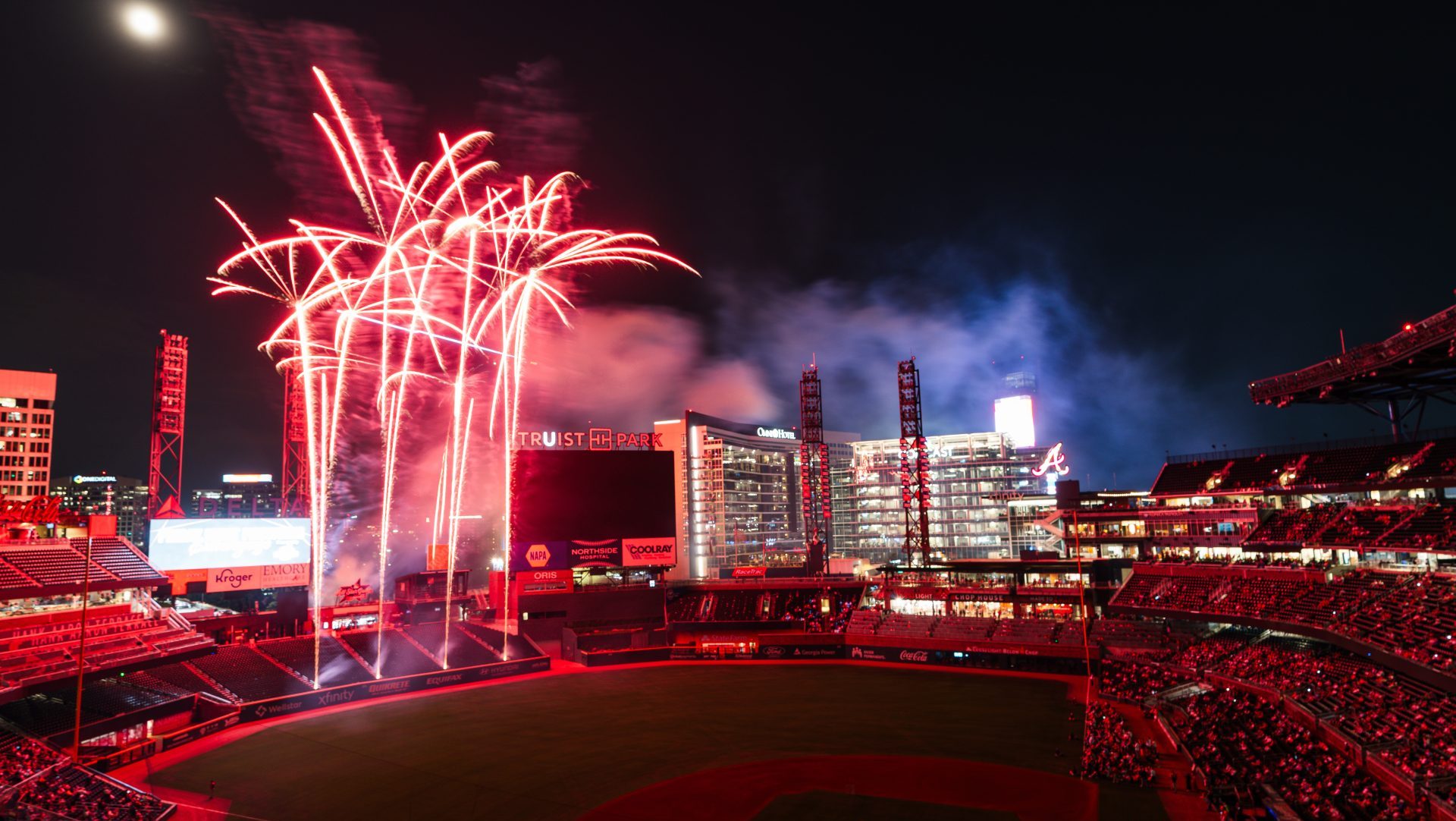
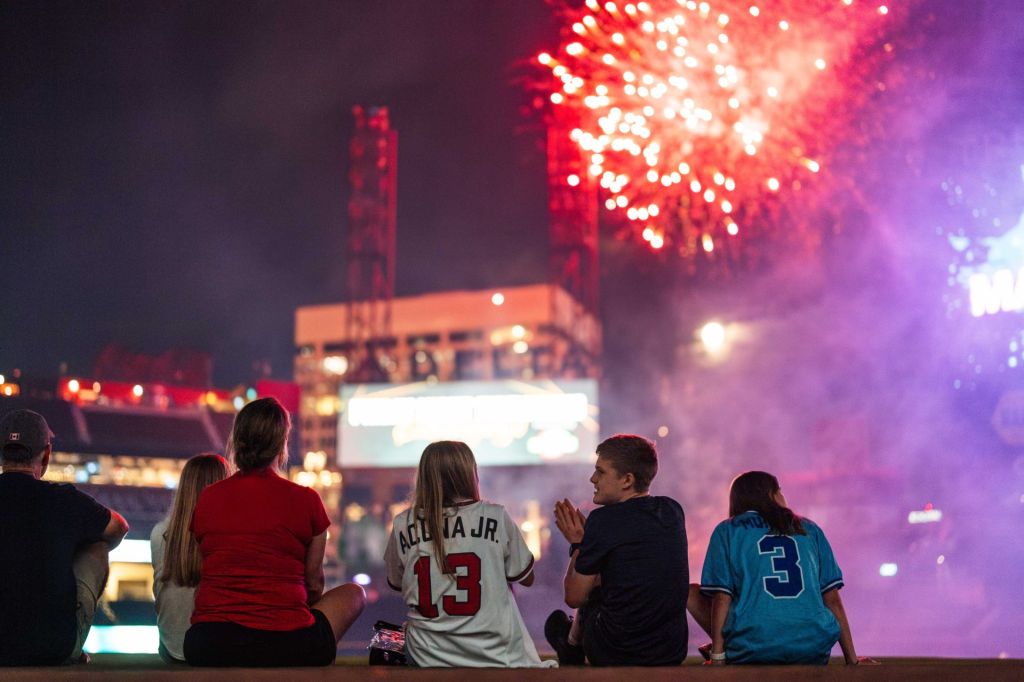
The Braves worked an entire year for this weekend. Their goal for the July 4 fireworks display at Truist Park was to “blow the place up,” Scott Cunningham, VP of fan experience for the team, told Front Office Sports.
Atlanta is among the Major League Baseball clubs that have unleashed huge postgame pyrotechnics shows for America’s 250th birthday. For months, team executives like Cunningham planned their July 4 weekend displays, sending fireworks bursting over 14 MLB stadiums—most as bigger-than-usual productions.
While fans take in the entertainment, they’re also watching the culmination of a sometimes-grueling effort that is as technical and tactical as it is theatrical.
MLB clubs and pyrotechnics companies told FOS that before the first shell streaked the sky this holiday weekend—or any other night of the season—they’ve already spent untold hours sourcing fireworks, mapping launch locations, coordinating with public safety officials, and meticulously designing themed shows timed to music. The spectacles last less than 10 minutes, but getting there is a year-round operation.
Baseball’s postgame pyrotechnics shows largely began as a marketing ploy to fill minor league stadiums for special occasions. They have since evolved into one of the sport’s signature experiences—as important to fans as they are to franchises looking to fill seats.
The Braves are uniquely partial to pyro. The team does a different show every Friday-night home game—up to 14 per season. “It’s a new show with new music every time, so we start working on them super early in the offseason,” Cunningham said. “If we don’t have all our tracks picked by January, we’re already behind.”
They also fire off rounds to celebrate every national anthem, strikeout, and home run at each of their 81 home games. “When I talk to my counterparts and tell them how much we do,” he added, “they’re kind of shocked … because it’s not cheap.” (All sources declined to discuss exact costs with FOS.)
Between weekly shows that run roughly 2,800 shots and one-off blasts to mark in-game moments, Truist Park launches more than 40,000 fireworks each season. To accommodate the workload, the Braves’ pyrotechnics partner—Tennessee-based Pyro Shows—must plan well over a year in advance.
Jesse Salveson, the firm’s VP of operations, said Pyro Shows is “basically a logistics company that happens to shoot fireworks at the end of its run.” That’s due to each team’s specialized needs and the global nature of the fireworks supply chain.
MLB clubs rely on close-proximity pyrotechnics, which have smaller fallout zones than traditional aerial fireworks, making them safe to shoot in semi-enclosed areas like ballparks. This product is almost exclusively manufactured in Spain—and only a handful of cargo providers are equipped (and willing) to transport it, most often by sea.
“Shipping is definitely the center of everything in this industry,” said Salveson. “Prices and timelines go up exponentially because of the nature of moving explosives. We have to get our orders placed [for a Braves season] by April or May of the previous year.”
Once they arrive Stateside, providers and teams still have to navigate safety protocols—a fire marshal must always be on-site—and other venue-specific logistics. For Kelly Dredge, the Guardians’ director of live experience, this means constantly monitoring the city’s fickle lakefront weather and, when August rolls around, arranging a police escort to Progressive Field for the fireworks used in the club’s flagship Rock ’n’ Blastshow. (“We use so much product in that one; local law requires it,” she said.)
Ballpark layout plays a major role in determining the size and scope of a fireworks presentation. Clubs with more space beyond their outfield, such as Kansas City’s Kauffman Stadium, can stage larger displays than more constrained venues like Fenway Park.
The look and feel of clubs’ shows, however, are set by their fan-experience teams.
Cunningham’s particular creative vision balances flow with wow factor: “We usually put 15 minutes’ worth of fireworks into a 7-minute show, so there’s constantly lots of booming happening. … But we still make sure to slip in some quieter moments or dips. You need that space in the choreography to be able to build things back up later.”
Another key part of pyro shows is the soundtrack, and the precision with which shots are timed to specific beat drops. External production partners help here, too.
“We use scripting software that pairs shows with music and simulates it all in the stadium on a computer screen,” said Pyro Shows’s Salveson. His and Cunningham’s teams go back and forth throughout the winter to perfect every second of the Braves’ full slate of shows. Dredge said the Guardians follow a similar process with their provider, Pyrotecnico.
Come game day, the pyro companies are also responsible for setting up and staffing launch sites, which are typically positioned on parking garages just beyond stadium outfields, or in outfield seats themselves. (In this case, fans are asked to relocate.)
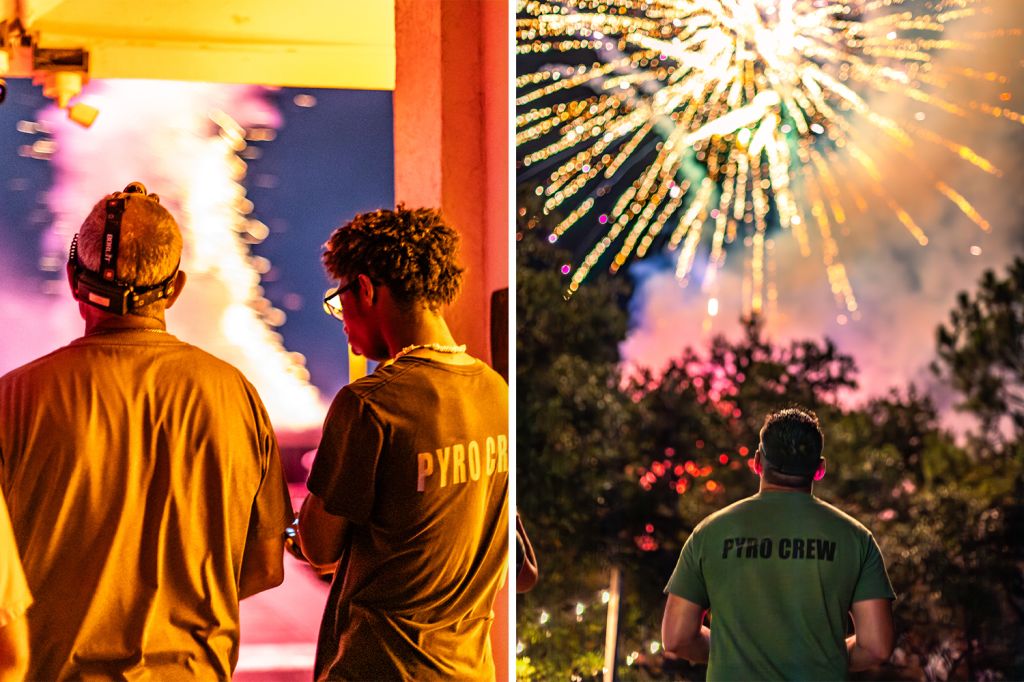
Licensed technician crews handle these tasks—a group that can range from two to twenty people, depending on the scope of the show. There isn’t a particular crew-member profile—Pyro Shows employs people of every background and gender between the ages of 18 and 70—but they all share a love of spectacle.
“If you can’t sing and you can’t dance and you can’t play an instrument, but you want to entertain, fireworks are a pretty good gig,” Salveson said. “Nobody knows who you are—you’re behind the scenes flipping a switch—but you can still entertain thousands of people. At the end of the day, that’s the draw for folks.”
That’s also the draw for so many MLB clubs that continue to spend big on pyro year after year: Few in-park experiences are as reliably popular. Cunningham and Dredge told FOS that their respective teams’ fireworks games are always among the season’s best attended, with most selling out days in advance. Plus, players often stick around after games and take in shows from the field with their families.
Despite the sustained demand, clubs take pride in evolving their shows so they don’t get stale. Building shows around broader promotional events—like Star Wars Night or ’80s Night—is a popular tactic to keep things fresh, as are interactive video board displays, lasers, and smoke effects.
The big booms won’t stop after the holiday: MLB told FOS that the July 14 All-Star Game at Citizens Bank Park in Philadelphia will also feature a special fireworks presentation, which it is coordinating in tandem with the Phillies.
But the Fourth of July weekend shows are especially enormous.
For their Independence Day game against the Mets, the Braves tripled the size of their normal Friday-night show, expanding total shots from 2,800 to 8,500. Pyro Shows added several new firing locations—including trailers stationed in the outfield grass—to create what Salveson said is the “largest show ever produced” at Truist Park. The Guardians, too, brought “a lot more firepower than usual” to their series against the White Sox this weekend.
Nearly every entity in sports has embraced America250 in some form. But the national pastime has to put on the biggest show of them all.
Download the FOS App
The business of sports, in your pocket.



Scan the QR code to get the app now.