Want more from Front Office Sports
in your search results?
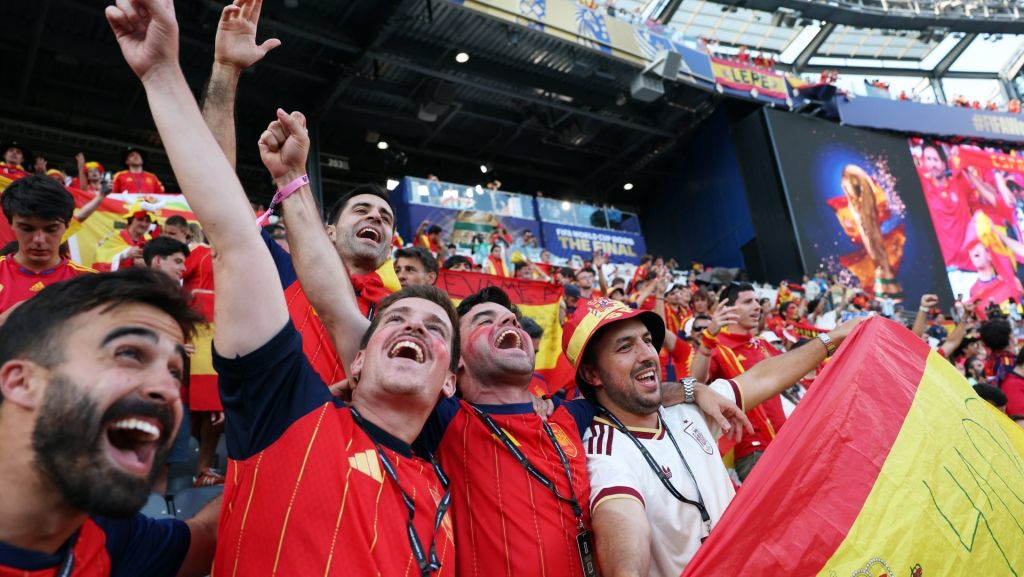
When the final whistle sounded at MetLife Stadium, the World Cup ended for Spain and Argentina—also for everyone whose lives were engulfed by the tournament over the past six weeks.
I was one of those people. I went to 12 matches for Front Office Sports in nine World Cup host cities: Los Angeles, Kansas City, Houston, New York/New Jersey, Philadelphia, Boston, Seattle, Miami, and Atlanta. The only two U.S. hosts I missed were the San Francisco Bay Area and Dallas.
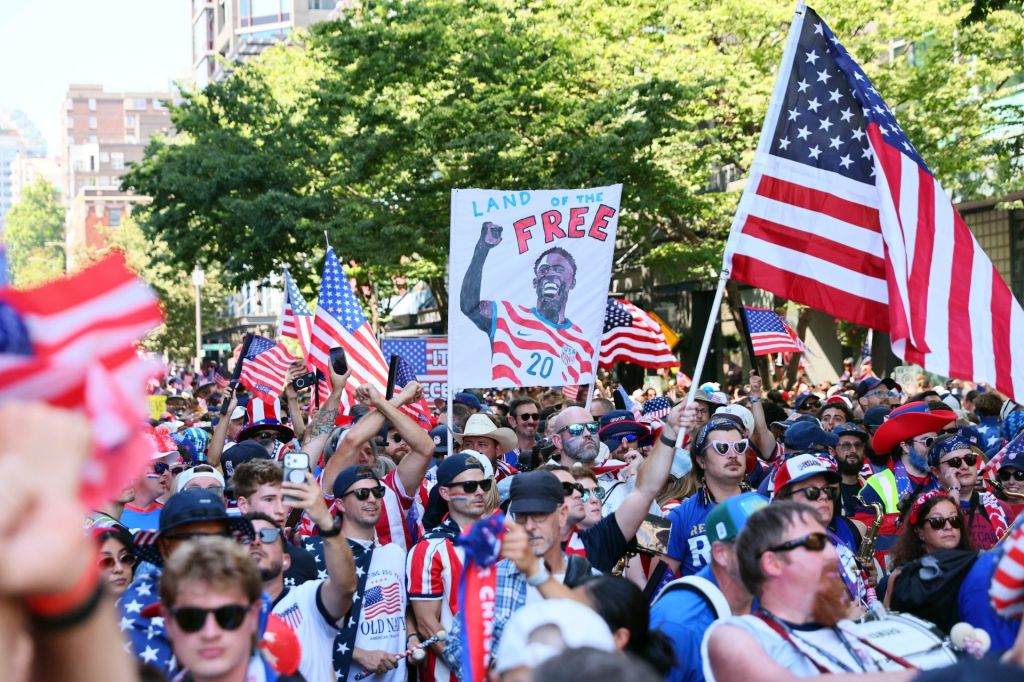
On the road, I saw some pretty remarkable things. I caught Lionel Messi’s hat trick against Algeria. I saw the Dutch Oranje Fanwalk through Houston, and Paraguay eliminate Germany in an electric penalty shootout. I felt the energy of the U.S. fanbase in full force on a beautiful day in Seattle. I saw the Norwegians row, the Argentine team make a political statement on the field, and Donald Trump once again sneak into the trophy ceremony.
Every host city had a different set of circumstances that shaped its World Cup preparations and reality. Philadelphia’s host committee had full coffers, while Boston’s equivalent openly admitted it struggled with fundraising. Some stadiums were easily accessible by foot from downtown hotels and urban cores, while others required sitting in traffic for an hour or more. The ease of covering matches wildly varied across stadiums.
Here are six takeaways from traveling around the country for the World Cup:
1. Downtown Stadiums Make A Big Difference.
The atmosphere in Seattle before the U.S. match against Belgium was the best matchday experience I witnessed.
The surrounding neighborhoods were teeming with bars, restaurants, parks, plazas, and beer gardens where fans gathered before the match; I walked to the stadium on a beautiful summer afternoon along with thousands of supporters wearing red, white, and blue.
This experience wasn’t possible in most of the U.S. cities FIFA picked for the World Cup. For several matches, I sat in traffic for over an hour on the way in or out of the stadium. It wasn’t that the suburban stadiums had bad atmospheres, but the ease of getting to the city-centric ones, plus the excitement from fans on their way in, made those venues really stand out.
Atlanta is another city where fans could walk to the stadium, and the official Fan Fest was close by. The atmosphere outside the gates was lively. In South Philadelphia, where all of the city’s sports teams are housed, fans stopped to enjoy the outdoor bar called Stateside Live! on their way into the match. Matches in Philadelphia were easily accessible by SEPTA trains, which were crowded, but cheap on the way in, and free on the way out.
FIFA expanded the security footprint around the stadiums, eliminating many parking spots surrounding the venues. Host committees told fans to prioritize public transit, but plenty of locals still chose to drive.
And who can blame them? Most NFL stadiums are so large that they’re located far from urban downtowns, with varying degrees of public transit to reach them. (Two of the most robust transit systems in the country are in Chicago and Washington, D.C., cities that did not host games.) American fans are used to driving to and from huge stadiums.
The complaints reached their loudest in Massachusetts and New Jersey. One fan at the final said he paid over $300 for parking. A fan in Boston told me he paid $100 to park in a woman’s driveway a 20-minute walk from the stadium that he found on social media.
The lack of parking also widely eliminated the great American tradition of tailgating—though some still found a way in Philadelphia.
2. Weather and Climate Are Major Concerns.
Hot and erratic summer weather was a huge factor across the tournament, although some have argued, paradoxically, that it led to a more entertaining style of play because teams were too fatigued to press.
I went to the roughly 100-degree Fourth of July match in Philly. I experienced a heat wave, wildfire smoke, and massive storms that caused flooding in July in New York City. On a Saturday morning in Houston, I sent the following message to an editor: “If I die from heat exhaustion and dehydration in a parking lot somewhere on the Astrodome complex know that I appreciated working with you.”
As organizers float possibly bringing FIFA back for the 2031 women’s World Cup, a 2038 men’s World Cup, and future Club World Cups, climate change is going to be an increasingly urgent concern. Indoor venues reduce weather concerns for matches, but fans will still want to be outside for watch parties and marches to the stadium, and rain, smoke, and storms still impact flights. It’s something U.S. leagues will also have to face, but it’s impossible to think ahead to future soccer tournaments without acknowledging the growing weather issues.
3. Indoor Stadiums Made For Great Atmospheres.
As the NFL increasingly turns to domed stadiums, there has been much handwringing about what will be lost. And while those domes will never host a snowy playoff game, the environment at indoor NFL stadiums was spectacular for the World Cup.
I have never been more grateful for air conditioning than I was heading into the match in Houston, and Dutch fans jumping and singing made the seats shake.
In Atlanta, Argentina–England at indoor Mercedes-Benz Stadium was probably the loudest match of the tournament. Argentina fans drowned out “God Save The King,” and the singing only intensified as Argentina came from behind to win.
As more and more NFL teams shift to domed stadiums for football, it’s good to know those venues can still be electric for fútbol, especially for any future FIFA tournaments.
4. The Media Heavily Skewed Male.
Despite some progress, sports media remains an overwhelmingly male-dominated industry. Soccer is no exception.
World Cup press conferences, mixed zones, and press boxes were typically populated by a small handful of other women, at most. I was the only woman on a packed media shuttle heading to the quarterfinal in Miami. In Boston, a FIFA volunteer instructed me to use the restroom in the press box—because the area for the press conference only had a men’s bathroom.
There are several female journalists whose work covering the tournament stood out, including The Athletic’s Melanie Anzidei, CBS Sports’ Pardeep Cattry, The Miami Herald’s Michelle Kaufman, and Politico’s Sophie Cai, but we were solidly in a tiny minority.
FIFA declined to answer how many of its credentialed media members for the tournament were women. Laurel Pfahler, the president of North American Soccer Reporters, told FOS that 24 of the organization’s 331 members are women. While most of Fox’s studio hosts and sideline reporters were women, Carli Lloyd was the network’s only female studio analyst, Jacqui Oatley was the only female play-by-play commentator, and Lori Lindsey was the only color analyst.
5. ‘Our whole lives was thrown away.’
The World Cup put a spotlight on the best parts of cities, and on their harsher realities, too.
Near my downtown Houston hotel, it seemed like every person was either wearing a soccer jersey or sleeping outside. The Fourth of July situation in Philadelphia’s Center City was similar.
Some cities approached homelessness as an image problem as the tournament neared; others upped their efforts to help the people sleeping on their streets; others did very little at all.
Atlanta and Seattle made an effort to build more affordable housing before the tournament, with varying degrees of success. Some nonprofits tried to place unhoused people in shelters. Most did not put additional resources into the issue, according to the Associated Press, and some, including Atlanta, conducted sweeps of encampments. The city of Atlanta called one such controversial action “routine park maintenance,” not a sweep. “Our whole lives was thrown away,” one unhoused person in Atlanta told The Guardian.
6. It’s the People.
As cliché as it sounds, the lasting memory of my World Cup experience is the people I encountered—journalists, fans, volunteers, bus drivers, stadium workers, and rideshare drivers.
In Kansas City, I shared an Uber from a barbecue restaurant to the Argentine pre-match celebration with a fan named Nash, and saw his joy when the giant blue-and-white flag engulfed us like a parachute in gym class. I attempted to have a solo dinner in a Houston bar only to end up eating with two Brits on a loosely-World Cup-related tour of Texas. A highlight of the final was sharing an NJ Transit train with a six-year-old Argentine named Juana, who told me about her long trip to the World Cup.
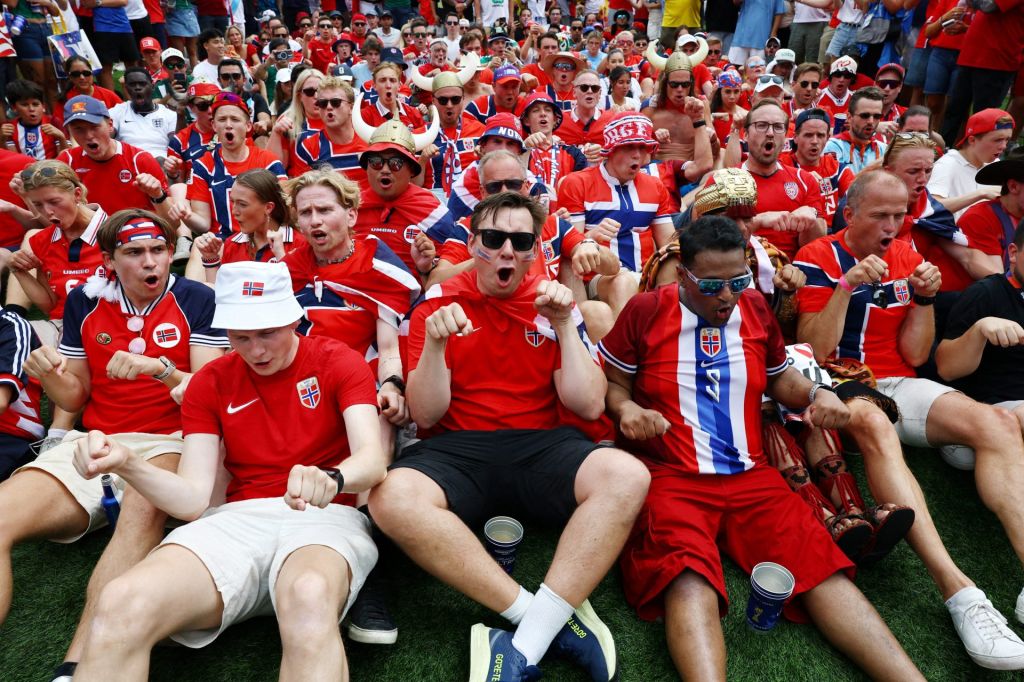
The singing, the rowing, the marches, the energy before the matches, in the stadiums, and on the way out: The fans were incredible.
What makes the World Cup special—and what keeps people coming back despite all the heartbreak, corruption, and cost—is the magic. This was mine.
Download the FOS App
The business of sports, in your pocket.



Scan the QR code to get the app now.