Want more from Front Office Sports
in your search results?
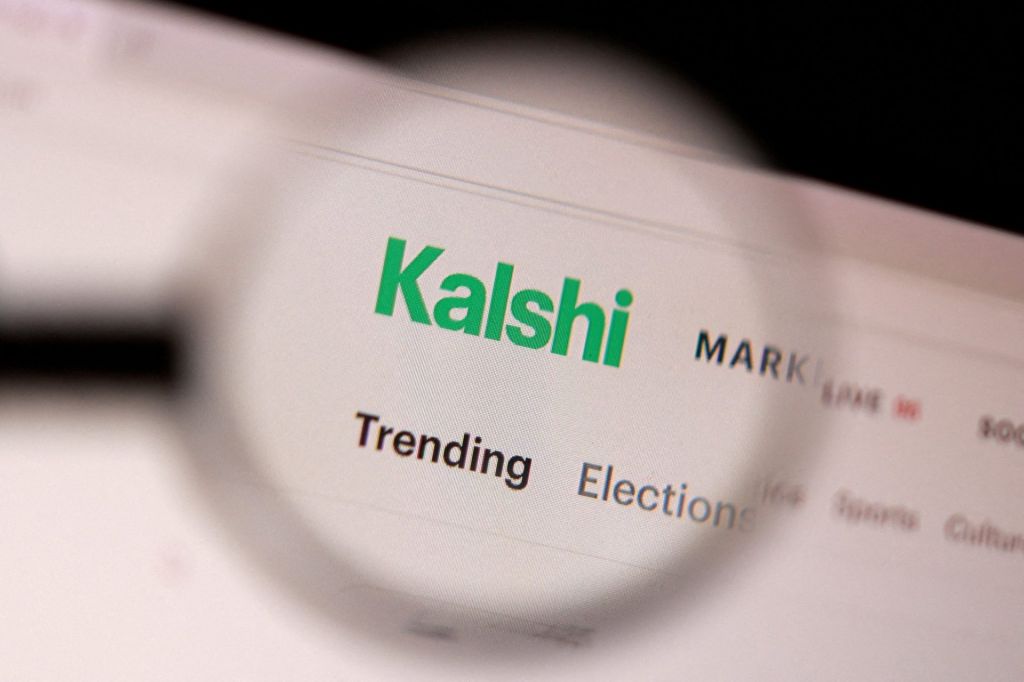
Kalshi cofounder and CEO Tarek Mansour doesn’t consider Polymarket to be his primary competition, and tells Front Office Sports the rival prediction-market platform should “come under the regulated umbrella” because its recent scandals serve to sully the entire industry’s reputation.
Kalshi and Polymarket are widely viewed as the two leading U.S. prediction-market platforms, echoing the early days of DraftKings and FanDuel in daily fantasy sports. However, Kalshi has far greater market share, according to analysts at Bank of America, who recently said it has captured 91% of the market, with the next two platforms being Polymarket followed by Underdog.
“When I think about competition, I don’t think about Polymarket, honestly, as much as some of the others,” Mansour says, speaking to FOS at Kalshi’s headquarters in New York City. “We have a whole suite of competitors.”
He points to derivatives exchange CME Group, which last year helped FanDuel launch its own prediction market product, as well as Robinhood, as two other rival platforms. The industry has seen rapid growth in the last year, with other companies offering prediction-market platforms including DraftKings, Novig, and Coinbase.
“It’s not that clear who’s second,” Mansour says.
“We think about the competition holistically,” he adds, saying Kalshi is “very customer obsessed and competitor aware. We see everything the competition does.”
Mansour says increased competition is good for the industry, because it “grows the market and grows the pie,” while also pushing Kalshi to constantly improve in order to be the “best version” of itself.
‘Come Under the Regulated Umbrella’
Not good for the industry, however, are recent scandals that have sprouted due to trades made on Polmarket’s international platform, which is only available to U.S. users who use a VPN.
First, in April, a U.S. soldier was indicted by the Department of Justice for allegedly using inside information to make more than $400,000 betting on when the U.S. military would capture Venezuelan President Nicolás Maduro. Last month, a Google software engineer was indicted for allegedly using confidential internal information to make more than $1.2 million on Polymarket betting on markets related to who the most-searched person of 2025 would be. Both of those incidents involved trades made on Polymarket’s international platform.
Mansour says he hopes Polymarket will “come under the regulated umbrella.” Kalshi and other U.S. prediction markets are federally regulated by the Commodity Futures Trading Commission, which last week proposed new rules to govern the industry that would restrict bets most regulated platforms in the U.S. don’t currently offer, like in-game props such as next pitch, markets on sports below the collegiate level, and officiating decisions.
While Polymarket does have a U.S. app that launched late last year and falls under the CFTC’s purview, much of the company’s trading volume comes from its international platform, which still sees billions of dollars in bets from U.S. users who are illegally using the platform, according to a recent report from consulting firm Crane Zeng.
Mansour tells FOS that taking steps to stop the unlawful activity would be good for Polymarket, its customers, and the industry at large.
“If we have more and more events of these types of insider trading and things like that, it sullies the industry’s reputation a little bit, and we should avoid that,” he says.
Download the FOS App
The business of sports, in your pocket.



Scan the QR code to get the app now.