
Want more from Front Office Sports
in your search results?
The NFL isn’t the only league that thinks the Trump administration has more work to do on its suggested framework governing prediction markets.
The deadline to submit comment letters to the Commodity Futures Trading Commission was Monday evening. Letters from the NBA, MLB, ATP Tour, NCAA, and players unions for the NFL, MLB, NBA, NHL, and MLS all appeared online early Tuesday afternoon, offering opinions of the CFTC’s 267-page rule proposal unveiled in June. In total, the CFTC now says it received 1,443 comments before the Monday evening deadline.
The CFTC’s proposed rules would ban sports bets that most regulated prediction-market platforms in the U.S. don’t currently offer, like in-game props such as next pitch, markets on sports below the collegiate level, and officiating decisions, while largely leaving intact contracts that have fueled the industry’s growth, like those tied to final scores, point differentials, win-loss outcomes, tournament advancement, and individual and team statistical performance.
Prediction-market proponents were enthusiastic. A comment letter from Kalshi co-founder Luana Lopes Lara said the proposal “reflects meaningful progress.” Polymarket commended the CFTC for its “careful and thorough proposed rulemaking.” Underdog also praised the regulator for putting forth a “comprehensive and carefully reasoned and researched” framework.
The NBA, which unlike MLB, MLS and the NHL has not yet struck an endorsement deal with a company in the field, acknowledged some positives in the proposal while noting it “did not incorporate many of the integrity-related protections and requirements” the league previously suggested. The proposal “falls well short” of requiring prediction-market platforms to “comply with the most basic sports integrity protections as a matter of course,” the NBA said.
Platforms should be required to cooperate with integrity-related investigations undertaken by leagues, and it should be written into the CFTC’s rules that platforms must notify leagues of any suspicious trading activity, the NBA said. The league also wants companies to be compelled to consult with leagues about new markets tied to player props, and said that leagues should have “control over the types of markets offered on their competitions and businesses.”
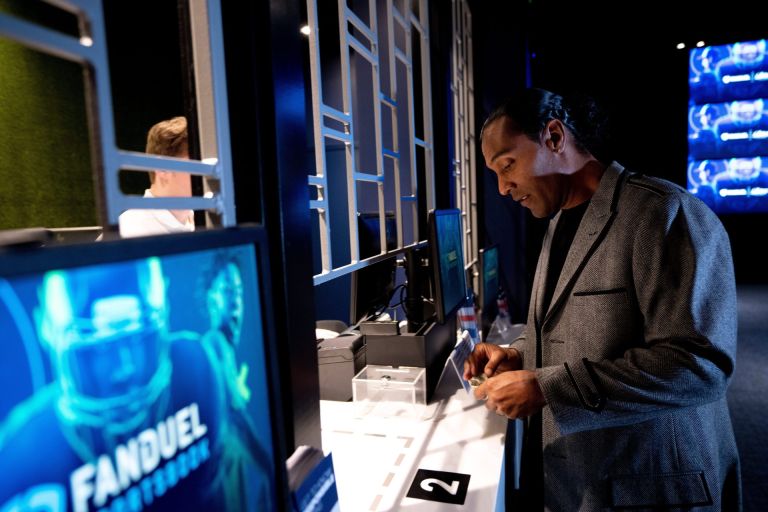
The NBA and NCAA both specifically asked the CFTC to adopt a minimum age of 21 for users to trade on sports-event contracts, something the NFL also requested.Kalshi and Polymarket allow people as young as 18 to use their platforms. Age requirements on sportsbooks, which are regulated on a state-by-state basis, can vary; FanDuel, for example, requires users in most states to be at least 21, although in Washington, D.C. and Wyoming the minimum age is 18, while DraftKings allows 18-year-old users in many states, but the age requirement goes up to 19 in Nebraska and Alabama, and 21 in Arizona, Illinois, Iowa, Louisiana, Massachusetts, and Virginia. The ATP did not specify a specific age limit, but did say the proposal failed to establish things like age and advertising restrictions.
The NCAA has maintained its blanket opposition to prediction markets, saying “a suspension of trading in collegiate sports prediction markets is prudent.” But it noted it is open to collaborating with the CFTC to develop necessary safeguards.
MLB, which since March has been in business with Polymarket through an exclusive deal, said the CFTC has taken a “positive first step” with regard to incorporating “robust integrity protections directly into regulations.” In its letter, the league voiced concerns about markets that could be susceptible to manipulation or insider trading, such as those based on what someone will say during a post-game interview or press conference, team personnel decisions, or what celebrities will attend a given game.
Like the NBA, MLB wants codified that the companies must cooperate with any league investigations, saying it “cannot accept a scenario where an exchange declines” to do so. Additionally, MLB said that its views on particular event contracts should “weigh heavily” in the CFTC’s own public interest determination.
The players unions for the NFL, MLB, NBA, NHL, and MLS want a “complete prohibition” on contracts that can be manipulated by a single person. It also wants a ban on “mention markets”on whether words such as “concussion” will be said during a live event, as well as player “under” markets, where traders profit if an athlete falls short of a statistical benchmark.
Notably, a comment letter signed by attorneys general from 44 of 50 states—including Ohio, Kentucky, New York, and Utah—was vehemently opposed to the rules as proposed, saying it is unconstitutional and “takes a sledgehammer to the States’ historic power, giving the CFTC a virtual veto over state policies.”
Download the FOS App
The business of sports, in your pocket.



Scan the QR code to get the app now.