Troy Aikman, Dolphins Have No Ongoing Consulting Agreement
Want more from Front Office Sports
in your search results?
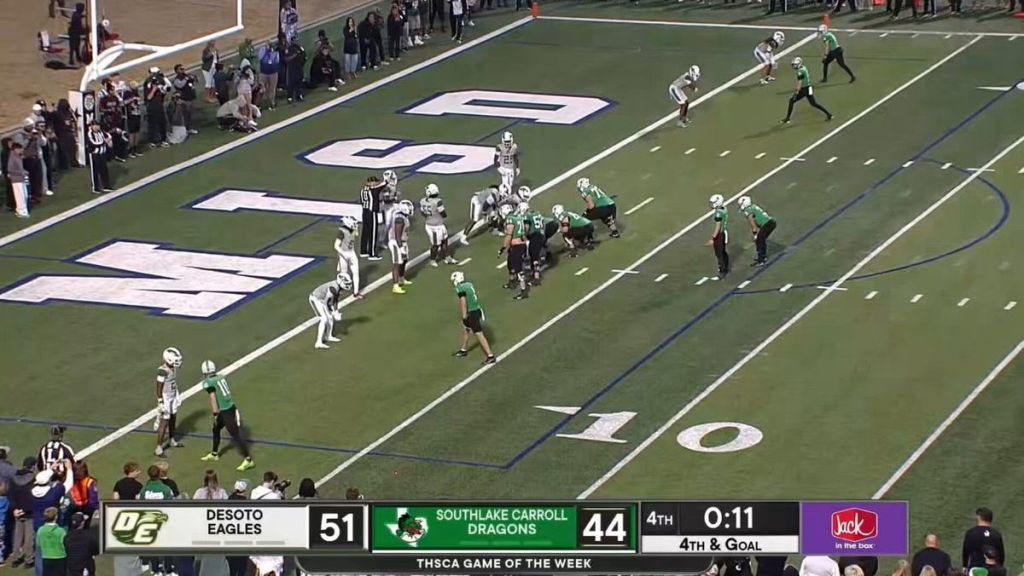
Duncanville vs. DeSoto is the kind of high school football game that attracts a crowd.
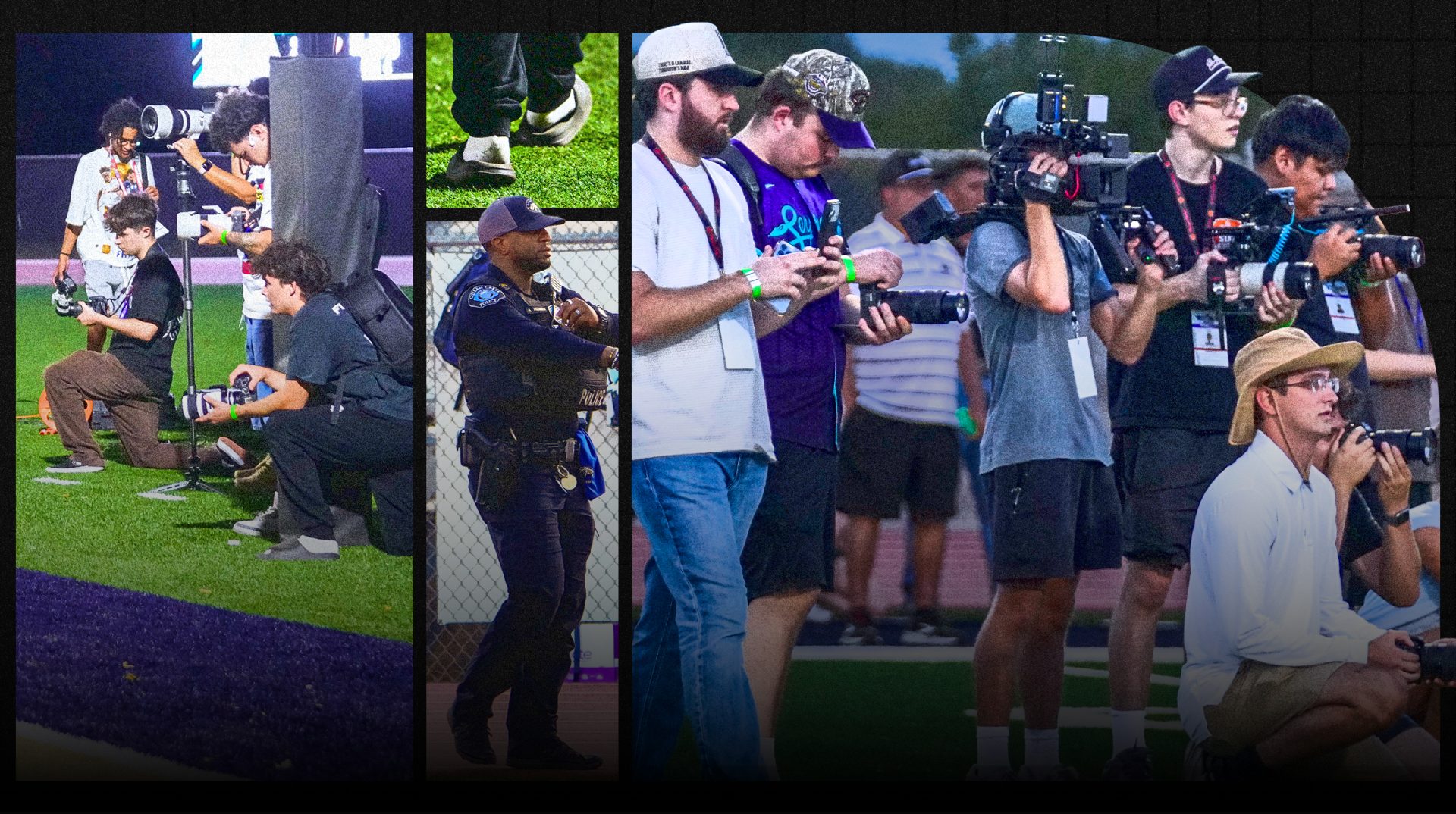
The two Texas powerhouses—separated by less than 10 miles of Dallas suburb—routinely produce dozens of high-level Division I prospects, making their matchup a marquee event on the state’s fall sports calendar. But in recent years, the sidelines have become almost as jam-packed as the stands.
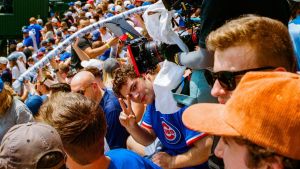
High-profile games like Duncanville-DeSoto used to draw “probably 10 to 15 members of local and regional media,” says 247Sports national recruiting analyst Mike Roach, who has been covering high school football in the South for a decade. Now, that crew can find themselves along the hash marks with “upwards of 70 or 80 other photographers and videographers.”
Front Office Sports spoke with high school administrators, coaches, and local journalists from around the country who described a similar phenomenon: Sidelines and baselines are increasingly populated with a new class of “private content creators,” often hired by players or their parents via casual, modest-sum agreements.
Social media has made sports-content creation into an accessible job—or at least a decent side hustle. Meanwhile, the proliferation of NIL opportunities throughout the high school ranks has left young athletes and their families with an insatiable appetite for personalized photos and videos. (As one AD in Ohio puts it: “Everyone has a media company now.”)
For schools and state athletic associations, this crush of creators presents a new balancing act and operational headache—accommodating the demand for more coverage while also maintaining safe, orderly playing environments. There is no universal playbook just yet.
Everyone Wants In
“Basically anyone with a cellphone” can now identify themselves as media and find a way onto the field at some schools, says Matt Stepp, a Texas high school football journalist of two decades. He began noticing an uptick in nontraditional media at games in 2021, when COVID-19 pandemic restrictions on sideline access were lifted, and NIL went into effect at the NCAA level.
In Arizona, the trend has become so pronounced that Seth Polansky, director of media services at the Arizona Interscholastic Association (AIA), tells FOS he and his colleagues have coined a term for it: the “pajama paparazzi.”
The name stems from the typical profile of these sideline seekers. Many are fresh out of high school themselves and have friend- or familial-ties to current high school athletes. As such, some often don lax attire and display unprofessional behavior, like trying to interact with players.
Roughly half of states leave high school sports media credentialing up to districts or individual schools. The other half, including Arizona, handle things at the state level. Last year, Polansky’s team received more than 300 applications from entities whose sole editorial output was a social media account or a website advertising for-hire creative services.
That volume reflects how dramatically the bar to becoming a “passable” sports photographer or videographer has lowered, Stepp says. “Ten years ago, to get a camera that captured quality-enough stuff that people would pay for, you had to spend quite a bit of money,” he explains. “Solid equipment has gotten much more affordable as of late, and parents are under the impression that any decent content will help their kid with NIL and recruiting.”
Some of these creators are also angling for longer-term rewards. “We’re seeing this evolve into people trying to attach themselves to star athletes, follow them into college, and be part of their branding team,” Polansky says.
The appeal isn’t strictly financial. For a generation raised online, content creation is seen as a coveted, mainstream career—and local sports is a logical entry point. But concerns can quickly compound when armies of amateurs descend upon the slim real estate of high school sidelines.
Crowded and Complicated
“I don’t fault these people, especially the kids, for wanting to get out there,” says Arianna Grainey, a professional photojournalist based in Arizona with a decade behind the lens. “But there’s little to no sense among them of the game, of where you can and can’t be—just general sideline etiquette, really. It’s evident that most of them haven’t had any kind of training.”
She’s seen new-media creators arrive to games with ring lights and full-size tripods—largely considered a tripping hazard—and has witnessed minor collisions caused by novice photographers setting up in places and positions (like “sitting criss-cross applesauce”) they shouldn’t.
Some administrators also have concerns about creators’ conduct around athletes and spectators who are minors.
“When someone is on the field with school-aged children, there is an assumption that they have been vetted and are O.K. to be in that position,” Chris Fisher, a teacher and offensive line coach at Ridge Point High School in Missouri City, Texas, tells FOS. “But when families start wanting to hire private people to be individual content capturers—people who aren’t representing the home or away team or an established outlet—it just increases the potential for bad actors.”
Still, the college recruiting process increasingly takes place on social platforms, with short-form content like “recruiting reels” playing an important role. So Roach of 247Sports says “there is absolutely a place for content creators” at high school events, a sentiment echoed by most other sources. In his view, the onus is on individual venues to “develop processes that weed out the legitimate from the not,” and decide what standards should apply to people who don’t fit neatly into traditional media buckets.
Drawing the Line
Polansky says Arizona became only the second state after North Carolina to mandate background checks for everyone seeking high school sideline credentials last school year. That change reduced the number of credentials issued by the AIA by about a third, from roughly 1,300 to 800. Ahead of this term, Polansky has also been requiring—and personally running—training for high-school- and college-aged photographers and videographers.
Other organizations are turning to a simpler form of gatekeeping: money.
Northgate High School in Georgia recently announced that it will begin charging a fee—up to $25—to individuals who request sporting-event media credentials but aren’t affiliated with a known local outlet or student newspaper. It’s not a lot of money, but that’s not really the point; Dean Jackson, public information officer for Northgate’s district, Coweta County Schools, tells FOS the goal of the move is to “limit field access to provide a safe and orderly game environment for our student-athletes and coaches.” (Any funds raised will go back into the athletic program.)
Elsewhere, schools and districts continue to experiment. An AD in Texas says his district is considering assigning dedicated sideline spots to legitimate media outlets, a common practice in professional sports. Other sources say they’ve advocated for state-level oversight committees.
The patchwork methods are largely a product of the dynamic nature of high school sporting events. Even when state- or district-level groups establish sound credentialing policies, individual schools, their staff, and volunteers often have final say over what happens on game day. The result can run the gamut from well-oiled machine to free-for-all.
While administrators figure out where to draw the line, Grainey is still elbowing her way through the sidelines gaggle on game nights. She says, “It’s beginning to look like a Super Bowl for our regular-season high school.”
Download the FOS App
The business of sports, in your pocket.



Scan the QR code to get the app now.