Want more from Front Office Sports
in your search results?
NEW YORK — The US Open’s partnership with Kalshi may have just been the first domino to fall in the sport.
Officials at several combined ATP and WTA tournaments tell Front Office Sports that they have received interest from prediction-market companies.
“There’s a lot of different spaces that are showing interest [in the Cincinnati Open]. Crypto is one, predictive markets is another,” Cincinnati Open tournament director Bob Moran told FOS last month. The Cincinnati Open is a combined 1000 event, often considered the warmup to the US Open, that was voted Tournament of the Year by players of both tours in 2025.
A spokesperson for the BNP Paribas Open, also known as Indian Wells, told FOS that the tournament is “open to a partnership in the prediction market category and are currently having some exploratory conversations.” Indian Wells is also a combined 1000 event and commonly referred to as the “Fifth Slam.”
Mark Ein, owner and chairman of the DC Open, told FOS that the tournament has also received “real interest” from prediction-market companies. The DC Open is the only combined 500 event on the tennis calendar.
He also said at the time of this year’s tournament, which started in late July, prediction markets were still learning how they wanted to activate at tennis events.
“It’s just that they hadn’t figured out tennis yet and what they wanted to do,” Ein said. “Obviously, tennis has been hugely popular for the betting companies, and it makes a ton of sense that it would too for the prediction markets companies. They just weren’t quite there yet.”
Both ATP and WTA rulebooks state that tennis tournaments may enter into a “sponsorship agreement” with a tennis betting operator, though there are strict guidelines, including not allowing players or members of their team to be included in any of the marketing content.
The ATP and WTA did not immediately respond to requests for comment.
FOS reached out to the other three Grand Slams, as well as several ATP and WTA tournaments held in North America.
A spokesperson for the All England Lawn Tennis Club, organizers of Wimbledon, said: “All discussions surrounding our partnership arrangements remain commercial in confidence.”
Tennis Australia and the French Tennis Federation did not immediately respond to a request for comment.
A spokesperson for the Miami Open, another combined 1000, declined to comment, saying they “don’t typically discuss partnerships until they come to fruition.” The Canadian Open, also a combined 1000, did not immediately respond to a request for comment.
The Charleston Open, a WTA 500 tournament, has not had discussions with prediction-market companies, according to Moran, who also runs the event for Beemok Sports and Entertainment.
None of the tournaments would say which prediction markets they are in discussion with. But Kalshi—which dominates the U.S. market with a 91% market share as of earlier this summer—is already in the sport, and Polymarket has also dipped into tennis after announcing a streaming rights partnership with the ATP earlier this month.
Kalshi declined to comment, while Polymarket did not respond to a request for comment.
Tennis is extremely popular with bettors globally—ranking among the world’s three most-bet-upon sports, according to Sportradar—and is historically one of the most vulnerable sports to match fixing, a key reason the International Tennis Integrity Authority was established in 2021. The ITIA—which is funded by the tennis Grand Slams, the tours, and World Tennis (formerly the International Tennis Federation)—provided the following statement to FOS:
“Betting and trading markets are evolving extremely quickly, and the emergence of prediction and other non-traditional markets bring new opportunities and risk to all sports – including tennis. Whilst commercial deals are outside of our scope, we are working closely with our funders on the identification and the management of the risks.”
Player Impact
Tennis players are not allowed to have betting companies as sponsors, and many have had a complicated relationship with the rise of sports betting. Some players have publicly discussed the abusive comments they’ve received from bettors.
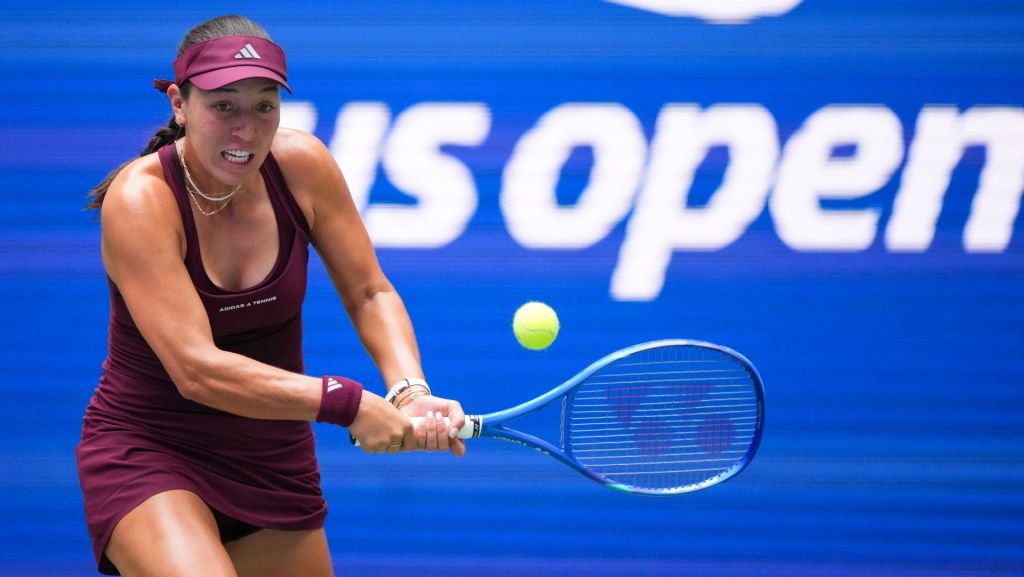
“We get a lot of negativity from people that use stuff like that, from bettors,” Jessica Pegula said Wednesday when asked by FOS about the US Open’s Kalshi partnership. “Whether you win or lose, right? It doesn’t even matter sometimes. And we get a lot of hate for it on social media, so it’s tough when you see that they’re a big sponsor behind the court or they’re on TV.”
Last year, Ukrainian star Elina Svitolina posted eight Instagram Stories showing more than a dozen users sending her abusive messages and accusing her of fixing matches. This week, former Wimbledon finalist Matteo Berrettini told “Bounces” writer Ben Rothenberg that his brother recently received threatening messages:
“They were saying, ‘Matteo is so bad, if you don’t tell him to lose, we’re going to kill your family.’ They were threatening us. Of course, we reported everything to the ATP, and they have the [threatener’s] phone number and everything.”
In each of the last two years, the WTA and World Tennis have published season-wide reports on online abuse against players. Last month’s report stated that they uncovered more than 12,000 posts that were deemed “abusive,” with nearly 4,000 labeled as “serious abuse, including violent, sexual, racist and targeted threat.”
However, many players also believe betting companies are bringing positives to the sport.
“I know it’s a big topic, obviously: tennis is making a lot of profits thanks to betting and bettors. … But at the same time, it’s all sport, tennis-connected so I guess it’s good for some people. I don’t think it is the best way to promote tennis, to promote sport. But at the same time, it’s business, so we can’t do much,” Wimbledon champion Linda Nosková told Rothenberg this week.
Pegula, one of the primary player representatives on tour, said she often goes “back and forth” with her stance on sports betting and still isn’t sure where she lands.
“I don’t really know the best way to deal with it, just because it’s kind of inevitable,” Pegula said. “It’s everywhere. That’s not really going away any time soon, especially when I look at other sports. Betting is a big part of keeping fans engaged. I don’t know. I go back and forth with that one. … It is an interesting time where you’re starting to see it creep in, especially now, more and more into tennis.”
“I don’t know. I’m not sure.”
Download the FOS App
The business of sports, in your pocket.



Scan the QR code to get the app now.