Want more from Front Office Sports
in your search results?
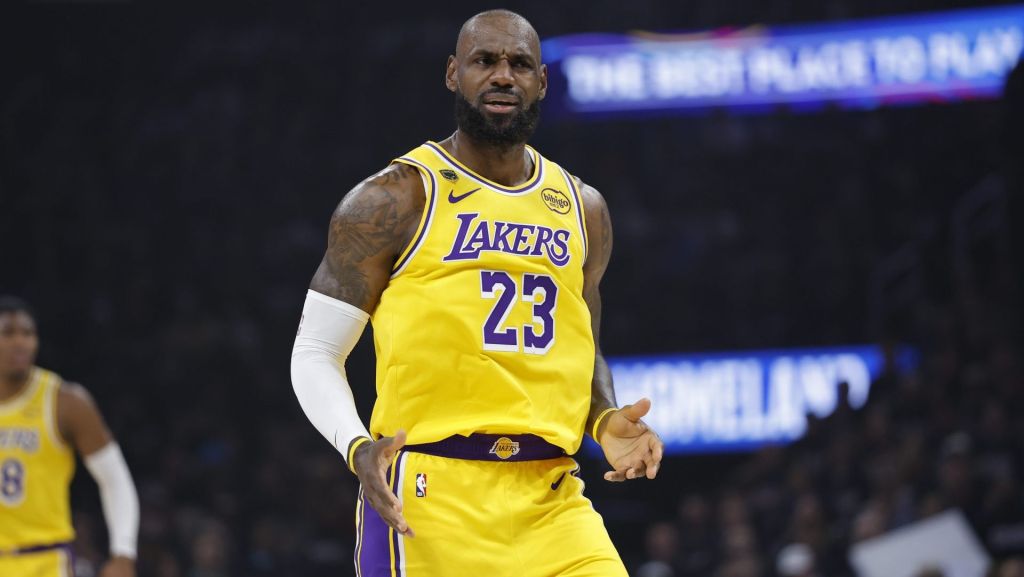
Prediction-market platforms like Kalshi and Polymarket like to bill themselves as truth machines. But LeBron James’s decision to sign with the 76ers shows there are some markets where the crowd’s consensus can be spectacularly wrong.
On Kalshi, just prior to James announcing he would join Philadelphia, roughly $226 million had been traded on which team he would choose next. In the hours leading up to James’s announcement, the 76ers were at 9%, trailing the two top contenders, the Heat and Cavaliers, as well as the Warriors. From July 2 to July 13, the Cavaliers were considered the most likely landing spot for James, although Cleveland’s chances began to dip on July 10, and Miami overtook the top spot on July 18. The Warriors’ odds were pretty low for most of the spring and summer, until a sudden spike June 30, when they shot up to almost 42%, before quickly plunging back down below 20%. In recent days, the Warriors saw another spike and sat just behind Cleveland, with Kalshi traders giving Golden State a 32.4% chance compared to the Cavaliers’ 33.7% chance.
The 76ers were at 1% until July 1, when they started ticking up as a possible destination, although it remained below 10% until roughly 20 minutes before he actually signed.
Online, it appeared as though there was a significant spike in Philadelphia’s chances, to 77%, just after 11 a.m. ET, about 20 minutes before ESPN’s Shams Charania broke the news. However, a Kalshi spokesperson tells Front Office Sports that while its platform shows odds down the minute, they aren’t always completely accurate. Kalshi uses a “smoothing algorithm, which can at times make certain market activity appear as if it happened slightly earlier or later than it did in reality,” the spokesperson says.
In this case, Kalshi says the 77% spike occurred at either 11:27 a.m. or 11:28 a.m., which is still just before Charania posted the news, but not as dramatic as it appeared on the platform to average users.
The potential for insider trading on prediction markets is one of the key concerns from detractors. Kalshi prohibits insider trading, and this year has fined and banned traders who were found to have made bets using nonpublic information (those cases have not had to do with sports). The company also refers such people to the Commodity Futures Trading Commission.
There did not appear to be equivalent late market movement on James’s next team on Polymarket’s international platform; the platform shows changes in odds in five-minute increments, while Kalshi shows such changes down to the minute.
Of the total amount of money put on where James would sign on Kalshi, $33 million was placed on Philadelphia, $27 million was put on Cleveland, $29 million was put on Golden State, and $33 million was put on Miami. Those totals account for both people who traded “yes” he would join those teams and “no” he wouldn’t, meaning they don’t indicate which team traders felt were most likely to win the James sweepstakes. But given the odds, anyone who wagered on the 41-year-old to join the Sixers likely received a nice payout relative to what they risked.
Polymarket’s international platform, which users in the U.S. can only access illegally using a VPN, saw more than $43 million in trading volume on James’s next team. As of 8 a.m. Friday, users were giving the 76ers a 7.6% chance, far behind the Heat at 47.5%. For all of June and July, right up until James signed, Philadelphia’s chances were at less than 1%. The Heat, Cavaliers, and Warriors were all heavily favored ahead of r the 76ers until Friday.
On Polymarket’s U.S. app, the total amounts that were traded are less clear, and the order book for the 76ers wasn’t available once James had picked them. Users were very vocal in the chat in the aftermath of the news. One user wrote, “only way to win in this Polymarket game is to be an insider,” while another wrote “anybody with common sense won actually.”
One prediction-market industry source tells FOS that the unpredictability of the market for where James would sign shows that there are some markets where there simply isn’t enough data for the average user to place an informed bet.
“Markets are machines that aggregate info,” the person says. “Markets like LeBron’s next team just don’t have a lot of data to go off of.”
Download the FOS App
The business of sports, in your pocket.



Scan the QR code to get the app now.