Want more from Front Office Sports
in your search results?
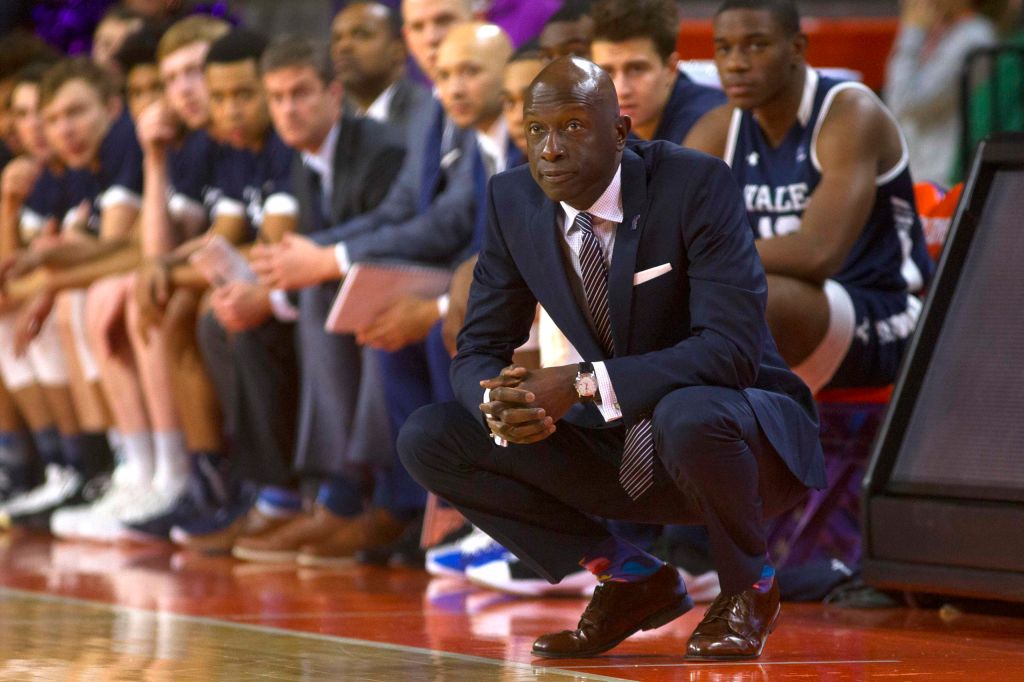
Initially cast as the overreactor or the outlier, the Ivy League wound up playing a leading role in what Big East commissioner Val Ackerman described as “the most extraordinary stretch of days I’ve ever had or ever seen in my 30-plus years of working in the sports business.”
That stretch included a sweep of college basketball cancellations, all the way up to the entire NCAA men’s and women’s tournaments and eventually, the entire spring sports calendar.
And while the Ivy League was the first to cancel its conference tournament, it was far from the last.
As Rudy Gobert was to the NBA, perhaps the league was, in the end, just the accelerator the NCAA needed.
Within 48 hours of the Ivy League’s announcement, all other conferences across the country with college basketball had canceled their respective tournaments. By Thursday afternoon, the NCAA had canceled March Madness.
There would be no postseason play – at any level.
And though it seemed that way to some – jumping the gun was actually the opposite of what the Ivy League felt it did. The conference began contingency planning for both the men’s and women’s tournaments several weeks before the decision was ultimately made.
Efforts ramped up just over a week ago, Ivy League executive director Robin Harris said, after an increased number of positive coronavirus cases arose throughout the Northeast, where all of the conference’s member institutions are located.
Regular conference calls were held with Harris and the Ivy League presidents on which a range of contingency options was “seriously considered.”
“They started the process with the intention of allowing the basketball tournaments to continue with some adjustments, possibly limited attendance,” Harris said. “We did end up announcing a policy of limited attendance for the spring, and then that changed overnight. It was such a fluid situation; it was changing daily and sometimes multiple times a day.”
READ MORE: Ticketing Industry Avoids ‘Apocalypse,’ But Still In Dangerous Times
Harris kept the presidents apprised of any updates from the NCAA and her conference AD peers, “but everyone was just looking at this. There was no real direction or guidance or definitive action from other conferences.”
The decisions of other organizations, however, came second fiddle to the policies each president’s institution implemented and the advice of the ad hoc group created within the conference, where each president appointed one expert from their campus to develop coronavirus-related recommendations to be considered by all.
The league’s focus was on getting ahead of the outbreak and imposing social distancing before the spread escalated to have a chance at “actually really impacting societal wellbeing.”
That focus was directed by individual campus working groups – composed of a range of medical, health and infection disease specialists and professionals – appointed by each president to help create policies regarding the virus. The presidents then brought the advice of their experts to their peer institutions and the league office as they considered the appropriate steps to take in regards to the tournament and athletics more broadly.
“We have a fundamental principle that we treat athletes like regular students as much as possible,” Harris explained. “That had to apply to policies regarding the coronavirus. And as our campuses were implementing policies limiting large gatherings, it quickly became apparent as we were trying to bring eight teams to one site for a basketball tournament that even if we significantly limited attendance, we would be above what the campus was allowing for other gatherings.”
The seemingly sudden and “very difficult but ultimately correct decision to cancel the tournament” was made Tuesday, two days before a single other conference took the same steps.
Massachusetts Governor Charlie Baker declared a state of emergency the same day after the 92 reported cases in the state reflected a doubling of the numbers from the day before. Harvard, the host site, then announced it was moving to virtual classes because of the coronavirus outbreak and asked all students to move out of their dorms within five days.
There couldn’t, and shouldn’t, Harris said, have been a tournament that gathered a group of people on a campus where students were being sent home to stop the spread.
“We had a lot of utterly disappointed, devastated student-athletes and coaches, understandably so, who had worked so hard for this capstone opportunity and for the opportunity to go to the NCAA tournament,” Harris said. “We were devastated by the decision as well, but it was the right decision given what we knew about the virus and the spread and the need to flatten the curve. That wasn’t even in the lexicon really on Tuesday.”
Harris fielded calls from her colleagues at other conferences, many of whom limited attendance as a first step to try before complete cancelation became the norm. Many of those tournaments were being held at off-campus venues, which changed the dynamic and decision.
She also spoke with the NCAA’s Chief Medical Officer Brian Hainline, head of the NCAA’s COVID-19 Advisory Panel, who, at the time, had not yet recommended that the league cancel its larger tournament altogether.
READ MORE: March Madness Cancellation Puts Safety Ahead of Substantial Revenue Losses
And yet, 48 hours later, nationwide cancellations in college sports swept through the country and up through the professional ranks as well.
“This has been a really difficult week for us, for everyone involved in college athletics, for everyone involved in sports generally, and for our country,” Harris said. “Everyone always wants to second guess. And we were certainly second-guessed when we canceled the basketball tournament. And everyone is saying, ‘Oh, look, the Ivy League had it right to begin with.’ But the reality is that we had it right for us.”
The Ivy League wasn’t the only conference to be second-guessed for some part of its decision-making process.
The Big East, which still tipped off from Madison Square Garden on Thursday, similarly felt scrutiny for sending its players onto the court, albeit behind closed doors, despite the other conference cancelations announced earlier that day.
St. John’s and Creighton played an entire first half before the conference called it off.
“You all can second-guess our decision to play that first half,” Ackerman told reporters Thursday afternoon. “That’s your prerogative. But I can assure you we were doing the best we could with the information we had. And when we had to make the decision – and as soon as we got the information, particularly from the city, we didn’t hesitate to do what we had to do.”
The information they had was changing by the minute. Still, the decision was ultimately made when Ackerman learned of New York City’s pending announcement banning public gatherings of more than 500 people.
“I was able to connect with one of the other conference commissioners, just because I wanted to understand their thinking, and he said that for his conference it was largely driven by directives that he was getting from the municipality in which their conference tournament is being played,” Ackerman said at that press conference. “So I then reached out to a contact that I had established over the last week with the City of New York, in the Office of Emergency Management and learned that New York City [was], in fact, very shortly going to be bringing forward directives related to large gatherings. So [that] had not yet hit.”
The decision was as difficult for Ackerman as it was for Harris. As Ackerman noted, “few of the people running sports leagues or sports organizations are qualified medical professionals.” They not only had to rely on the recommendations of others but also brace for the disappointment they were sure to hear.
“I’ve got to tell you; it breaks my heart,” Ackerman said on Thursday. “But we respect the decision of authorities. We’re very mindful about what’s happening nationally. We do not want to be imprudent as it relates to the safety of our participants and our fans. And it’s terrifying, frankly, what’s evolving here as the science and the assessments of the science are progressing. And I don’t think any of us know what’s going to happen tomorrow.”
Download the FOS App
The business of sports, in your pocket.



Scan the QR code to get the app now.