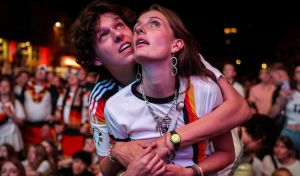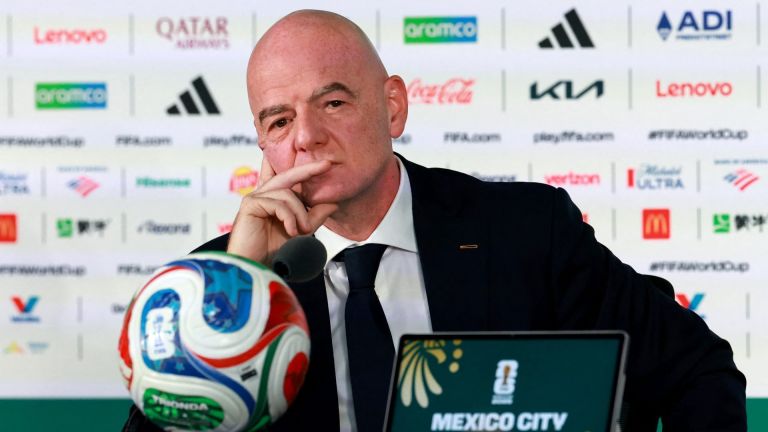
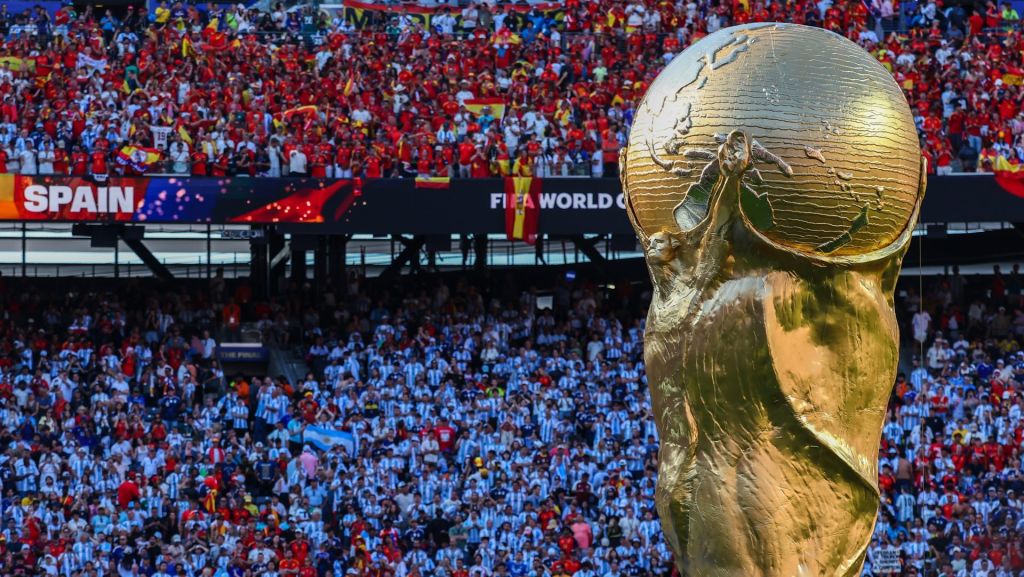
The largest and most lucrative World Cup ever is over.
FIFA’s expanded 48-team, 104-match tournament across the U.S., Mexico, and Canada is estimated to have made $15 billion in revenue. Off the pitch, the tournament was defined by travel and visa issues, high ticket prices, and a presidential intervention on behalf of the biggest host nation. On the pitch, teams given a chance in the expanded tournament punched above their weight but also lashed out against the referees in the later stages.
Now that the tournament is done, FIFA faces major decisions. Its U.S. media-rights deals with Fox and Telemundo are up. Its leaders are considering expanding the tournament further. It must decide whether to keep or ditch changes in video refereeing, hydration breaks, and dynamic ticket pricing.
The next men’s World Cup in 2030 will be spread across six countries. To commemorate the 100th anniversary of the first World Cup, the tournament will open at Estadio Centenario in Uruguay, and also play one match each in Argentina and Paraguay before heading across the Atlantic. Spain, Morocco, and Portugal will split the vast majority of matches, with the location of the final yet to be announced.
Based on what we learned from the 2026 tournament, here’s a realistic wish list of things Front Office Sports staff would like to see in 2030.
Move On From 48 Teams
The expansion of the tournament from 32 teams to 48 was a qualified success. Cape Verde, the Democratic Republic of Congo, and New Zealand all showed soccer’s talent pool is deep enough to sustain a bigger competition. There were few thrashings, and most teams committed to at least some attacking play.
The problem was whittling 48 teams down to 32. It was unfair that some teams began their final round of group matches without a clear idea of what was required to qualify for the round of 32, while others knew the exact equation. For example, it was fortunate that the Austria-Algeria game—where both teams knew a draw would send them through—was played before the tournament fully plunged into conspiracy theorizing.
There is no possibility of a return to 32 teams, given the impact that this would have on FIFA’s revenue. So, instead, 2030 should feature 64 teams.
This would make qualifying an even lengthier process for plenty of teams, particularly in Europe. And by making an already enormous tournament even bigger, it would reduce the pool of potential hosts.
However, 64 teams divide cleanly into 16 groups of 4, from which the top 2 would qualify for the round of 32. The total number of matches would rise from 104 to 128, but the tournament wouldn’t need to last any longer: The number of days with six matches would simply need to increase from 4 to 16. And crucially, every team would enter the final round of group-stage matches knowing exactly what they needed to do to progress. —Mike Jakeman
Fix the Third-Place Game …
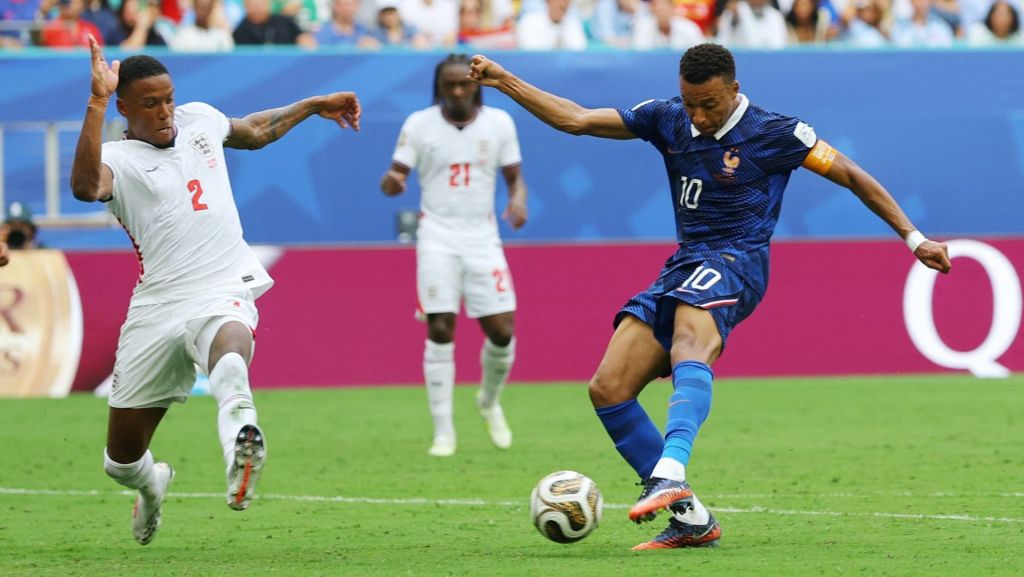
For 40 minutes or so, France was completely checked out of the third-place game, letting England pelt it with four goals in 40 minutes before remembering that it had Kylian Mbappé. Then it was England’s turn to start longingly looking at a cold beer and a plane ticket, surrendering four goals of its own in a second half that mercifully concluded with a deeply unserious 6–4 scoreline and no extra time.
If the game is going to be played at all, it needs to have higher stakes than awards races and a $4 million difference in prize money.
The solution is simple, and would mildly help with another problem in global soccer: Give the bronze medalists—along with the two finalists—automatic qualification to the next World Cup. FIFA clearly has no problem doling out automatic slots like candy, as it’s giving away six to the hosts in 2030, and previously auto-qualified the defending champions until 2002.
It would be an injection of major stakes into a game that “no one wants to play in,” as England coach Thomas Tuchel called it this year. And avoiding onerous qualifying tournaments would mean more rest and relaxation for the world’s best players, a serious problem that isn’t going anywhere as greedy organizers keep packing their schedules with more and more games. —Dennis Young
… But Leave Offside Just As It Is
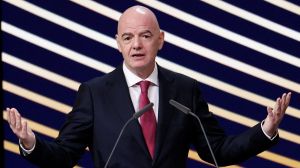
FIFA president Gianni Infantino has not been shy about his intentions for the future of the World Cup. He wants 64 teams, and he doesn’t really care whether it’s played in the winter if it means a few petrodollars are on offer.
Now the tournament has been played in America, the nation that loves to boast about how it’s too stupid to understand the concept of offside even though two of its four biggest sports have an extremely similar rule with an identical name. And Infantino appears eager to accommodate. “We will see if the offside law is going to change or not and give more advantage to the attackers,” he told a Scottish TV station after the final.
Infantino was telegraphing his support for Arsène Wenger’s “daylight” offside proposal, which is currently being tested on FIFA’s behalf in Canada and would mean offensive players would be offside only if their entire body was in an offside position. (The current rule has a player offside if any part of their body that can legally score is past the second-to-last defender.)
Former Premier League ref Graham Scott—largely a VAR skeptic—previously told FOS that semi-automated offside enforcement was “one of the best things about this World Cup,” moving much faster than painstakingly slow reviews in England. Implementing Wenger’s proposal would just move the same review problem a few inches forward and leave teams defending even more conservatively. —Dennis Young
Don’t Put Matches Behind a Paywall
In a fractured media landscape where big games are auctioned off to the highest bidder, the World Cup is remarkably accessible. Fox put 70 of the 104 matches free over the air. Telemundo had 92. In other countries, including the U.K., all matches were free.
FIFA loves this dynamic. Infantino often talks of the billions of viewers who watch matches from home.
Yet it is also remarkable that FIFA hasn’t tapped into the full potential of the lucrative U.S. media market yet. Fox paid FIFA only $485 million for English-language tournament rights in the U.S., and FIFA will be able to sell those for a lot more next time around. FOS previously reported that bidding could start at $1 billion.
If FIFA wants to break up the tournament and bring in multiple media partners, so be it. Competition and variety could be a good thing. Telemundo had a great tournament in part because some English-speaking viewers preferred it to Fox’s coverage.
But it would be a shame to put the World Cup behind paywalls, as it’s already doing for the next two Women’s World Cups on Netflix. FIFA will undoubtedly make more money from 2030 media rights than it did from 2026—especially if it keeps hydration/commercial breaks—and it doesn’t need to make fans shoulder any of the burden. All that would do is halt the excitement around the tournament and fervor for soccer in its most lucrative market, where it could come back and fill up its coffers again in 2038.
Unless the streamers are going to offer most games for free, FIFA should keep the tournament on traditional TV networks. —Margaret Fleming
Give Teams VAR Challenges
VAR was a blight on the 2026 World Cup. Its application continued to sacrifice on-pitch drama for off-field certainty: Moments of great skill continue to be struck off because of the advantage given by an errant toe or shirt sleeve. But FIFA has decided that supremacy accuracy should be given precedence over the spirit of the game, and it’s unlikely this particular genie can be coaxed back into its bottle.
Initially, VAR was meant to rectify refereeing howlers. Now, with the tech here to stay, the bigger problem is the inconsistency with which it is called upon.
Making matters worse, on-field referees and VAR officials had been given different instructions. Before the tournament, FIFA told refs on the pitch to be lenient with tackling to maintain the pace of the game, while VAR officials were allowed to use frame-by-frame replays to examine clashes between players. This produced two different standards of officiating.
Given this ambiguity, players began to pester referees to use VAR to look at tackles and fouls both real and imagined, leading to the slow but steady erosion of the on-field referee’s authority, and an even greater reliance on VAR.
If we accept that FIFA remains wedded to the use of technology in officiating, the best way forward in 2030 has been proposed by U.S. soccer writer Ryan Rosenblatt. He has suggested that each team be given a small number of VAR challenges per match, just like in tennis or cricket, and they then choose when to use them.
By putting this choice in the hands of the team captain or the coach, it would immediately eliminate any notion that VAR was being used selectively by referees. It would also put a limit on the length of matches, which are currently being strung out to two hours or longer because of VAR checks and subsequent added-on time. —Mike Jakeman
Set a Ticket Strategy That Reflects European Soccer Culture
FIFA’s bet on introducing dynamic pricing for World Cup tickets proved to be a masterstroke for the governing body. Prices fluctuated during the tournament as the draw unfolded, but final figures will confirm attendances were strong and ticket revenue will prove enormous.
The majority of the matches were in the U.S., a wealthy country with a huge consumer market that already accepts very high ticket prices for sporting and cultural events. None of these characteristics apply to Spain, Portugal, or Morocco, the primary hosts in 2030. GDP per head in the U.S. is approximately $90,000; in Spain, which is likely to fulfill the U.S.’s role in 2030, it is less than $60,000. The combined population of these three countries is little more than one-quarter of that of the U.S. The fans in these countries simply aren’t equipped to absorb the exorbitant ticket prices seen at this year’s tournament.
It is also worth noting that the European governing body, UEFA, is engaged in a long-term arm wrestle with FIFA for control of the sport. In its attempt to differentiate itself from FIFA, UEFA has sought to align itself with fan protests over FIFA’s ticket strategy. UEFA has already ruled out dynamic pricing for its Euro 2028 tournament, and insisted that tickets can be resold at only face value; the prices in the U.K. and Ireland are sure to be contrasted to FIFA’s approach to ticketing in 2030.
FIFA has increasingly taken the World Cup to destinations where soccer is a small or minority sport in a bid to grow its global popularity. In 2030, it will land in three nations that are already converted. If it prices its tickets affordably, FIFA can argue it is honoring the working-class traditions of European soccer during the tournament’s centenary. Or it can continue to push the World Cup as a luxury experience for the few. —Mike Jakeman
Keep the Pre-Match Changes
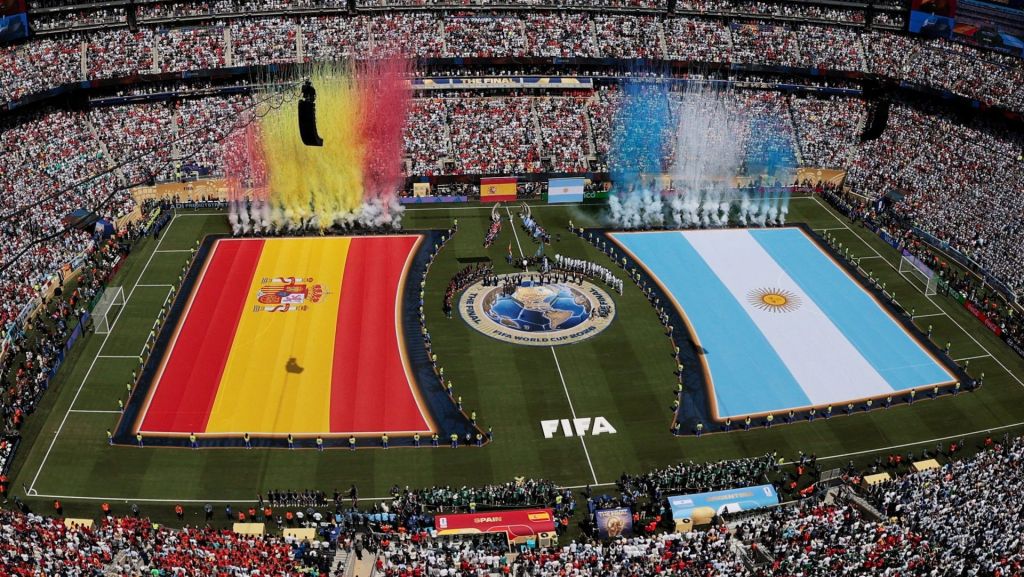
One thing FIFA got right at this tournament was its pre-match ritual. The flag banners on the pitch during the national anthems were much larger than in previous tournaments, each taking up nearly half of the field. They looked fantastic in the stadium and on TV.
The other positive change was having the whole squad on the pitch for the anthems, rather than just the starting 11. Considering 999 of 1,248 rostered players appeared in at least one group stage match, it doesn’t make sense to give only the starters that experience. The players also formed a circle instead of a straight line.
FIFA will switch up its songs and spectacle to keep every tournament fresh, but it should keep the giant flags and the full squads as a permanent part of its national anthems. Both met the moment of the World Cup every time. —Margaret Fleming
Bring Back the Golden Goal
Nobody is ever going to accuse the World Cup of lacking drama—especially in the tournament’s later rounds. But even its biggest moments can feel a bit anticlimactic if they happen to occur after a match’s first 90 minutes.
Take for instance Ferran Torres’s game-winning goal for Spain in the 106th minute of the final against Argentina. Rather than the score putting an exclamation mark on one of the most exciting World Cups we’ve ever seen, both teams returned to play another 14 minutes before waiting for the referee’s whistle to decide when stoppage time was over.
Contrast that with the finish to this year’s men’s hockey gold medal game at the Olympics. Thanks to the golden goal, everybody in the arena knew that as soon as Jack Hughes scored in overtime, the game was over and Team USA had won. Would the moment have been as memorable if the U.S. had to spend another 18 minutes playing keep-away from Canada? I doubt it.
Even taking away personal preferences, the biggest problem with soccer’s extra time rules is the confusion. Even though the World Cup eliminated the golden goal after previously using it from 1994 to 2002, most sports fans (particularly in the U.S.) are predisposed to a score after regulation meaning the game is over. Anecdotally, I’m in a group chat with several die-hard soccer fans (including some reporters), many of whom had to remind themselves of the post-regulation rules when Germany and Paraguay played the first extra time of this year’s tournament.
One of the beauties of watching soccer is that so much of it is intuitive. You don’t need to spend your Saturday mornings watching the Premier League to understand that Spain’s defense is suffocating or that Erling Haaland is a menace in the open field. But the part where a team scores a goal in extra time and then has to keep playing? That inherently goes against what many of us as sports fans have been trained to feel when such a moment occurs. —Ben Axelrod