Want more from Front Office Sports
in your search results?
The WNBA has a robust expansion plan in place. The league went from 12 teams in 2024 to 15 teams this year—and will climb to 18 teams by 2030.
Since announcing three new teams last year, the league has not had any messaging about additional expansion. But that didn’t stop a Vancouver-based group from going public last week about its desire to build the WNBA’s 19th franchise.
The group, led by retired business executive Bill Bakk, said it has yet to submit a formal bid to the WNBA, but is hoping to solidify its plan this year or next. Under its current timeline, it projects to bring a team to Vancouver in 2031, which would be the year after the latest round of expansion ends with the return of a WNBA franchise to Detroit.
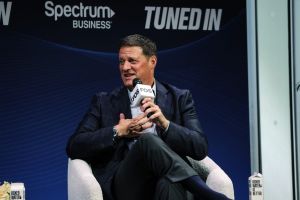
In an interview with Front Office Sports this week, Bakk and Deloitte managing partner Jodi Evans went into greater detail about their vision, adding that they are flexible on the timing of a new franchise based on the opportunity that opens up. Bakk said they are even open to the possibility of an existing team relocating to Vancouver.
“We want to be ready,” Bakk said. “You never know in the world of sports as to when franchises move. I know that’s not something that will probably happen here. But nevertheless, our standing line is we want to be ready for whatever reason in that period of time.”
A source familiar with the league’s decision-making says it has no further expansion plans beyond what has been announced. Commissioner Cathy Engelbert said in 2024 that she evaluated about a dozen cities before eventually announcing Cleveland (2028), Philadelphia (2029), and Detroit (2030). But since then, conversations around expansion have gone quiet, at least publicly.
However, Bakk says he’s spoken to numerous people “in the ecosystem of the WNBA,” including other team owners, who have reassured him that a Vancouver expansion team is feasible.
“Nothing along the way there says we’re crazy on our goals,” Bakk said. “There’s certainly a challenge. Nothing is formally announced. That’s O.K. with us.”
Expansion Plans
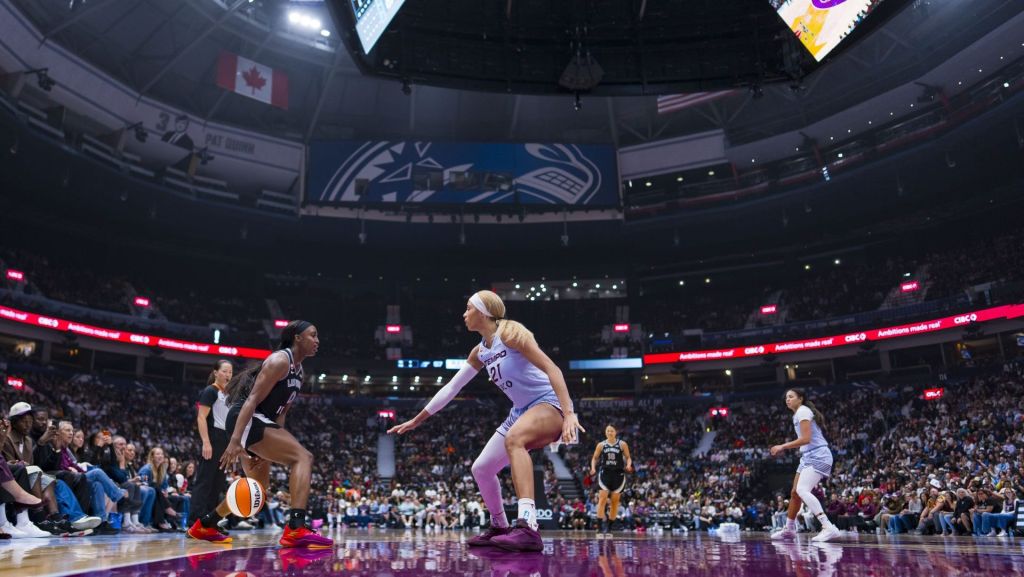
Vancouver is an intriguing option, especially as Engelbert, along with many other WNBA voices, have hinted that globalization is the next growth opportunity for the league. The WNBA has played three games in Vancouver over the past two seasons, including the first regular-season game outside of the U.S. in August 2025.
However, it would create somewhat of a geographical bottleneck, as three WNBA franchises would be in the Pacific Northwest region (along with the Portland Fire and Seattle Storm). The Southeast region of the U.S. remains rather empty outside of the Atlanta Dream.
Bakk’s group is seeking around $500 million CAD ($350 million USD) to fund its bid, which it estimates will cover the expansion fee and practice facility. Evans is pegging the expansion fee at around $250 million, with the excess to fund a practice facility.
In 2023, when the Valkyries were announced as the league’s first expansion team in nearly two decades, the expansion fee was $50 million. The fee grew to $250 million just two years later amid the league’s exponential growth, while the Connecticut Sun, who will be moved to Houston next year, were purchased for $300 million in March.
The Golden State Valkyries are already projected by CNBC to be worth $1 billion despite less than two full seasons in the WNBA.
The aspiring Vancouver group has yet to secure any official investors or sponsors, but Bakk says there is “highly interested” money on the table. He recognizes, however, the need for investors who have an ownership stake in other major professional sports franchises to be a part of the group.
“One of the other investors, dominant potential investors, has said that we need to have that skill set in our group,” Bakk said.
The WNBA has skewed toward markets with ties to NBA team ownership for its expansion franchises. Teams in Golden State, Houston, Cleveland, Philadelphia, and Detroit are owned by the same owners as the NBA teams in those cities, while the ownership groups in Toronto and Portland have ties to NBA franchises. (The NBA owns 42% of the WNBA, while several NBA owners have separate equity stakes in the league.)
A key reason is due to infrastructure, as many WNBA teams share arenas and practice facilities with their NBA counterparts. But there is no NBA team in Vancouver. The city infamously had the Grizzlies for six seasons before relocating to Memphis in 2001. The NHL’s Canucks and MLS’s Whitecaps are the only major men’s franchises in Vancouver.
Bakk says that Rogers Arena, the home of the Canucks—which is also owned by the team—is the leading option to hold the potential WNBA Vancouver team’s games. The arena has already hosted three WNBA games, including the first WNBA game played outside the U.S. in August 2025.
There is another option—the Pacific Coliseum, where the PWHL’s Vancouver Goldeneyes play—though he expects renovations may be needed before bringing a WNBA franchise. He’s not yet aware if there will need to be renovations done to the 19,000-seat Rogers Arena to accommodate a WNBA franchise.
“That is part of the discussions,” Bakk said of Rogers Arena. “We do know that they’re very happy to entertain the placement of games in their facility.”
The group is actively exploring areas to build a practice facility, primarily focused on a large portion of government-owned land around the Pacific Coliseum, which is about three miles east of Rogers Arena. It is also examining opportunities to create mixed-use facilities, similar to what franchises like the Toronto Tempo and Chicago Sky have done, so it could be used during the lengthy WNBA offseason.
Ultimately, any decision on additional WNBA expansion falls in the hands of the league’s next commissioner. Engelbert announced last month that she will retire at the end of this season. Evans is optimistic the league’s next head will be looking to expand again.
“These expansion teams that are coming down, they’re part of the legacy of the current commissioner,” said Evans, who also said she does not have a relationship with Engelbert despite overlapping at Deloitte. “So a new person coming in, how are they going to look at it? I just think it has to happen, and I don’t think they’re at the breaking point. I think there’s a lot of opportunity still.”
Download the FOS App
The business of sports, in your pocket.



Scan the QR code to get the app now.