Want more from Front Office Sports
in your search results?
SEATTLE — After initially confirming Folarin Balogun would be out for the U.S. men’s national team’s round-of-16 match in Seattle on Monday against Belgium, FIFA abruptly reversed course Sunday, announcing a suspension of the striker’s one-match ban.
FIFA hasn’t given any sort of detailed explanation about why it reconsidered or overturned the red card given in Wednesday’s round-of-32 win over Bosnia and Herzegovina, and the move is nearly without recent precedent. One of its own vice presidents reportedly called it an “utter disgrace.”
The U.S. staged a full lobbying campaign.
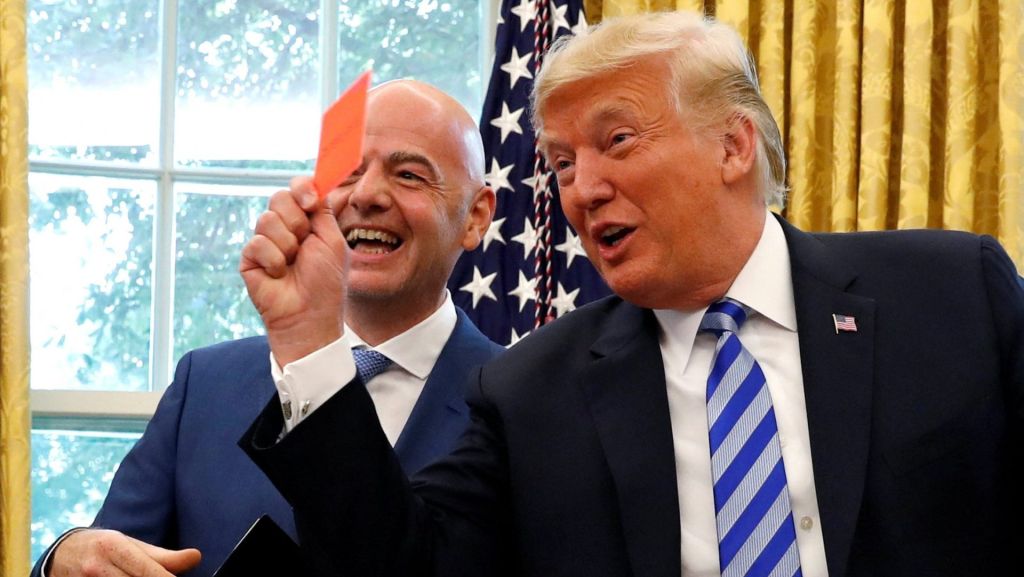
President Donald Trump called FIFA three times about it, including bringing up the referee’s past allegations of match fixing, according to The New York Times. The government assembled lawyers to help U.S. Soccer make its case about the misuse of slow-motion replay to hand out the red card. The federation also threatened to take the case to the Court of Arbitration for Sport, according to the New York Post.
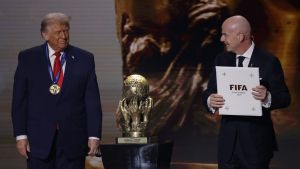
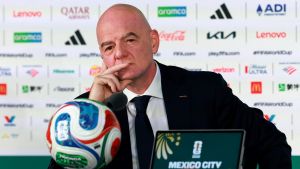
FIFA president Gianni Infantino has a close relationship with Trump, having rented FIFA office space at Trump Tower in New York, accompanied him on official trips, advocated for him to win the Nobel Peace Prize, and created the FIFA Peace Prize for him.
Belgium is upset, and FIFA on Monday dismissed the federation’s challenge against Balogun’s eligibility. The striker who has scored three goals for the U.S. this tournament can play Monday night in Seattle.
The U.S. Stance
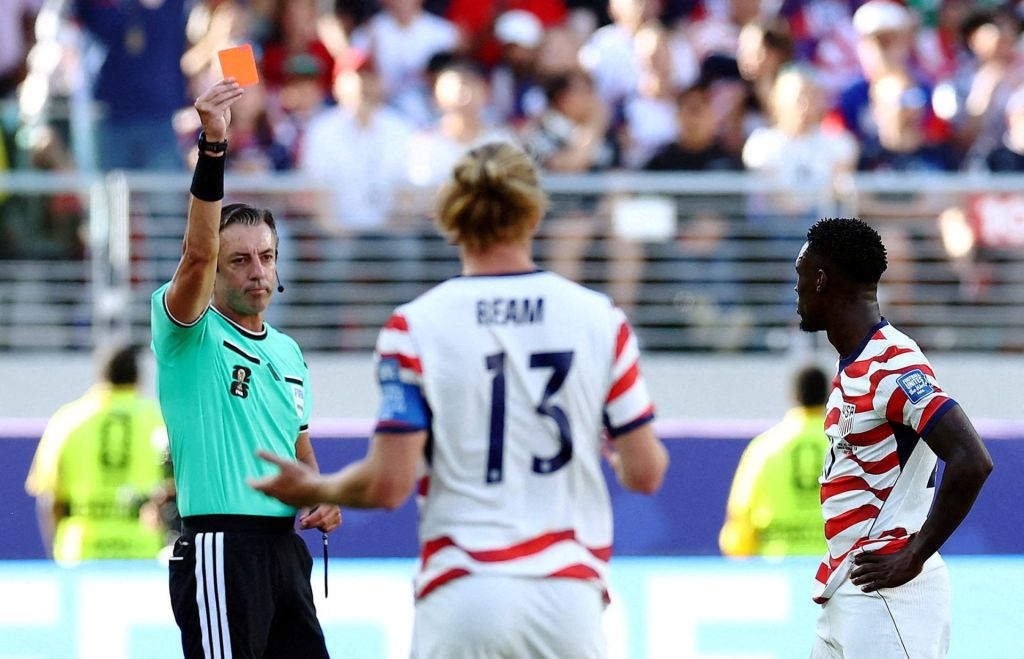
On Wednesday night, Balogun stepped on opponent Tarik Muharemović’s ankle while falling. The referee did not call a foul at all on the field, but then the VAR team showed them Balogun’s fall in slow motion. VAR rules say that slow motion should not be used to determine the intensity of a play, and those decisions should be made using footage shown at normal speed. But the effect on Muharemović’s ankle looked severe in still images and slow motion, and Balogun was given a red card.
Trump told reporters Monday that he called FIFA and asked for a review of the one-game ban. He told reporters Balogun’s collision “wasn’t a foul, that wasn’t even an infraction.” He said he “didn’t know” what a red card meant, openly asking, “How do you penalize them for a game that hasn’t been played yet?” The president confirmed that he brought up the slow-motion VAR decisions and referee’s history.
“All I did was ask for a review,” Trump said. “I didn’t say, ‘You have to do this.’”
U.S. coach Mauricio Pochettino said FIFA’s suspension is “very good for football” because now teams can try to reverse an unfair decision that happens on the pitch. He also said, “If anyone was harmed in this whole situation, it was the United States,” because the team had to play with 10 men for most of the second half.
A U.S. government official familiar with the situation tells Front Office Sports they believe FIFA is “standing up for fair play” and “correcting an injustice” with its suspension, because they say the original procedure for awarding Balogun the red card was flawed. They also say they “haven’t really paid attention” to the largely European backlash, and suggested those organizations could be acting in their own best interests.
Europeans Furious
Belgian players, coaches, and administrators have been outraged by the last-second reversal, and the country’s Royal Belgian Football Association says FIFA has provided no details justifying the move.
Belgium, which argued the decision violates FIFA’s competition regulations that call for an automatic suspension from the next match after a red card, said it asked for more details. But FIFA turned that inquiry into a formal appeal process—one that would be inadmissible under FIFA’s own rules because Belgium hadn’t received a “reasoned decision” for the suspension yet, the federation said. Still, Belgium challenged Balogun’s eligibility for the match, which FIFA dismissed as “inadmissible” on Monday, saying the federation “is not a party to the proceedings and, as such, has no standing to appeal the decision.”
Many major soccer figures in Europe have come out against the decision.
UEFA released an incendiary statement, saying FIFA’s “unprecedented, incomprehensible and unjustifiable decision” to suspend Balogun’s one-match ban “crossed a red line.” Norway coach Ståle Solbakken called it “a bad, bad, bad, bad, bad decision that will hurt the World Cup,” and said he feels sorry for the U.S. team because “if they win, it will always be that will hang in the balance of it.”
Even former FIFA president Sepp Blatter—whose leadership saw major criminal investigations and corruption convictions—wrote on social media: “Football must never become a playground for political power.”
FIFA’s Muddy Explanation
In its statement announcing the news, FIFA’s disciplinary committee did not say in its decision why it was suspending Balogun having to sit out a match “for a probationary period” of a year, other than by citing Article 27 of its disciplinary code that it claims allows it to do so.
“The judicial body may decide to fully or partially suspend the implementation of a disciplinary measure,” reads the first subpoint of Article 27, the same justification that FIFA cited in November when imposing a similar controversial stay for Cristiano Ronaldo. The Portugal captain got a red card in World Cup qualifying that would’ve kept him out of two group-stage matches.
The global governing body did not answer questions from FOS about what prompted the review in Balogun’s case.
“That appearance of bias is destabilizing to the integrity of FIFA and the tournament,” UCLA law professor Steven Bank tells FOS. “By not providing a rationale, some explanation of why this particular red card was handled this way, and the context you provide about Infantino’s actions toward Trump in the past several years, it all creates this picture that is problematic.”
Infantino reiterated in a statement on Monday that FIFA’s disciplinary committee is an independent body, and he talked to Trump and explained the legal process.
“I read the decisions of the FIFA Disciplinary Committee when they are issued. Sometimes I am surprised by them. Sometimes I agree with them, and sometimes I disagree,” Infantino said.
“What I always do, however, is respect those decisions and the autonomy of the bodies that make them. Whether we personally like a decision or not is irrelevant. Respect for independent institutions and the rule of law is what protects the integrity of our competitions and the credibility of FIFA at all times.”
Later Monday afternoon, FIFA released an unsigned “Statement from the Chairperson of the FIFA Disciplinary Committee,” who was unnamed but is Mohammad Al Kamali of the United Arab Emirates.
The 13-point statement explained little about FIFA’s process and reasoning, but it did add that Balogun was being fined $40,000 in part because he entered the field for a victory celebration despite his ejection.
The statement alluded to how FIFA let Ronaldo play, saying that such a move “is not unprecedented, as similar decisions have previously been issued during the FIFA World Cup 2026 qualifiers.”
It repeatedly emphasized that the card itself was not overturned, only the suspension, and added that such disciplinary reviews were common in “the majority of top-tier leagues.”
What Happens Next?
Much has been made about Article 27, and whether FIFA is cementing a dangerous precedent started by the Ronaldo decision by invoking it for a red card in the middle of the World Cup.
According to OutKick founder Clay Travis, the disciplinary committee “agreed the penalty was incorrectly given,” and therefore rescinded it under Article 27. But some have argued that Article 27 shouldn’t apply to a red card at all.
Either way, FIFA has opened a can of worms. The only other red card to be rescinded during a World Cup came in 1962, when Brazilian legend Garrincha was allowed to play in the final after being shown a red card in the semifinal, a decision that was widely believed to be impacted by political considerations and perhaps even bribery.
Other countries are seeing their own opportunities after Balogun’s mid-tournament turnaround.
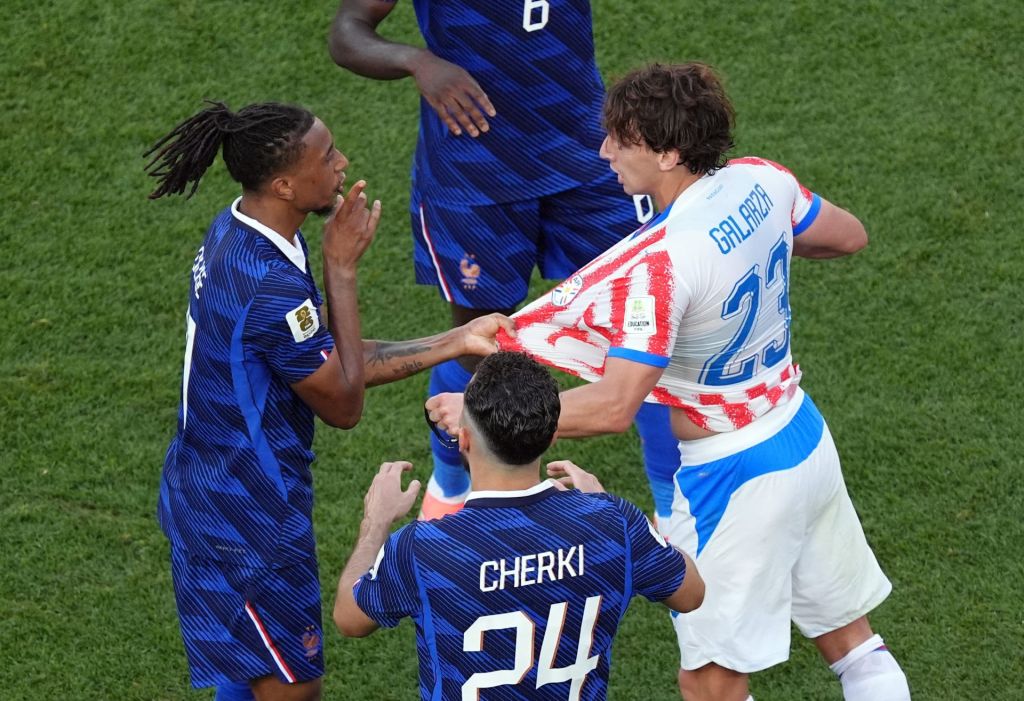
France is now appealing its own yellow card given to Michael Olise in Saturday’s win over Paraguay. (Any player who gets a second yellow in a quarterfinal will be suspended for the semifinal, and a long list of stars beyond Olise have one yellow on their record as of Monday.) The French federation claims the move is not a direct reaction to Balogun’s suspension, The Athletic reported, but the timing is undeniable. A British lawmaker has asked FIFA to suspend the red-card punishment for English player Jarell Quansah, citing the Balogun decision.
Belgium said it still contests Balogun playing despite its denied appeal, and has the option to take its case to the Court of Arbitration for Sport, though any decision at CAS would not come before Monday’s game.
Download the FOS App
The business of sports, in your pocket.



Scan the QR code to get the app now.