The youth sports industrial complex has gotten a lot of bad press lately.
This month, parents filed a proposed class-action lawsuit against youth hockey operator Black Bear Sports Group, claiming the company—the sports arm of Blackstreet Capital—coerces families into using designated hotels, charges undisclosed fees, and collects kickbacks from hotel partners. It’s just one example of the pushback to private equity’s rush into the youth sports ecosystem.
The Aspen Institute estimates U.S. families spend $40 billion a year on their children’s sports activities, which includes club teams, travel tournaments, training academies, expensive gear, and technology platforms. For some sports, average annual costs exceed $1,000 and can reach into the five figures. The total amount spent on one child’s sport per season was $935 in 2022, compared with $883 before the COVID-19 pandemic, an increase of nearly 6%, according to the Aspen report.
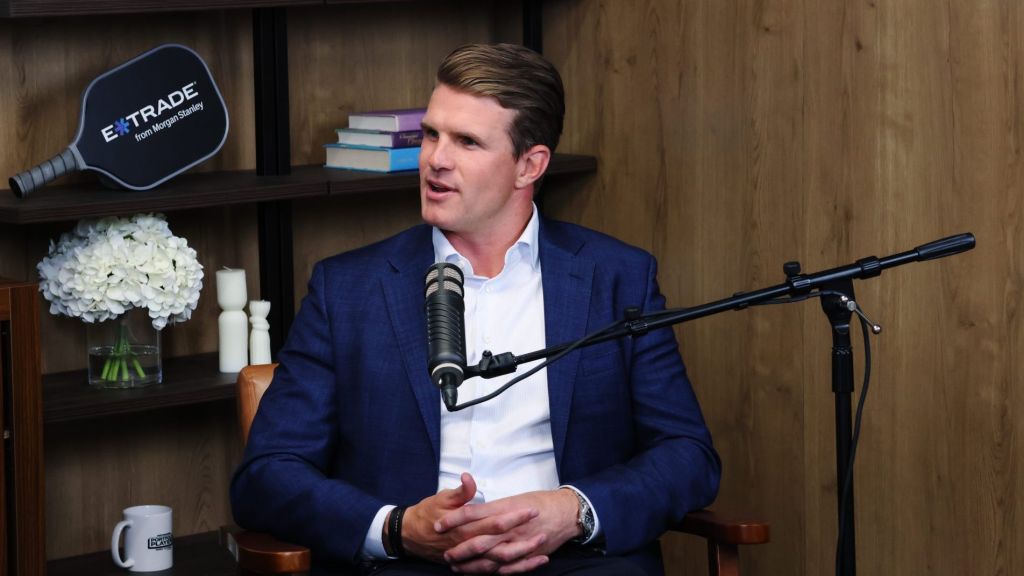
Drew Weatherford, former FSU quarterback and founder of private investment firm Weatherford Capital with his brothers, says youth sports—and the tournament system—is “fundamentally about the most inefficient way that you can run a network of anything,” and that private equity can fix it.
“I believe that the right type of capital coming in, that has a long-term vision, that wants to increase access—this idea that private capital is going to come in and create less access, that doesn’t make sense fundamentally,” he told Front Office Sports in a recent episode of Portfolio Players. “We want to grow participation.”
Critics of the PE push extend as high as Capitol Hill. In May, lawmakers introduced legislation that would ban private equity from youth sports altogether.
Weatherford, whose firm is invested in youth baseball platform Curve Sports, defends the influx of investment dollars into the space. Pro sports leagues and teams understand the value of youth sports, he says, “but they’re not fully integrated and they need partners like us to build things of scale, to help vertically integrate, and rationalize what is a really massive market but one that’s also really fragmented.”
Streaming games is a big target area Weatherford sees as ripe for an upgrade, with camera systems becoming more affordable and higher quality. “The reason why I’m really bullish on that is I do believe that in the same way that professional sports has commercialized and institutionalized—and colleges in the midst of it—that’s going to happen at the youth level. And you need streaming, right?”
Weatherford is one among many private equity investors who have poured into the space.
Unrivaled Sports, the youth sports holding company of PE billionaires Josh Harris and David Blitzer, has built a portfolio of more than 20 companies that includes flag football. Last year, KKR-backed PlayOn bought high school sports information provider MaxPreps, which features information about 29 different sports and covers roughly 28,900 high schools across all 50 U.S. states.
One problem with youth sports now, Weatherford says, is that kids participate and practice at a local or community level, but then they play competitively in tournaments where they have to pay for travel and lodging elsewhere, sometimes even out of state—a source of financial stress for families.
“I believe that Curve, by rolling up these clubs, is creating more value for the athletes,” he says. “I believe there’s a lot of efficiencies and a lot of value that can be created at scale, for youth baseball clubs. But that’s true for all youth sports.”
Weatherford Capital’s portfolio also includes investment in USL and the Tampa Bay Rays. It’s also an investor in the private capital partnership between the Big 12 and RedBird Capital Partners first reported in April; no Big 12 member school has yet opted in to the loan that partnership has offered to them. (Editors’ note: RedBird IMI, in which RedBird Capital Partners is a joint venture partner, is the primary investor in Front Office Sports.)
Parents have lamented the heightened intensity and competitiveness that come with a more professionalized environment means less access for kids who don’t make it in—whether because of skill level or affordability.
Weatherford points to his involvement in a campaign started by the founder of IMG Academy, which is a school for grades 6–12 and higher that combines academics with athletic training, called #AddMoreAthletes. Its goal is to add more athletes at the youth level. For athletes who aren’t good enough to play at the Division I level, it doesn’t mean they shouldn’t play at all, he says.
“You hear about the crazy soccer mom or dad, or football or baseball, thinking their kid’s gonna go pro,” says Weatherford. “There are more parents that are more rational about it. And they want their kids to play, and they want their kids to compete at a high level so that they learn the intangibles, which will make them better citizens, more valuable in the workforce. It’s those intangibles that I really believe in because they shaped who I am.”