
Max Kellerman, LeSean McCoy Off DAZN Boxing Show As Mario Lopez Joins
Want more from Front Office Sports
in your search results?
In a small handful of countries—Argentina, Spain, Cape Verde—this World Cup will be remembered for its heroics on the field. But most everywhere else, the lasting impact will be a series of changes that FIFA implemented, including several that could extend beyond soccer.
FIFA has a history of introducing new concepts at World Cups, including adding red and yellow cards to the game in 1970. Front Office Sports spoke to several soccer and industry experts about which changes will be as durable as cards and which will go the way of the Golden Goal.
Ticketing
Before the World Cup kicked off six weeks ago, one of the biggest storylines was how FIFA would possibly fill these enormous stadiums at such exorbitant prices.
Chalk that one up to American ignorance of the size, passion, and wealth of soccer’s global fan bases. Although small patches of empty seats were sometimes visible, the reality largely matched FIFA’s official narrative. The organizers said that as of last week, more than six million tickets had been sold, and stadiums were operating above 99% capacity.
Ticket prices actually shot up after the tournament started, and in 8 of the 16 host cities, the get-in price for group-stage games was more than $1,000; the lowest, Kansas City, was $535. In other words, FIFA’s heavily scrutinized and debated “drip-feeding” strategy worked—at least for FIFA, which likely banked billions in ticket revenue from the tournament.
To TicketData founder Keith Pagello, the biggest takeaway was this American model is likely to be exported across the globe now.
U.S. teams “hold back inventory, release tickets in batches, dynamically price, and generally treat maximizing total ticket revenue as the main goal,” Pagello tells FOS. “Many international fans were used to more fixed pricing, lotteries, supporter allocations, et cetera. … No one likes feeling squeezed for every possible dollar, but that is increasingly the reality of modern ticketing.”
Pagello believes other global events may look at FIFA going full American and “decide they can be more aggressive about dynamic pricing and optimizing for revenue.”
Jim McCarthy, a ticketing expert who advises events on growth, is slightly more skeptical. To McCarthy, FIFA was able to maximize revenue so aggressively because it won’t be back in the U.S. for years.
“The World Cup is certain to have a big impact on the world of ticketing, whether organizations choose to copy what FIFA did—or try to do the opposite, because they feel it’s bad for fans,” he tells FOS. “For soccer clubs, for example, many of the things FIFA has done will not only be ineffective, but potentially very damaging to their ongoing ability to grow their respective fan bases.”
But McCarthy adds one thing has been abundantly clear this summer: “This World Cup has also demonstrated that the price ceiling for the very best, high-demand tickets is higher than ever.”
Officiating Tech
FIFA accelerated an officiating change that is picking up speed in nearly every sport around the world: increased automation and reliance on technology.
Two rules experts who spoke with FOS believe, though, that FIFA was so erratic in its implementation of VAR that it will have to clean up a mess that led to an explosion of conspiracy theories this summer.
“We’ve reached a situation where we don’t know where VAR is going to come in,” former Premier League referee Graham Scott tells FOS. “People in the game don’t know what they want—they just want decisions that they like.” Scott, who has worked as an official and VAR, says that week to week, by the FIFA standard, it would not be clear to a referee when VAR would be expected to intervene.
Referee Christina Unkel, who is working for European broadcaster ITV this summer and has long been CBS Sports’s lead rules analyst, believes that fan distrust in technology can’t be separated from FIFA’s intervention on behalf of Folarin Balogun, which led to a “stain” on this World Cup.
On the field, she was stunned to see FIFA’s suite of rule tweaks and is skeptical that many will stick. “They rolled out a bunch of things that hadn’t been tested, which blew my mind for a men’s World Cup,” she tells FOS. “They’ve done it for the women.”
Still, both Unkel and Scott generally praise FIFA’s emphasis on more permissive officiating that encourages “flow.” Though both said VAR has been inconsistently applied, they did agree this World Cup notably cut down on the lengthy, legalistic reviews that have become the scourge of league soccer.
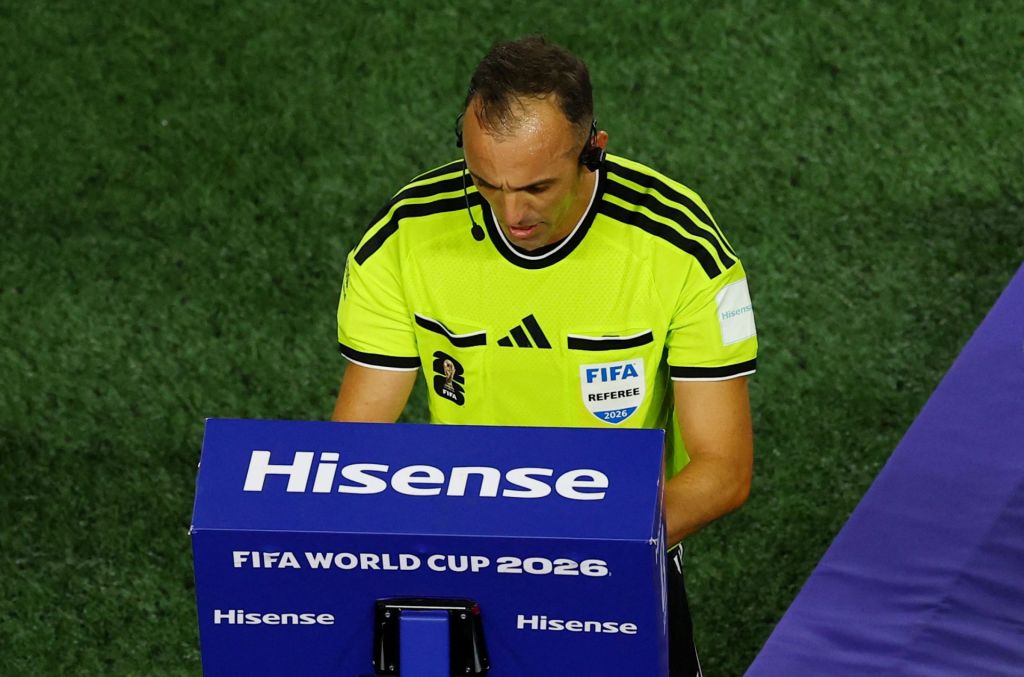
In two areas, automation was introduced in a way that makes it easy to imagine gaining traction across soccer and other sports.
While the chip inside the ball led to heavily debated calls in Portugal-Croatia and England-Norway, the NFL had to be salivating over the possibility of completely outsourcing a decision to technology. After the controversial ruling that the ball brushed a Croatian player—disallowing a goal—Mike Florio wrote that “if technology can lead to the right outcome in soccer, it needs to be used in football.”
Before the tournament, FIFA 3D also scanned every player, leading to a fully automated model and much, much faster offsides decisions than most soccer fans are used to.
Scott, generally a skeptic of technological interventions, praises how it has sped up the game. “Generally, when a goal is scored, everyone can celebrate,” he says, compared to painstaking offside reviews in England. “One of the best things about this World Cup has been offside, generally,” he says.
Hydration Breaks
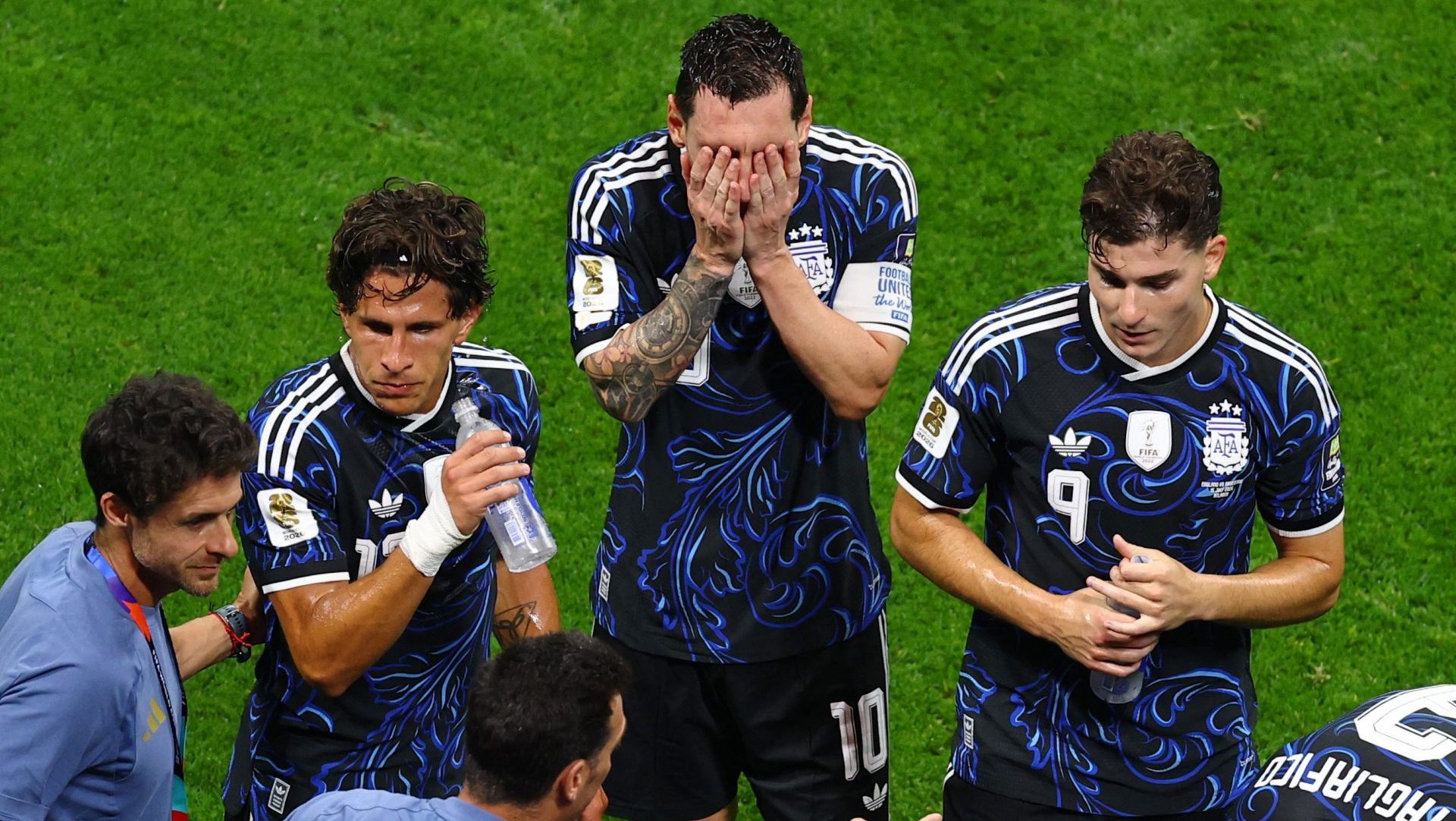
Perhaps the most jarring on-field change has been the introduction of mandatory and universal hydration breaks. FIFA introduced them ostensibly for player safety during hot summer conditions, but broadcasters certainly weren’t complaining. Fox alone made hundreds of millions of dollars from just ad sales during the three-minute breaks, and most broadcasters around the world used the in-game interruptions to air commercials.
Now the question is whether the breaks are here to stay, altering the very structure of soccer by turning halves into quarters.
While the juggernaut Premier League is not hard up for media revenue—and English games are usually not played in hot conditions—media experts surveyed by ESPN agreed the French, Italian, and Spanish leagues, struggling to grow their rights deals, could take a “hard look” at adding breaks; MLS and the NWSL both did not categorically rule out adding breaks in the future.
Puck reported this week that FIFA was “torn” about making the breaks a permanent fixture and “thin-skinned” about relentless criticism from around the globe by soccer purists furious about the vandalizing of the game.
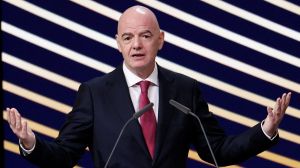
Early in the group stage, FIFA president Gianni Infantino suggested the unusually thrilling games were a credit to the breaks. “Until the last second of the match, players attack and so on,” he said. “And maybe, maybe not, but maybe it’s also a bit thanks to this little break that the players have.”
The most pressing question is whether next year’s Women’s World Cup in Brazil—which will air on Netflix in the U.S. and Canada—will be played in quarters or halves. A FIFA spokesperson said no decision had been made about whether the Women’s World Cup would have hydration breaks, but pointed out that the universal breaks were implemented after serious issues with heat at last summer’s Club World Cup, and that the women’s tournament would be played in the Brazilian winter.
FIFA does plan to jam in one more abnormally long pause into Sunday’s final: halftime will last roughly 30 minutes, more than double soccer’s usual break, and will include a Super Bowl–sized performance.
Download the FOS App
The business of sports, in your pocket.



Scan the QR code to get the app now.