Want more from Front Office Sports
in your search results?
KANSAS CITY, Mo. — The World Cup is here, and although its opening week in the United States has largely been a success, the political pressure points aren’t going away.
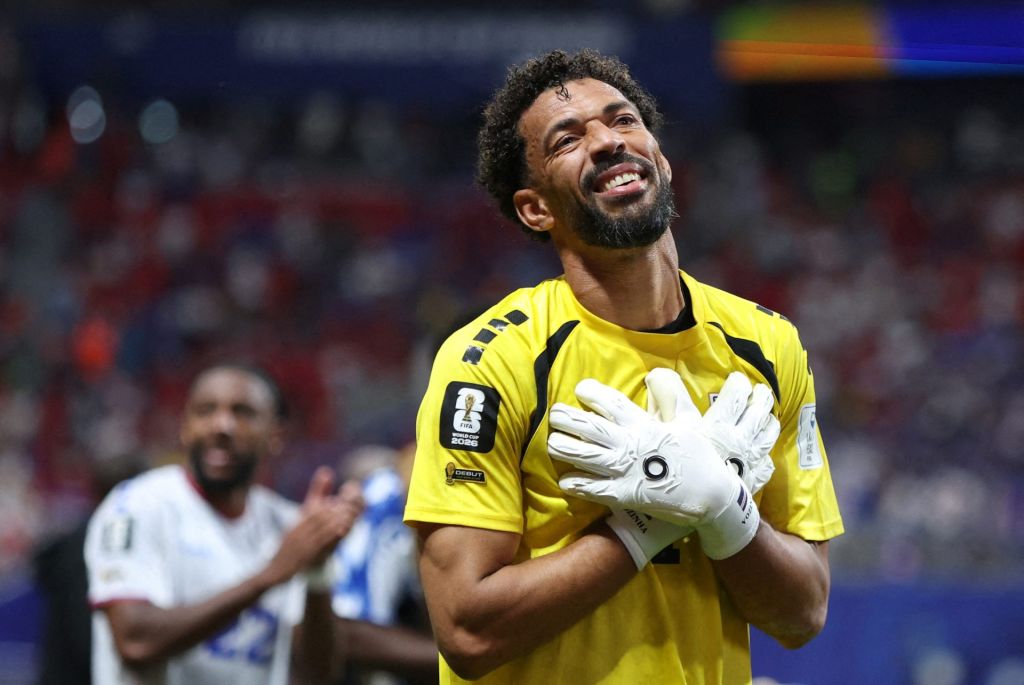
Iran complained about its travel schedule for its Monday match, limited to only one night in the U.S. due to visa restrictions. Cape Verde’s goalkeeper explained that his mother couldn’t travel to his remarkable performance against Spain “for a visa issue, and the money we had to pay for it.”
Meanwhile, U.S. President Donald Trump’s border czar, Tom Homan, last week said Immigration and Customs Enforcement “is going to surge” in New York, which is hosting eight World Cup matches including the July 19 final, and also said, “I’m not going to tell you exactly when it’s going to happen, but it’s coming.”
Also this week, the Trump Administration has touted a tentative agreement with Iran that would extend a ceasefire, reopen the Strait of Hormuz, lift U.S. blockades, and begin 60 days of negotiations. Though the deal is supposed to be signed Friday, its contents remain unclear.
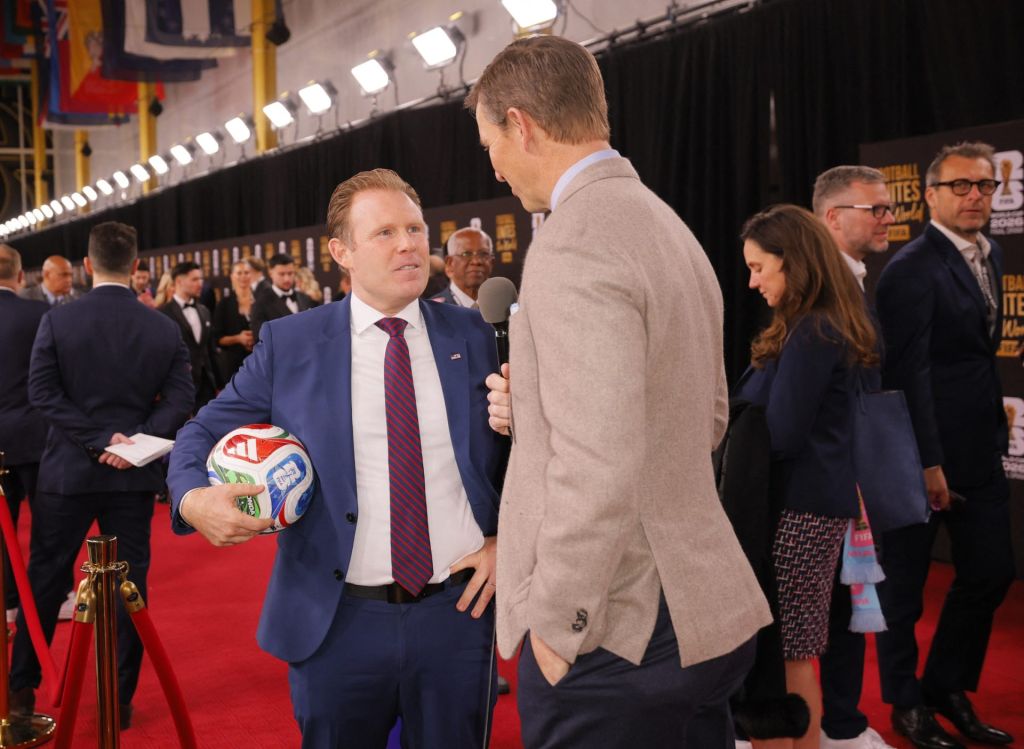
Front Office Sports spoke with the head of Trump’s World Cup task force, Andrew Giuliani, about a number of topics surrounding the World Cup at the FIFA Fan Fest in Kansas City, where Argentina will face Algeria later Tuesday night.
This conversation has been lightly edited and condensed for clarity. After the interview was completed, the White House sent a statement that said, “Every visa decision is a national security decision.”
Front Office Sports: There’s been so much in the news this week about a potential peace deal between the U.S. and Iran. How could that impact the Iran team? Could that mean that their visas maybe would get reconsidered or extended so they could stay longer?
Andrew Giuliani: Well, their players have all had visas to come and play. All 31 had their visas. All coaches, so everybody who was on the pitch or on the bench for the match had the opportunity to access that. We’ve agreed a long time ago that they would be able to come in one day before the match, and leave right after the match ended.
Look, fantastic to see obviously the progress [on a deal]. We’ll see ultimately what conversations, I don’t want to talk about hypotheticals. But what I’m happy about is yesterday’s movements, the last couple of days’ movements, first coming into LAX and then going to SoFi [Stadium] and coming out were fantastic.
FOS: We’ve also seen recently some discussion about ICE in New York. Would that overlap with the World Cup? What would that look like if that happens during the tournament?
AG: So ICE has a presence at stadiums for not just the World Cup, for Super Bowls. I mean, ICE, HSI [Homeland Security Investigations] is a leading agency. They did it for San Francisco this year for the Super Bowl. Very important because they have subject matter expertise in major events like this. When you’re thinking about 78 matches over 39 days, the stress that puts on security is incredible. Then you add all the America250 stuff. If we were to take subject matter experts out of the equation right now, we’d be planning this with one hand tied behind our back.
On top of that, the work that ICE, HSI does on a human trafficking, anti-human trafficking area is nothing short of vital and really spectacular. Just a few days ago in Boston, they were able to save 35 victims of human trafficking. They go directly after the people that are trying to commit some of the most heinous crimes, and I’m proud to stand with them.
[“Operation Yellow Card” in Massachusetts was conducted by the U.S. Marshals Service, which falls under the Department of Justice.]
FOS: Just to make sure I’m understanding correctly, what Tom Homan was talking about with New York and bringing more agents in, that would be normal SEAR 1 event levels, or would that be an escalation?
AG: I think you’re referring to what he said a few months ago?
FOS: I think there was something more recently, in response to what New York Gov. Kathy Hochul was doing legislatively, that there’s going to be an escalation.
AG: If it’s what you’re talking about six weeks ago or so, what I can tell you is the plans are they’re going to be around the stadiums as they always were. We’ve created many legal pathways for people to come enjoy these games.
When you think about all the B-1, B-2 visas processed for Argentina, the wait times were 300 days, as I said in the park yesterday. It was so cool because in that moment you get to see all the hard work, the discussions, the sit-down with consular affairs in the State Department, making sure they’re on the same page as CBP and USCIS to be able to make this work in a true task force model, to actually see it come to fruition that allow Argentinians who just want to come here and enjoy this World Cup, to be able to get them access to it was really, really amazing.
FOS: I know you said that you get a lot of phone calls about individual cases. Have you been getting phone calls about the Cape Verde goalie’s mother yet?
AG: You know what, we actually just saw some email traffic on it now, so I’m sure in my next ride we’ll be troubleshooting it.
FOS: Is President Trump planning on coming to any matches before the final?
AG: I’ll tell you this about my boss. The one thing about him is he loves a great cliffhanger. He loves to keep you on the edge of your seat. So I don’t want to reveal any plans, but all I’ll tell you is just pay attention for the next 34 days, because I think there’s nobody that knows how to put on a show like the 45th and 47th president of the United States, Donald J. Trump.
FOS: He’s planning to be up there at the final, hoisting the trophy with whoever wins?
AG: You know what, we’re going to see, we’ll see. You’ve got to watch on July 19. I can’t ultimately surprise. You’ve got to see the end of the movie.
FOS: How have you felt about the quality of the play on the pitch so far with this expanded tournament?
AG: I think it’s been actually really good. That was, I know, one of the things that FIFA was concerned with in terms of expanding out to 48. I think you’ve had some amazing matchups. I mean, the Cape Verde game tying against Spain was amazing—drawing, sorry, nil, nil, draw against Spain, excuse me—it was fantastic. Really, really good. And I think really aside from maybe one or two games, and even the Curaçao game. To see them score a goal was amazing. … To see the celebration that he will forever be in the record books as scoring a goal in the World Cup, really cool. While the expanded tournament, you may end up getting some games in the group stage where it may be a little lopsided, through nearly close to the end of the first set of games here, it’s been pretty good.
FOS: I was there at the U.S. opener in L.A. I feel like such a question coming into this has been, “What will this tournament do for soccer going forward?” After seeing what you saw on Friday, how are you feeling about that question?
AG: I had the chance to talk to coach [Mauricio] Pochettino before the game, and it was really, really special. I think the thing that was so impressive to me was you had these players that were one day from the biggest game of their life. Hopefully they’ll have that scenario eight different times over the next 35, 34 days. But to see how calm, how focused, how relaxed they were. … They really have the opportunity to captivate a nation over this month. When you think about the fact that they’ve earned being on a World Cup roster, but they get to do this on home soil in the United States over our 250th birthday. You guys write the storylines, it’s endless. Really, really cool.
FOS: Why did you choose to come to Kansas City?
AG: I thought it was really awesome to be able to go see Kansas City for their first match of a World Cup. Really amazing. The fact that they have Argentina, Algeria, the defending champions here, fantastic. Speaking with [Missouri Gov. Mike Kehoe] yesterday—I’m going to meet with him actually after we talk today—how the whole states of Kansas and Missouri, Kansas City, and the greater Kansas City area have rallied around this event, it’s really, really fantastic. … The visual of this is amazing. But what Arrowhead Stadium will sound like tonight when you add Argentinian fans in there, it’s going to be off the charts.
FOS: What have you made of “Rock Chalk, Algeria?”
AG: Hysterical. I think it’s amazing. This is exactly, as we thought of the legacy of this World Cup, it’s exactly what we’re hoping for, right? There’s been so much talk about this off the field, this off the field before the matches start. As soon as that first ball was kicked and the first goal was scored, we’re now talking about all these great interactions between Kansas City and Algeria and Argentina and what we’re seeing with the Dutch that will come here next week with that. Oh, the bus ride will be amazing.
That’s what makes a World Cup so special. To be able to host it here in the United States, with Canada and Mexico, over our 250th birthday, what an amazing, amazing summer this is going to be.