Want more from Front Office Sports
in your search results?
The World Cup is off and running, with 13 of the record 104 matches completed as of Monday afternoon.
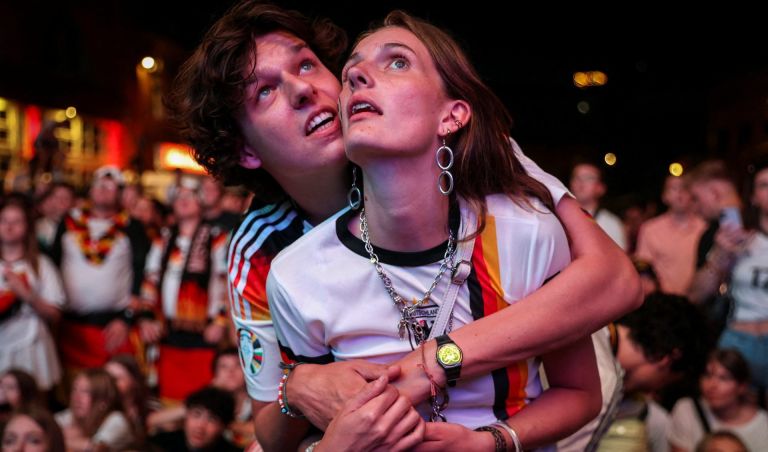
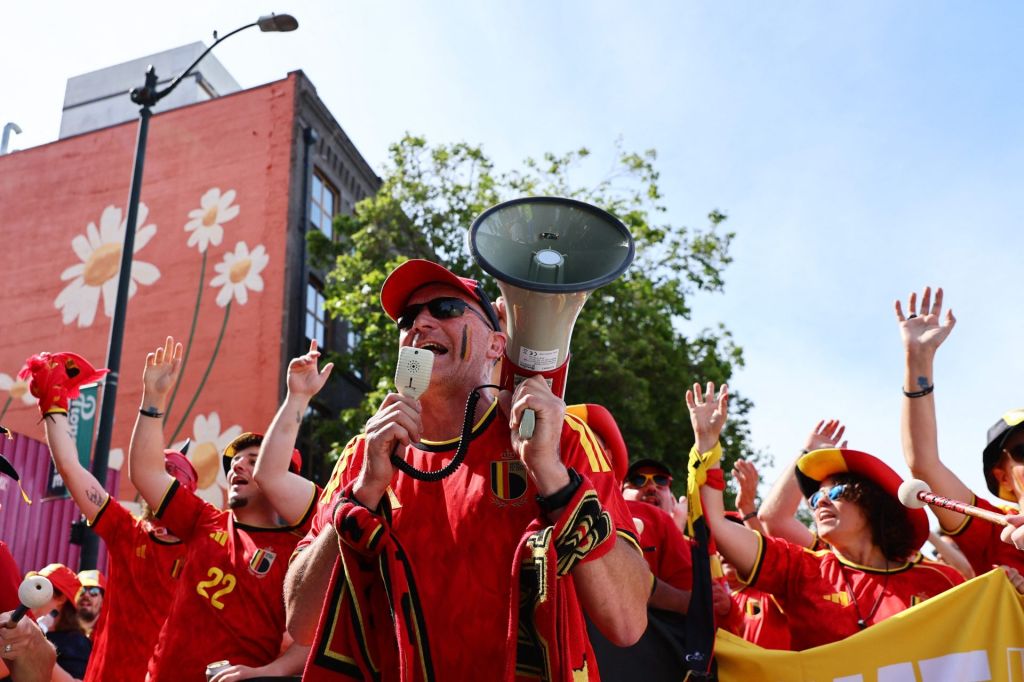
Each of the three host nations held a glitzy opening match, and highly ranked teams like Brazil, Morocco, Germany, and the Netherlands began their group-stage campaigns. Curaçao recorded its first World Cup match and goal, while Qatar earned its first World Cup point. Fans are parading through streets, forming unlikely bonds, and bringing the usual World Cup energy to North America.
Here are some of the takeaways from the opening weekend of the World Cup.
Despite Expensive Tickets, Attendance Has Been Strong
Nobody quite knew what the crowds would be like at the tournament.
On top of its high prices, FIFA hadn’t been transparent about ticket sales, and hundreds of thousands of tournament tickets were still available on resale in the days before the tournament kicked off. FIFA has even kept (pricey) tickets available on its own website. Would fans show up for the expensive host nation openers? What about the less-marquee matchups?
So far, the answers have been yes. FIFA’s official attendance numbers include several sellouts and indicate that no opening weekend match had more than 1,400 open seats. Those numbers aren’t completely reliable, given FIFA said the Czechia–South Korea match had only 679 fans below capacity despite visible empty seats, and defended its figures by saying “several ticketed fans” were standing on the concourse.
But on the whole, stadiums have been visibly packed, and the crowds are lively. Front Office Sports was present for a packed and high-energy stadium at the U.S. men’s national team’s opener against Paraguay, despite the high get-in price. Huge crowds showed up for Mexico, Brazil, Scotland, and Ecuador, to name a few.
Fan Bases Missing Amid Trump Travel Restrictions
The flip side of some of those well-attended matches is the fans who aren’t there, either because the tickets were too expensive, or because their visas were not accepted by the host nations, namely the U.S.
Supporters of Morocco, Haiti, and the Ivory Coast, were badly outnumbered in the stands during each of their matches. Their squads played teams with fan bases who travel well and have large diasporas already in the U.S. and other non-banned countries, but the lack of fans also stems from politics.
The U.S. bans visitors including World Cup fans from four participating nations: Haiti, Iran, Senegal, and the Ivory Coast. Others, including from Morocco, have faced visa denials or other travel issues.
The Soccer Is Competitive—So Far
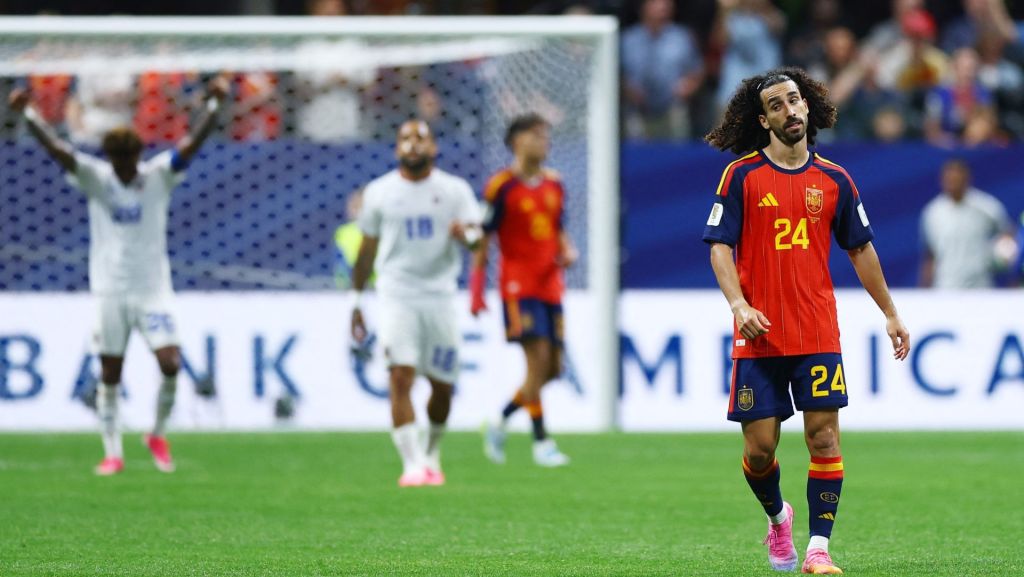
FIFA expanded the World Cup from 32 teams to a record 48 participants this year, which many suspected would dilute the group stage. While Germany smashed Curaçao 7–1 on Sunday, Cape Verde—population around half a million—stunned Spain and the world with a 0–0 draw Monday.
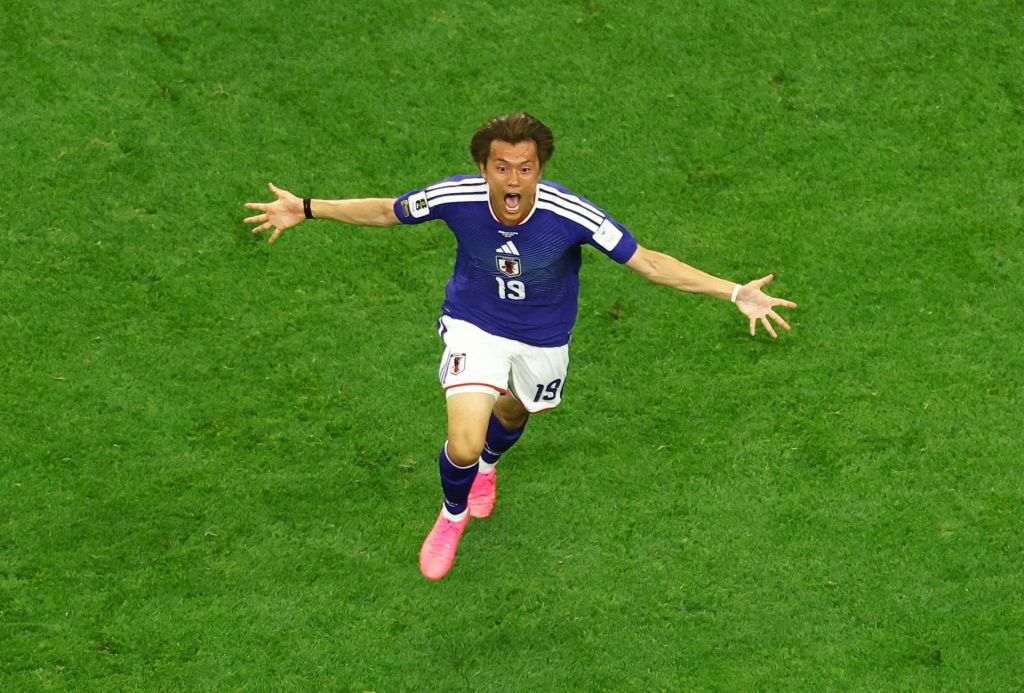
Much of the soccer to date has still had the usual World Cup freneticism and competitiveness.
Instead of teams playing a hyper-conservative style because only three or four points will be required to advance, teams have instead aggressively chased a first win. The opening weekend of matches was highlighted by a thrilling Netherlands-Japan draw, an Australia upset over Turkey, and a tense draw between Brazil and Morocco.
Early Viewership Is Big
The opening match between Mexico and South Africa drew 6.3 million viewers on Fox, while the U.S opener versus Paraguay got 15.99 million viewers for the network. Over on Telemundo, its streaming platforms, and Peacock, the Mexico opener drew 12.1 million viewers, and the U.S. opener had 8.9 million viewers.
These numbers are early, and do not include the Nielsen Big Data + Panel methodology that will give each figure a boost. Still, the numbers were already big, averaging nearly as many as the first two games of the NBA Finals, and more than three times the average of the Stanley Cup Final through its first four games.
Commercial—Er, Hydration—Breaks
FIFA introduced two mandatory breaks to all World Cup matches this year, claiming they are a response to the heatwave at the Club World Cup last summer. But the breaks are instituted for all games, even ones that are indoors or below a heat threshold.
As main broadcast Fox cuts to commercials (for FIFA’s sponsors) twice a half, fans have seen the hydration breaks as advertising slots. In the opening match, Fox came back from commercials after play had already resumed, blaming the referee for starting the hydration break early.
Sports Business Journal reported last week that Fox would be using a hybrid approach to in-game commercials, with some editorial analysis mixed in, but the network has gone to full-screen ads every time so far. Telemundo, meanwhile, has proudly kept its broadcast on the field, though it hadn’t planned to avoid picture-in-picture ads entirely.
The breaks have disrupted the viewing experience, and they’ve also changed the game on the pitch. Coaches get two extra opportunities to go over tactics with their teams that they normally wouldn’t. In the case of Curaçao, which scored an equalizer just before the first hydration break, the team lost that momentum in the pause, and Germany came roaring back with two more goals before half.
Traffic and Public Transit Lines
While public transit has appeared largely effective where available, riders in several host cities complained about long lines, heavy crowds, and inaccessibility for disabled passengers.
Traffic around the stadiums was an issue, including in New Jersey, where NJ Transit’s train tickets cost $98 round trip, resulting in only half the expected ridership. That left fans stuck in traffic, struggling to call rideshares, or waiting in long lines for the $20 host committee bus. (Five of the buses were set on fire amid the madness after the Knicks won the NBA Finals.) For upcoming matches, those buses won’t take as many riders for weekday games, which will slightly alter the dynamics, potentially pushing more people toward the train.
Traffic was also an issue in Dallas, Boston, and Houston.
“Rock Chalk, Algeria”
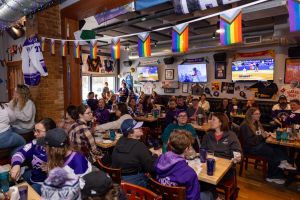
Brazilians packed Times Square. The Tartan Army has overtaken Boston. The Dutch brought the Oranje Fanwalk to Dallas. Japanese fans are raving over Texas and its food. Major U.S. sports teams are hosting and sending gifts to a German fan and his friends.
The cultural crossovers created by the World Cup are as joyful as anticipated. The spirit of the tournament—repeatedly questioned given the expensive tickets and the Trump Administration’s restrictions on immigration—has still broken through.
Perhaps the strongest bond has grown between the city of Lawrence, Kansas, and Algeria’s national team. Videos began emerging in the buildup to the tournament of elated Kansans celebrating that the team chose to make a base camp in their town at the University of Kansas. In recent days, the players shot baskets and kicked field goals at the basketball arena and football stadium; local kids played with the team at a community day; the school band learned Algeria’s national anthem; artist Stan Herd unveiled his giant Algerian flag creation, and a crowd gathered around it to sing and chant. As one viral Jayhawks fan put it: “Rock Chalk, Algeria!”