Want more from Front Office Sports
in your search results?
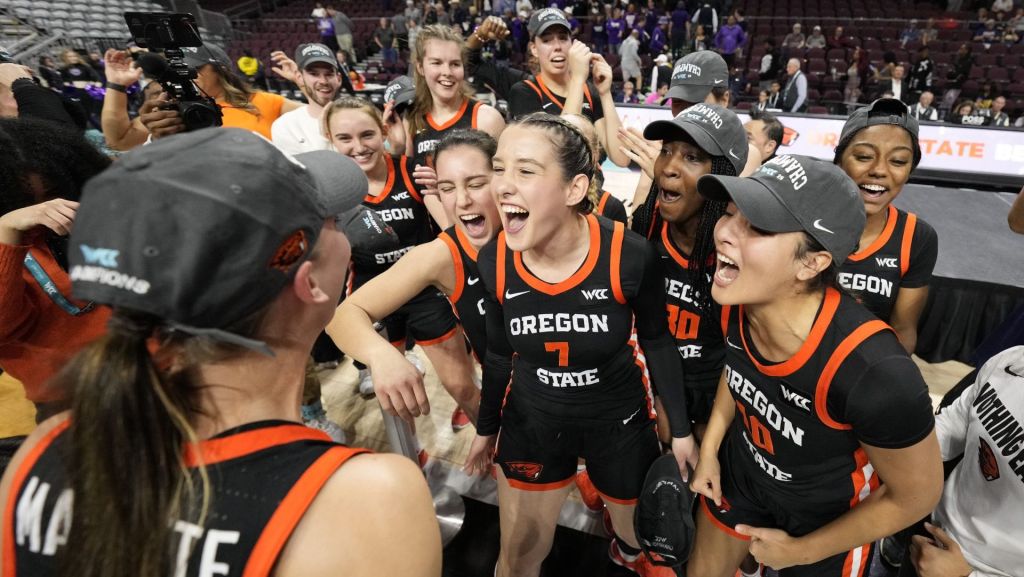
On Friday, members of the Oregon women’s basketball team filed a petition for union representation with the Oregon Employment Relations Board, marking the latest unionization effort in college sports—and the first based solely on public sector state labor laws.
The effort was led by the United College Athletes Association, a 501(c)(5) labor union founded by former NCAA track athlete Andrew Cooper, which has been working to organize women’s basketball specifically since 2024. While this is the first formal move toward unionization, the UCAA says it has more than 100 women’s basketball players who have signed “unionization authorization cards.”
The UCAA’s advisory board includes current and former members of professional sports unions, including NWSLPA executive director Meghann Burke and WNBPA president Nneka Ogwumike, as well as former National Labor Relations Board executives.
“We deserve a seat at the table, meaningful protections, fair compensation, and a collective bargaining agreement that raises the standard for everyone,” Maryland women’s basketball player Oluchi Okananwa, the interim president of the UCAA, said in a statement. “This work is bigger than any one season or generation. We are building lasting power for the athletes competing today and those who will come after us.”
The news comes just several days after a separate organization, the College Football Players Association, launched an organizing effort among football players at Stanford. Unlike the UCAA’s effort, however, Stanford football players aren’t filing for formal union authorization just yet—they’re waiting for a more favorable political climate.
In fact, the disparate strategies highlight a major concern with unionizing college athletes at any level, in any sport: the mix of public and private schools. Previous unionization efforts at Dartmouth and Northwestern involved players at private schools, who argued that they could be considered private sector employees, who fall under the jurisdiction of the National Labor Relations Board.
Some have argued that the NLRB could claim jurisdiction over public school college athletes through a concept called the “joint-employer doctrine.” Under this theory, players could be considered employees of both their universities and their conferences (or even the NCAA)—the latter of which are private organizations.
Oregon State women’s basketball players, however, will test out a new concept of forcing state labor laws to recognize them as state employees.
The move also suggests that a growing number of college athletes are in favor of unionization and collective bargaining as a way to both solidify their rights and set enforceable rules—rather than a law from Congress, the path preferred by college administrators.
In addition to the union push, the UCAA has been lobbying in Congress against legislation that would restrict player bargaining rights. They’ve come out against the Protect College Sports Act in particular. Athletes involved in both efforts have previously told FOS they see the PCSA specifically as a way for Congress and university, conference, and NCAA officials to unilaterally impose restrictions normally negotiated with players at the table.
“We all agree that we need structure,” LSU women’s basketball player Jada Williams previously told FOS. “Where we disagree is—Congress shouldn’t be deciding who makes those rules.”
Download the FOS App
The business of sports, in your pocket.



Scan the QR code to get the app now.