Where Does New Big East Commissioner Stand on PE?
Want more from Front Office Sports
in your search results?
In the expansive world of sports equipment, some pieces easily belong exclusively on the field, court, or ice. Someone walking down the street in an Allen Iverson–style compression sleeve or thick, garish hockey socks would look wildly out of place. But any sidewalk, coffee shop, or crowded mode of public transit is sure to be littered with dozens of baseball caps—despite the fact that none of those people will be playing a baseball game.
The baseball cap has become the lone on-field accessory to transcend its original use and become part of the civilian closet. Worn by everyone from grandparents running errands to mega celebrities with immeasurable influence, the baseball cap can be both unobtrusive and endlessly customizable. But it didn’t start out that way.
In 1954, Harold Koch—then the head of New Era, and son of Ehrhardt Koch, who founded the company in 1920—developed the baseball hat we’ve come to know out of an aesthetic frustration with how big league teams presented themselves.
“When baseball players lined up, he wanted them to look uniform, like military or firefighters or police,” says Chris Koch, Harold’s grandson and current CEO of New Era. “The problem with baseball was, one guy would have a floppy cap, one guy would have [a stiffer one]. They were all different.”
This began the long history of what’s now known as the 59FIFTY—the official product name for the fitted cap every MLB player dons and what fills the biggest section of the hat store.
Becoming an unimpeachable pillar of American fashion isn’t as simple as creating a hat silhouette and waiting for the money to pour in, though. Across the history of New Era, the company has made changes to the 59FIFTY, such as moving from wool to breathable fabric blends. There have also been a series of minor tweaks in the name of moisture wicking or comfortability—players wearing the early version of the 59FIFTY had to last nine innings wearing a hat with a leather sweat band sticking to their dome—but the bones of the cap have remained mostly the same.
The hat’s consistency has helped New Era become a retail juggernaut, with the company earning more than $2 billion in annual revenue. Part of that is because of the close attention to detail at New Era headquarters, but perhaps an even larger reason is because consumers want to dress like their favorite rapper or feel like their favorite baseball player.
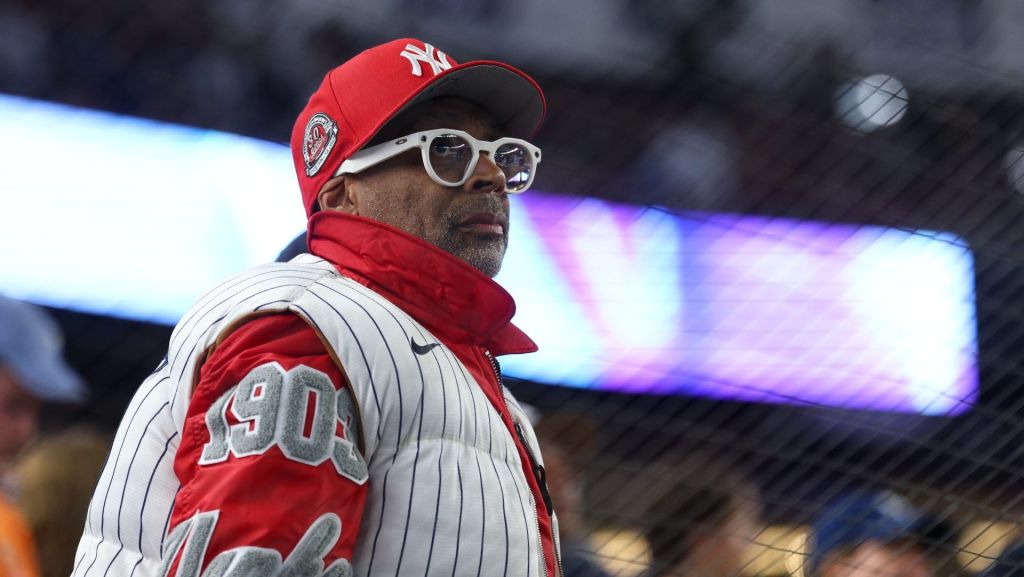
While Yankees icons including Babe Ruth, Reggie Jackson, and Derek Jeter wore the iconic NY cap every time they put on pinstripes, rapper Jay-Z, as well as other devotees of the hat like Spike Lee and 50 Cent, pushed the New Era fitted cap to become a ubiquitous piece of everyday clothing, pop culture, and modern life. It’s become so ubiquitous, in fact, that even some professional athletes just know it as a New York thing, not a Yankees thing.
“Some of the demand for New Era is out of their control,” says Josh Roter, co-owner of the popular New York City vintage store In Vintage We Trust. “It’s just a fashion phenomenon. The 59FIFTY became this behemoth and an industry standard.”
Finding an Alternative
The 59FIFTY’s clean lines give it its unmistakable shape and style, and its association with Major League Baseball lends it legitimacy. But a hat’s purpose extends beyond team affiliation (or signaling in-depth sports knowledge). It can also signify hometown or regional pride, protect against nasty weather and bad hair days, or provide the finishing touch to an outfit.
Colloquially known as the dad hat, the 59FIFTY’s floppier cousin is the unofficial go-to accessory for movie stars on a pap walk, doting parents pushing their children at the swing set, and grizzled, upper-deck fans still keeping score at every home game. The hat is a load-bearing product for the brand ’47, which New Era acquired in 2024. The dad hat—with its adjustable strap hanging from the back of millions of heads—is so common, it’s become a staple, like a white T-shirt or jeans.
The history of the dad hat, ironically, begins with children. In the 1990s, kids looking for a flexible style of hat to fit their pubescent frames would trek to the closest Lids or Hat World store, says Dave Zaleznick, GM of ’47. Then, looking to create that worn-in, beat-up look that marries better with a limp, adjustable cap than the more rigid, boxy style of a fitted, kids would wear their hat in the shower or run it through the washing machine.
Noticing this, and hoping to create a happy medium between fitted and adjustable, ’47 came out with the closed-back Franchise Hat in 1996. Once it became clear there was a sizable market for weathered and adaptable hats, the company debuted the ’47 Clean Up in 1998, creating the low-crown, curved-bill look that’s now a streetwear classic.
“The trend has really taken off,” Zaleznick says. “It still amazes me how many people I see wearing that silhouette. It’s more and more every day.” Zaleznick says it’s been ’47’s number-one style for more than a decade now. “It’s by far the most volume that we do,” he says. He declined to share revenue figures. (New Era’s Koch also says team-related products can receive a sizable bump from that team playing well; online searches for “Knicks baseball cap” have risen by a staggering 4,276% since March.)
Seeing how popular the casual, form-fitting alternative to the 59FIFTY has gotten over the past 15 years, ’47 has embroidered everything from pictures of golden retrievers to “Fiancé” or “Maid of Honor” written in script across the forehead of their dad hats. “It works for a bunch of different occasions,” says sports-retail analyst Matt Powell.
Innovating, for Better or Worse
The willingness to evolve, Powell says, has fueled the New Era and ’47 rocket ships.
“Obviously, being the official on-field cap of Major League Baseball gives them a tremendous amount of authenticity,” he says. “But the real key is, this is a fashion business. They’ve been able to introduce new styles, logos, colors, materials, and collaborations to keep the brand fresh.” He adds the baseball hat is also a much easier style of hat to pull off than a jaunty fedora or enormous sun hat.
Some of the bold ideas in the recent history of headwear were the product of herculean swings, which can also lead to some herculean misses.
In 2022, New Era teamed up with luxury brand Off-White for a capsule collection of fitteds that came with sizable holes in them, retailed at $260, and became the butt of countless jokes. In 2025, New Era came out with its line of Overlap hats, in which MLB logos were plastered over the team name or city written across the cap. This led to an immediately viral Texas Rangers hat, in which the team’s block T logo overlapped the X in Texas, producing a hat that read “TETAS,” a Spanish slang term for breasts.
In the micro, New Era withstood 48 hours of internet jokes. In the macro, it hardly mattered at all, as the unfettered success of its most popular items affords New Era a few whiffs. It also allows them to get a little bit cocky when surveying their competition in the hat space. “There really isn’t anyone else,” Koch says. “New Era, ’47, and then what? There isn’t. You can name a brand, and it’s nothing.”
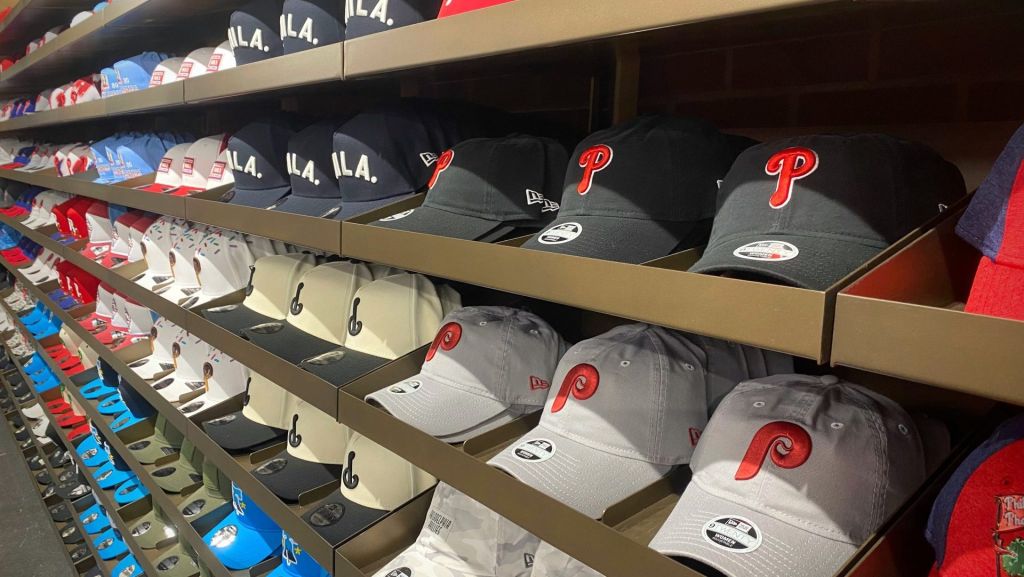
Today, the most notable swerves from New Era and ’47 have been hats with upside-down logos or wordmarks on them (a trend that has resulted in a steep divide on golf courses), plus a wildly popular style that features a rope between the crown and brim of the cap. Don’t expect those to have the staying power of the 59FIFTY.
“The one with the rope on it, I think that’s already kind of played itself out,” Powell says. “The upside-down thing is in trend right now, and I see lots of different team names, city names, ZIP codes, all kinds of stuff. There’s just crazy stuff that comes out of the minds of these brands. Some of them catch pretty good, and some of them don’t.”
Roter, the vintage purveyor, says he views the upside-down hat as something akin to a meme at this point. “I’m not a huge fan of it,” he says, adding it’s not just New Era and ’47 pumping them out. “But it definitely has a lot of legs. I see a lot of people wearing it. It’s definitely a specific customer.” As for the rope hat beloved by many men in their 20s and 30s, Roter says, “There’s so much of it in the marketplace that it gets super repetitive. If you see 1,000 brands all do the same thing, it gives off that AI slop vibe. Let’s get something else going.”
New Era and ’47 are already hard at work cooking up their 2027 and 2028 drops, paying attention to both designer labels and sportswear giants like Nike and Adidas to see which direction the winds of fashion are blowing. They know that not fixing what ain’t broke will always be a viable strategy, but they are constantly looking to innovate. With business growing, and two seemingly bulletproof caps in the 59FIFTY and ’47 dad hat, outcry from spurned fans who want to see some better representation for their team might be the only thing New Era product developers need to worry about.
Zaleznick laughs. “We do get a lot of feedback on, why don’t you offer my team?”