Max Kellerman, LeSean McCoy Off DAZN Boxing Show As Mario Lopez Joins
Want more from Front Office Sports
in your search results?
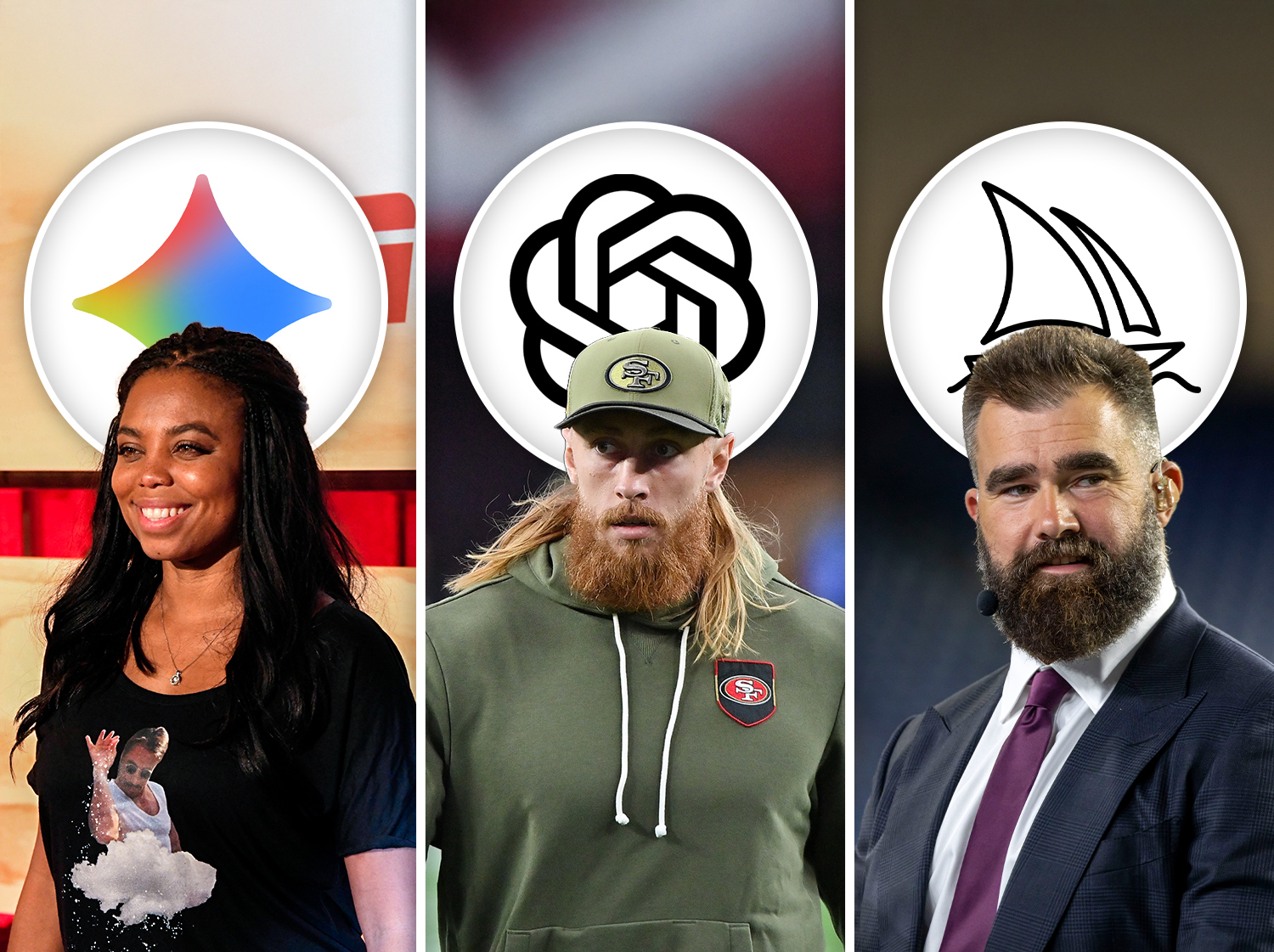
Last fall, 49ers tight end George Kittle was forced to address a manufactured controversy. After conservative activist Charlie Kirk was shot and killed Sept. 10, a quote falsely attributed to Kittle went viral on Facebook before spreading to other platforms.
“I love football because it unites people,” Kittle’s fake statement read. “But lately, I’ve seen politics being dragged into it far too often. Charlie Kirk may matter to some, but he has no place in the NFL. Football is for the fans, the competition, and the love of the game—not for politics.”
The online backlash to the quote was swift and enormous, prompting Kittle to post a response via Instagram Story: “This is a fake quote. I hope most of you realize that. Also, that [Facebook] account only posts fake news/reports, please ignore them. The wild messages I’m receiving from people made me have to address it.”
Jason Kelce had to do similar damage control last October, leading up to the Super Bowl, when an alleged quote of him disparaging Bad Bunny (“bad fit for America’s future”) went viral. “I normally don’t comment on things like this, but I feel I need to address that there are a number of accounts posting fake quotes and attributing them to me on this platform right now,” he said.
Alongside Kittle and Kelce, several other current and former NFL players have had fake quotes attributed to them. Star athletes, teams, and media figures across nearly every sport and league are in the same position.
The inaccurate and usually sensational quotes are just one part of a larger ecosystem of “AI slop,” generally defined as low-quality content that is produced by artificial intelligence tools with little to no regard for accuracy. These posts have become a mainstay of the internet’s new era, and they’re increasingly targeting the world of sports.
Experts tell Front Office Sports that massive, tribal audiences and never-ending event calendars make sports a perfect breeding ground for widespread AI slop. The fake-news churn is not only frustrating for fatigued fans, but also an increasing problem for sports professionals.
Kevin Clark, NFL commentator at ESPN and Omaha Productions, says the topic came up during conversations he had at the NFL’s annual league meeting in Phoenix at the end of March. “[NFL team] PR departments are having to spend time swatting down the craziest things,” he tells FOS. “And it keeps happening more and more.”
Why Sports Makes for Such Good Slop
Sports slop is typically packaged to mimic the look of social media posts from legitimate sports outlets and insiders, in a way that deceives fans. There’s a range of this content: Along with fabricated quotes about hot-button topics, the most common types are erroneous claims about schedule changes and player deaths.
It spreads through a simple snowball effect: A fake quote gets screenshotted and shared across platforms, often first by content-hungry aggregator accounts, and sometimes—more problematically—by legitimate users who got duped.
This content is specifically crafted to push buttons and cause engagement. A lot of slop ties teams and athletes to political, emotional, or otherwise divisive news events, much like Kirk’s assassination.
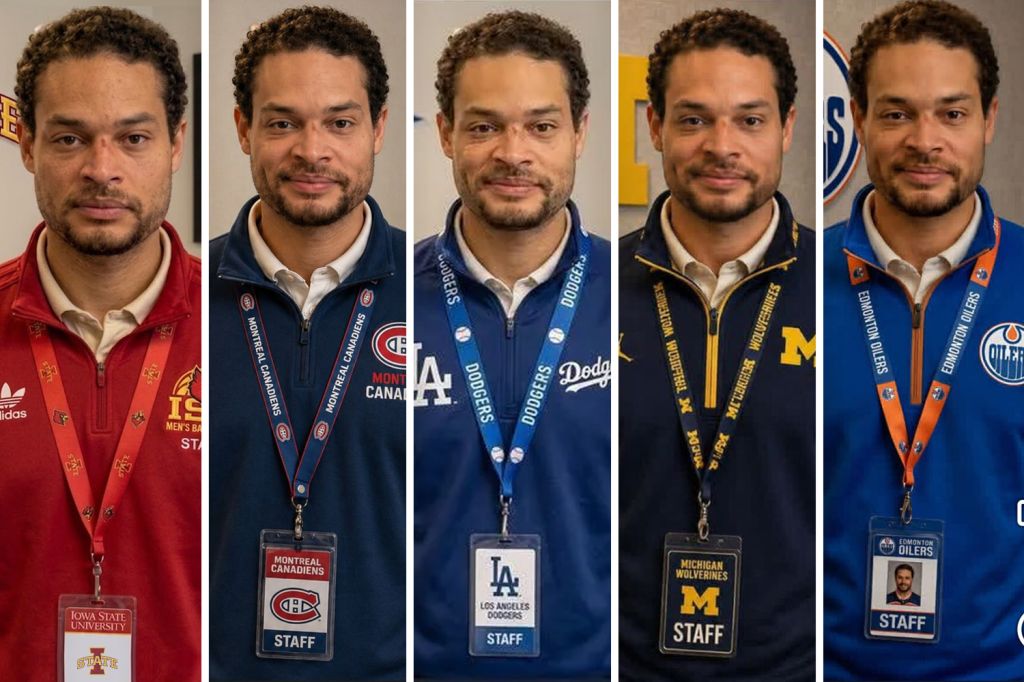
In April, after a shooting at the White House Correspondents’ dinner, Facebook was flooded with posts claiming the suspected assailant had previously worked as a staffer for major collegiate and professional sports teams. The posts followed a similar format: side-by-side photos of Cole Tomas Allen—a real one of him being arrested at the Washington Hilton and an AI-generated one of him smiling while sporting team apparel. They also came from similar sources: Facebook pages that bill themselves as fan sites for their respective teams. All were untrue.
Sports is a particularly effective slop delivery vehicle because fans are extremely online—and rabidly loyal.
“People feel so passionate about their favorite teams and athletes, and that passion can easily be manipulated into angry clicks and comments based on what information they’re consuming,” says sportswriter and commentator Jemele Hill.
Hill has been the target of several viral fabricated quotes, including one that claimed she said Angel Reese was the next Michael Jordan. Stephen A. Smith was eventually asked about the fake story during a guest podcast appearance—an example of how sports slop can quickly spread as legitimate news on big platforms.
But what also makes sports so susceptible to the AI slop machine is that people largely aren’t vigilantly looking out for fake news in the category. “Most people who use social media are used to seeing a piece of political content and going, ‘That might not be real,’” says C. Shawn Eib, head of investigations at AI risk-management firm Alethea. “Sports fans haven’t really had a reason to think like that before now, so it’s an untapped market for bad actors.”
There’s also never a shortage of sports news and events to manipulate. That constant onslaught makes the slop hard to ignore, says Marshini Chetty, an associate professor of computer science at the University of Chicago.
This all combines for a proliferate content machine that efficiently turns fake sports news into the day’s big topic, especially as psychology studies on mis- and dis-information routinely show people are much more likely to hang on to fake information they heard first than to any corrective information heard later.
“With the frequency with which fans are encountering increasingly realistic AI slop,” Chetty says, “I assume this effect might be even stickier.”
Why Sports Slop Exists
Sports slop went into overdrive in 2025, as access to generative-AI tools increased. Before that, creating deceptive online accounts and content required a fair amount of human labor, attention, and even creativity; now, Eib says, this work can easily be produced at scale “by just one person in a room.”
A human being may create the fake quote, but AI-generated visuals speed its spread.
While sports slop is present on every platform, Facebook is its beating heart. There, pages that bill themselves as team fan sites pump out fake, AI-generated content upward of 50 times a day, according to an Alethea report from January. (Meta did not respond to a request for comment about why sports-related AI-generated content thrives on Facebook or the specifics of its content-moderation policies.)
The Alethea analysis also showed NFL-focused slop pages typically had administrators located in two countries: India and Vietnam. Yet most pages list the addresses and phone numbers of local small businesses to give the appearance of legitimacy. They also employ other tactics, such as posting outbound links in the comments section rather than in the post itself, to help skirt Facebook’s moderation tools that get posts removed.
These outbound links are the core of the whole operation; they funnel users to junk sites stuffed with ads, from which administrators collect revenue on an impressions basis. The strategy is extremely low margin, so it’s a volume-based play, says Eib: “To be making any kind of money, they have to go for that economy of scale.”
The Moderation Problem
Sources tell FOS it’s impossible to quantify exactly how much AI-generated sports content is posted with the intent to deceive or rile users. But there’s more of it every day.
A recent joint study by Stanford University, Imperial College London, and the Internet Archive showed that, as of mid-2025, 35% of all newly published websites were either partially or fully AI-generated. Before the launch of ChatGPT in 2022, this figure was close to 0%.
“The trend line of AI-generated content on the internet is going up,” says Max Spero, CEO of Pangram Labs, whose AI-detection tool was used in the Stanford study. “And it’s really not going to stop.”
That volume makes moderation an enormous challenge. Most platforms rely on existing community guidelines to police AI-generated content and are “permanently playing catch-up” as a result, says UChicago’s Chetty.
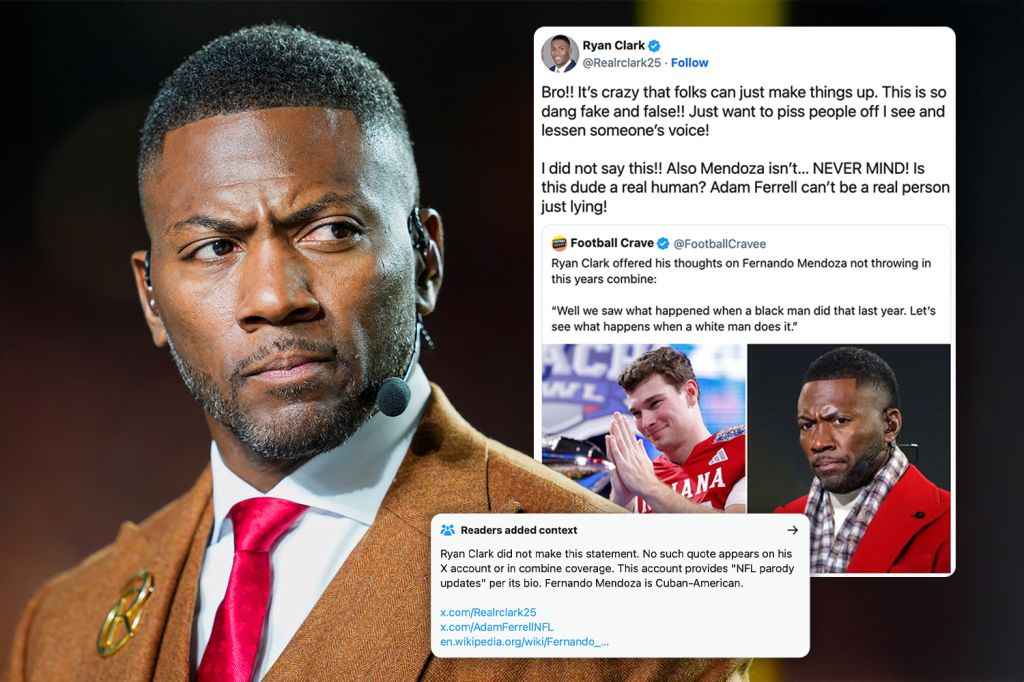
Features like X/Twitter’s Community Notes—which let users add context to posts—have proved useful but are imperfect. Fabricated posts often still circulate for hours or days before receiving corrections, accumulating all kinds of engagement.
Pushing Back Hard
The current sports-content environment isn’t doing much to stanch the effects of AI slop.
The shitposting culture embraced in recent years by the social media accounts of professional teams only makes the fake content more believable, as does the outright lying that is now standard fare for accounts associated with prediction markets like Kalshi and Polymarket.
“Sports used to be considered one of those things that unite and inspire us, but all of this fake content is creating conversations that are rooted in anger or some other extreme emotion that has nothing to do with joy,” says Hill.
Still, even as fans find themselves duped by the slop, they’re increasingly pushing back on AI content in all its forms.
ESPN was roundly criticized for using an AI-altered photo of Tony Parker during its broadcast of Game 1 of the NBA Finals. The network told FOS it is “evaluating” whether to use AI in its remaining Finals presentations. Last month, the Fever also took heat for sharing an Instagram post in which Caitlin Clark’s hand was visibly altered by an AI tool—including from Clark herself, who called out the error in the comments section.
Fan campaigns for sweeping bans on AI-generated content are becoming commonplace, and several pro sports teams have denounced the use of AI for graphics or social posting, which is helping sort the signal from the noise.
For now, though, the only thing for sports fans to do is get savvier when they see a headline. As people get increasingly used to sports as a vehicle for fake news, it may become easier to spot content that doesn’t pass the smell test. And although sports is fertile ground for AI slop, like anything, its shock value may wear off over time. The slop factories will be forced to move on.
Download the FOS App
The business of sports, in your pocket.



Scan the QR code to get the app now.