Want more from Front Office Sports
in your search results?
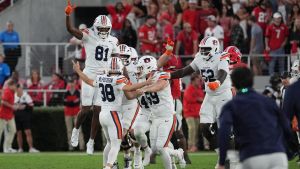
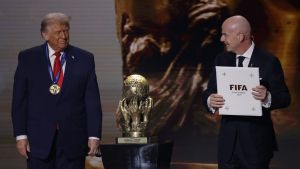
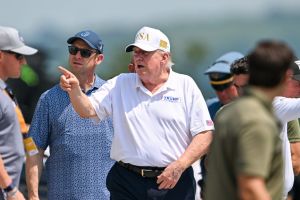
Since 2020, the SEC and Big Ten have spent millions of dollars lobbying in Congress for a college sports bill, and found allies in several top Republicans like Sen. Ted Cruz (R., Texas). Over the past year, they’ve also lobbied the Trump administration, participating in a White House roundtable, sitting on presidential committees, and even, in the case of SEC commissioner Greg Sankey, golfing with the president.
But after all that lobbying, the Big Ten and SEC have found themselves on the opposite side of not just Cruz, but also Trump.
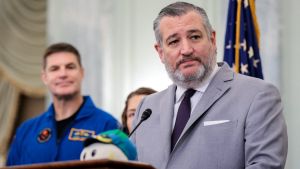
This week, the Big Ten and SEC came out against the bipartisan Protect College Sports Act, introduced by Cruz and Sen. Maria Cantwell (D., Wash.), and co-sponsored by Sen. Eric Schmitt (R., Mo.) and Chris Coons (D., Del.). On Thursday, Trump endorsed it.
The Big Ten and SEC first proclaimed their opposition in a joint-statement Tuesday night, saying they couldn’t support the bill “as written.” Their stated reasons: It didn’t go far enough to give college sports leaders control over rules through antitrust exemptions and state law preemption; they also had concerns over how the House v. NCAA settlement was codified.
The SEC also previously came out against the concept of multiple leagues pooling media rights to sell them as one package—something the bill allows for, but does not require. The bill also effectively bans the Big Ten and SEC from ever forming a two-conference super league (Big Ten commissioner Tony Petitti told Yahoo Sports they haven’t discussed it).
Cruz isn’t necessarily against the Big Ten and SEC on purpose—at one point, he released draft legislation that included all the NCAA and power conferences’ wishlist items. But in order to draft a bill he thinks will garner bipartisan support, he’s had to make concessions. Those concessions, it appears, are some of the things the conferences don’t like.
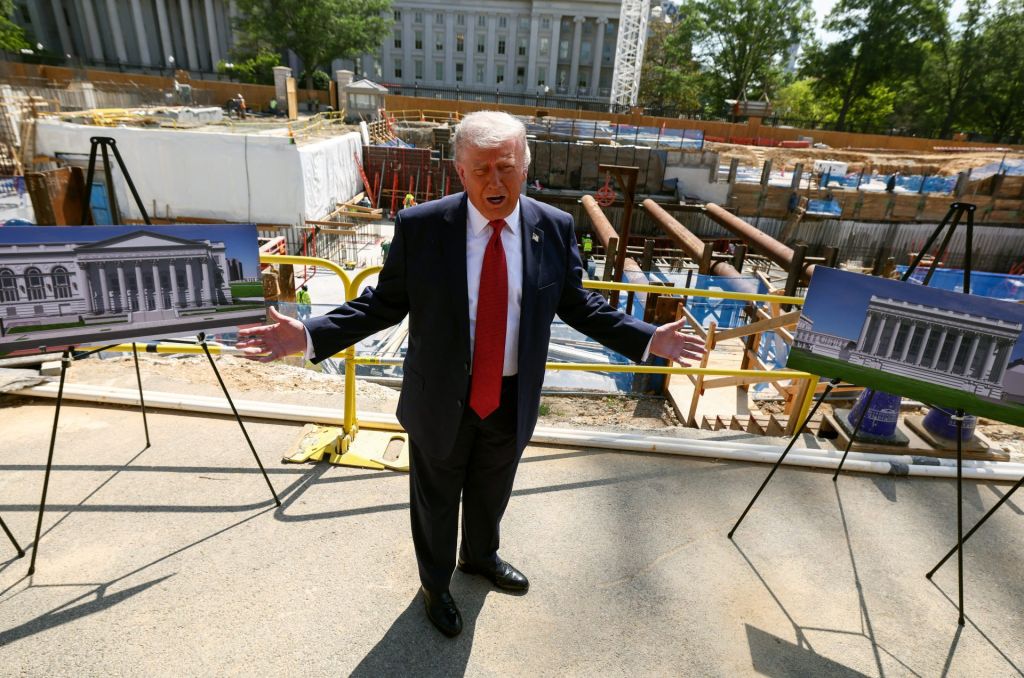
Then, on Thursday, Trump put out a statement in favor of the bill. After noting stakeholders “have all complained” to him about the state of college sports, he wrote the bill “resolves many of the most urgent issues challenging our Universities and Student-Athletes, stop the chaos and, most importantly, it may be the last chance to save College Sports, and Colleges themselves, before it’s too late.”
Trump’s position wasn’t surprising, given that the bill was also endorsed by one of his closest advisors on the issue, Texas Tech board chair Cody Campbell. But the president’s support was notable since the White House had waffled on the bill earlier in the week.
After Trump’s statement came out, Petitti and Sankey met with Cruz (the meeting was scheduled before the statement went out). But the conversation didn’t sway the Big Ten or SEC. In a joint statement, they reiterated they could not support the bill. Spokespeople for Cruz did not provide comment to FOS about the meeting.
Now, the question is whether the Protect College Sports Act could reach Trump’s desk (or at least pass the Senate) without the SEC and Big Ten’s support.
Schmitt told FOS Thursday he “hopes” so—but added he wanted to get the Big Ten and SEC on board, especially because his home state of Missouri has an SEC school. Coons took a stronger position, saying: “There’s an awful lot of senators from states that don’t have either SEC or Big Ten teams, but do have college sports.” He added: “We need to be willing to risk pushing back on the SEC. They are used to being the big game in town.”
That doesn’t mean the Big Ten and SEC are on an island, however.
Also opposed are leaders in the House of Representatives, including Majority Leader Steve Scalise (R., La.). Scalise told Politico: “Nobody can credibly say they’re going to move a bill to address college athletics and have opposition from the two major college athletic conferences.”
Trump acknowledged Scalise and House leaders in his statement, and asked them to work with the Senate on the bill. “The House has worked long and hard on this issue as well, and I am very grateful to Speaker Mike Johnson and Leader Steve Scalise for their work to fix this very major problem,” Trump wrote. “I urge the House and Senate to come together to pass a final Bipartisan Law.”
Either way, the clock is ticking for the Senate, as the bill is considered dead if it doesn’t pass the Senate before August. The next step would be a Senate Commerce Committee markup, but no markup notice went out Thursday night. The earliest markup date would be the week of June 15.
Download the FOS App
The business of sports, in your pocket.



Scan the QR code to get the app now.