Want more from Front Office Sports
in your search results?
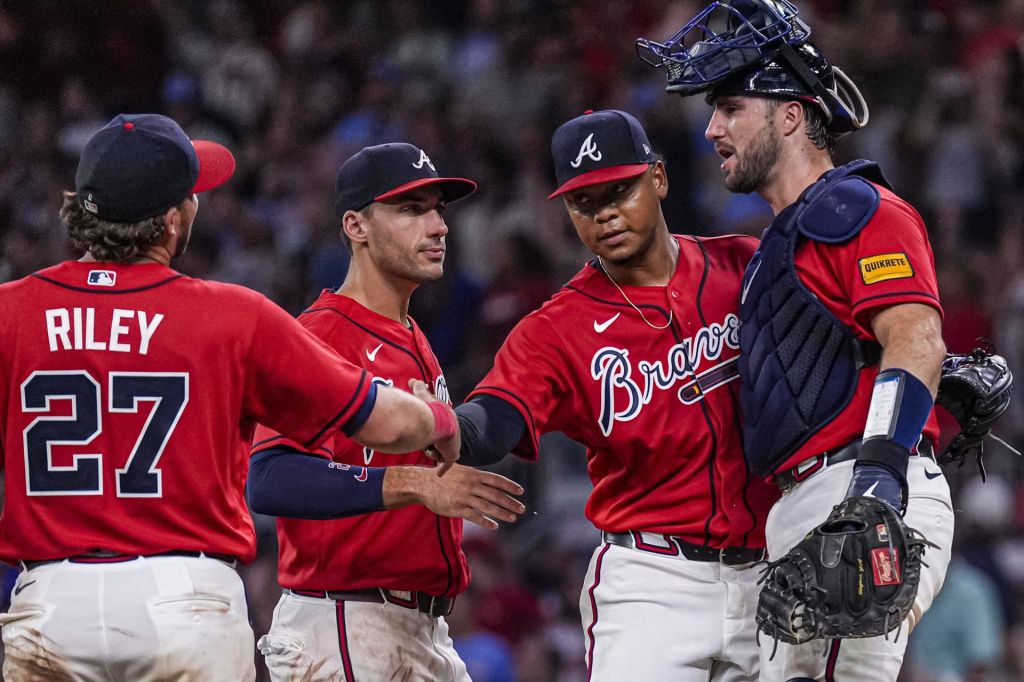
The Braves are still bullish on the long-term potential of its new BravesVision, but the team-owned and operated broadcasting venture continues to cloud the team’s near-term finances.
The MLB franchise said Wednesday morning that its second-quarter revenue fell 2% from the same period a year ago to a new total of $305.1 million, while operating income swung from a prior $41.8 million gain to an $18.5 million loss. While some of the revenue and earnings hits owed to six fewer home games at Truist Park compared to the second quarter of 2025, and a $22 million bump in luxury-tax player payroll this year, sizable financial impact came from the establishment and revenue flow of BravesVision.
The regional sports network, which debuted in March, was cited as a primary driver to the reductions in operating income and adjusted profit for the quarter, though the team framed that as something of an accounting situation. More specifically, the Braves said its newly renamed “media related” revenue fell 10% in the quarter to $72.9 million, with the team calling out “the timing of revenue recognition under BravesVision linear distribution agreements.”
“We remain encouraged by the early success of BravesVision, and are confident that we will replicate or exceed revenue from our prior, third-party local rights partner on an annualized basis,” said Braves president and CEO Derek Schiller in an earnings call with analysts.
“Overall, the legacy cable model continues to decline with some distributors seeing subscriber numbers decrease even more so than previously forecasted—putting pressure on our business. This is not unique to the Braves. That pressure is being felt across sports. However, our unique ability to manage our business means that we have been insulated from those impacts more than most teams,” Schiller said.
His comments largely echoed those from earlier this year, when Schiller told Front Office Sports that it is on track to surpass its prior revenue from Main Street Sports, and then reiterated that projection in a first-quarter earnings call.
Success Markers
The Braves, meanwhile, continue to post sizable returns from The Battery, its highly influential mixed-use development. The club’s revenue in this area rose 14% in the quarter to $28.7 million, fueled in part by a series of new lease agreements.
As MLB’s only publicly traded, U.S.-based team, the Braves are a near-lock to return to the postseason this year, holding a 7.5-game lead in the National League East entering Wednesday’s games.
“The depth of this team has been on full display in the past few months, and we are excited to be playing at or near full strength going into the back half of the season,” said Braves chair Terry McGuirk.
While still operating in additional uncertainty due to MLB’s current labor issues with the MLB Players Association, the Braves also pointed to untapped long-term revenues in the sport’s national broadcasting. The league’s current set of national-level pacts expires after the 2028 season, and like many others around sports, pointed to the NBA’s recent escalation in national rights fees as something of a benchmark.
“The NBA just went from about $2.7 billion per year to $7.7 billion per year, midpoint to midpoint of deals,” McGuirk said. “There is a lot of untapped growth in the popularity of baseball.”
Download the FOS App
The business of sports, in your pocket.



Scan the QR code to get the app now.