Want more from Front Office Sports
in your search results?
A handful of NBA draft picks have an interesting summer decision to make: whether or not take their talents back to school.
On Friday, Colorado district court judge Charlotte Sweeney ruled that the NCAA could not prevent athletes from using a fifth year of eligibility if they enrolled in college in 2022, even if they had already competed for four years. The ruling came as the NCAA is aiming to implement an “age-based” eligibility rule that would give many athletes a fifth season, but not those who enrolled in 2022 and already played four seasons.
Sweeney amended her own ruling over the weekend to clarify that players aren’t eligible if they’re 24 or older or have signed a professional contract.
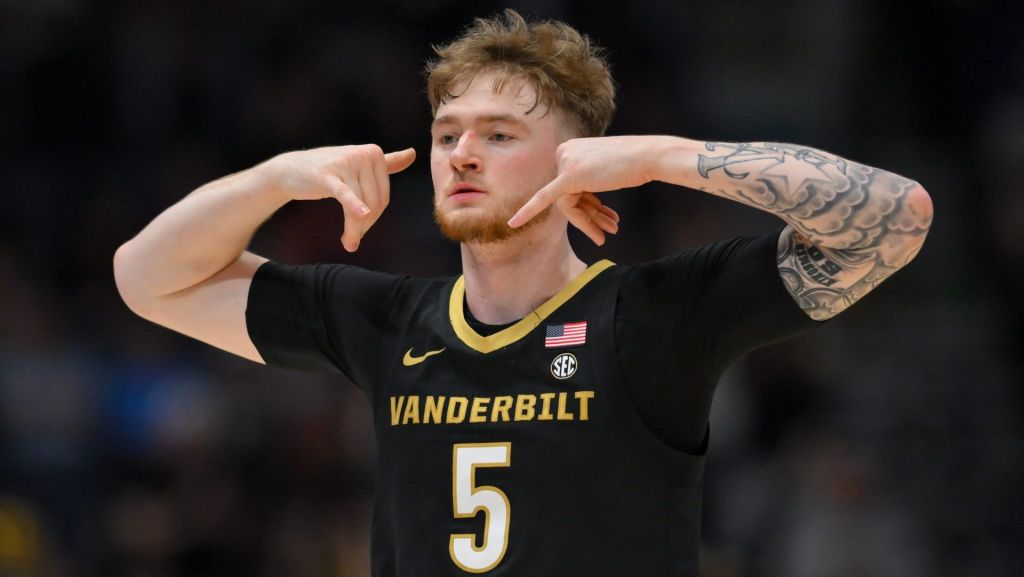
Even with the adjustment, the decision leaves a handful of players who were drafted in the second round of June’s NBA draft with the potential option to return to school. Vanderbilt wing Tyler Nickel (No. 47 overall to the Knicks), Purdue guard Braden Smith (No. 38 by the Bulls), St. John’s guard Dillion Mitchell (No. 40 to the Celtics) and Florida State’s Lajae Jones (No. 54 to the Warriors) are all apparently eligible to play college basketball next year.
The NBPA did not immediately respond to a request for comment. The NCAA declined to comment.
While BYU’s Richie Saunders, who was drafted No. 32 overall by the Grizzlies was initially among the list of eligible players, a league source told Front Office Sports that he is not because he will turn 25 in September. Saunders spent two years on a Mormon mission, which is why he was a 24-year-old senior this year, but that doesn’t change his NCAA status, the source said.
A source told FOS that players and their representation are still learning their options in real time. The transfer portal is currently closed and most college basketball rosters are set. Sweeney said players must abide by NCAA transfer rules and their schools are still subject to roster limits and revenue-sharing caps set by the House v. NCAA settlement.
NCAA president Charlie Baker has said even with Sweeney’s ruling that the NCAA will not clear athletes who have signed a professional contract, including two-way deals.
All four players are unsigned. Nickel and Mitchell will reportedly explore a return to college basketball, according to CBS Sports. Jones’s agent did not immediately respond to a request for comment.
Smith will not explore a return to college basketball, a league source confirmed to FOS, but remains unsigned by the Pacers, who acquired him from the Bulls on draft night. The Pacers are close to the first apron and the franchise has historically avoided the luxury tax, which is why it has yet to fill its final roster spot as it seeks a team-friendly contract.
If Smith returned to college basketball, the Pacers would retain his NBA rights as long as the team tenders him a contract by Aug. 5. The same goes for Nickel, Mitchell, and Jones with their respective teams.
In 1994 the NBA allowed second-round picks to return to college basketball with teams being allowed to retain players’ draft rights as part of a one-year exception. Ultimately only two players took advantage of the provision, which the league did away with the following year.
Second-round picks do not have the same set rookie scale that first-round selections do, leaving most to sign for the rookie minimum of $1.4 million annually or a two-way contract, which pays less than $700,000.
“If I’m one of those players and I can get even just $2 million to go back to school, I think you got to do it,” a Western Conference executive told FOS.
After LeBron James signed with the Sixers for roughly $4 million annually, The Athletic reported that 18 college basketball players will make more than James this season. Sweeney’s ruling could now add to that figure.
Download the FOS App
The business of sports, in your pocket.



Scan the QR code to get the app now.