
Want more from Front Office Sports
in your search results?
Iga Świątek’s defeat in the French Open on Sunday cements that first-time singles champions will be crowned on both the men’s and women’s sides of the tournament.
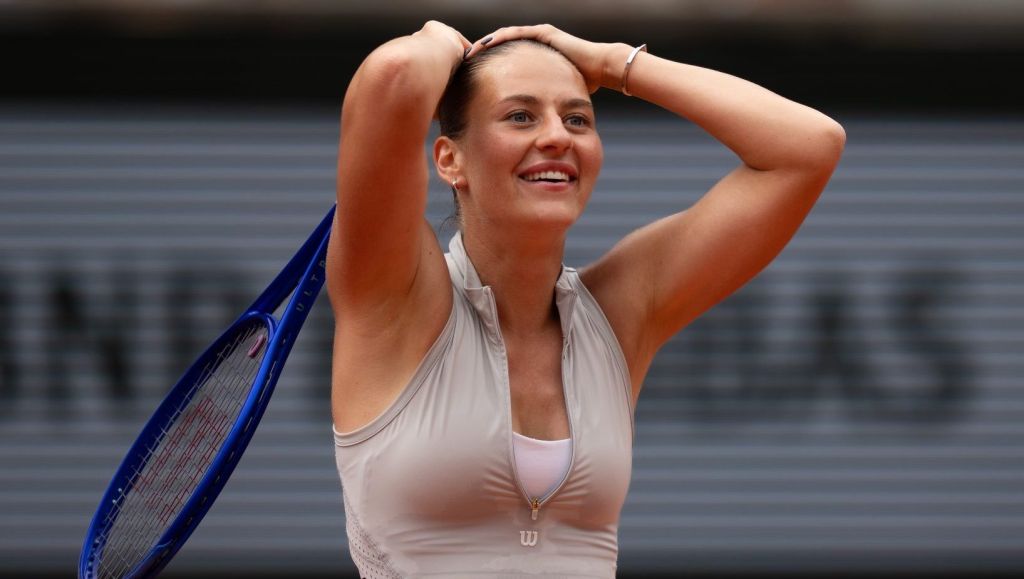
Marta Kostyuk beat four-time Roland-Garros champion Świątek 7–5, 6–1 on her birthday in the tournament’s fourth round. Last year’s winner, Coco Gauff, exited in the third round.
Novak Djokovic was the last past winner standing on the men’s side Thursday when he lost in the third round. Tournament favorites Carlos Alcaraz and Jannik Sinner are also out—Alcaraz missed the tournament due to injury, and Sinner lost in the second round amid dehydration. Daniil Medvedev fell in the first round, and Ben Shelton lost in the second.
Plenty of big names still remain on the women’s side. Aryna Sabalenka and Naomi Osaka will face off Monday night, the first women’s night match at Roland-Garros in three years. Australian Open winner Madison Keys is also still competing.
But on the men’s side, it will be the first Grand Slam victory for whoever takes the crown.
Alexander Zverev, who has lost in three Grand Slam finals, is the favorite, but both veterans and disruptive youngsters alike are still standing.
The men’s and women’s singles champions will each take home about $3.25 million in prize money. Gauff and Alcaraz each won about $2.9 million last year.
Not Just the Tennis
In addition to the rampant upsets, this year’s French Open has dealt with several challenges and controversies.
The tournament began with players limiting their media availability in protest of the tournament’s revenue sharing. Players are set to earn 15% of projected revenue in prize money from Roland Garros, and want that number to increase to 22% by 2030.
The early rounds of the tournament coincided with a record French heat wave that saw temperatures above 90 degrees Fahrenheit.
And last week, the tournament said it would deliver a “significant” fine against Adolfo Daniel Vallejo after the player said Thursday that his match needed “to be umpired by a man” because the woman referee couldn’t handle the “very demanding crowd.”
Download the FOS App
The business of sports, in your pocket.



Scan the QR code to get the app now.