Want more from Front Office Sports
in your search results?
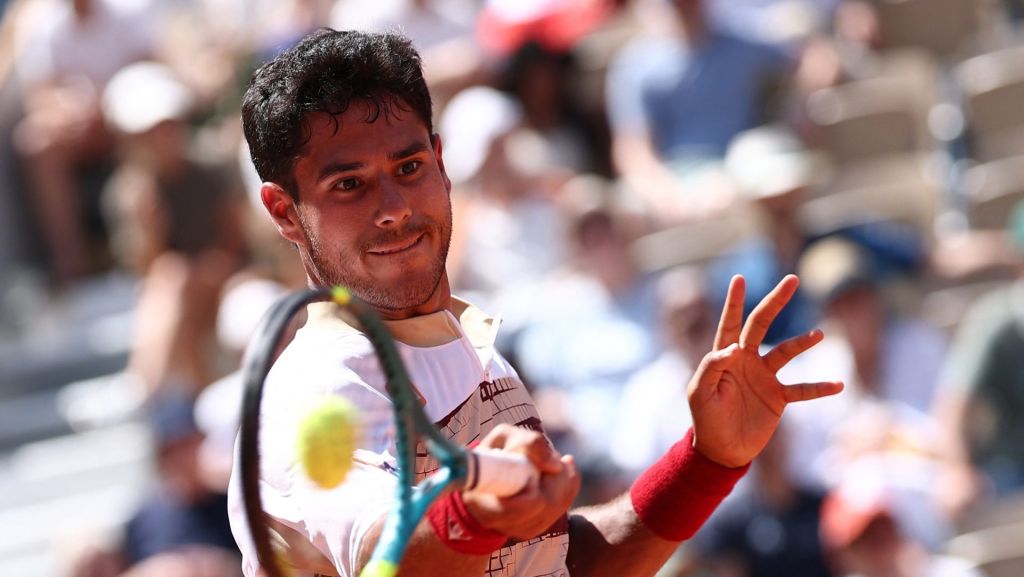
Paraguayan tennis player Adolfo Daniel Vallejo was fined $65,000 from the French Open management for making what they considered misogynistic remarks toward a female umpire.
Vallejo, who fell in the tournament’s second round to 17-year-old Frenchman Moïse Kouamé on Thursday, said that his match should have been umpired by a man, rather than official Ana Carvalho. The French Open and French Tennis Federation called these remarks “unacceptable.”
“Referees’ competence is not measured by their gender, but by their professionalism and their ability to officiate at a high level,” French Open management wrote in a Friday press release. “The result of a sporting event, whether positive or negative, can never justify or excuse such remarks.”
“The French Open strongly condemns all sexist remarks from wherever they come from, and offers its support to the umpire of the match, and more broadly to all the tournament’s refereeing officials,” the tournament continued.
Vallejo, 22, told Clay magazine on Thursday that his match “needs to be umpired by a man,” and that it was “very difficult for a woman to do it.” He said that Carvalho was not strong enough to go against a raucous French crowd supporting its hometown player, who defeated Vallejo in a 3–6, 5–7, 6–3, 6–2, 7–6 five-setter.
“It has to be refereed by a man, because it’s a very demanding crowd and you need a lot of strength to go against the crowd,” Vallejo said. “It’s not normal for the crowd to be shouting for a full minute without any play.”
The world No. 69 said that Kouamé took up significant time lying on the floor and “stalling,” which delayed the game and gave the Frenchman an unfair advantage. Players are allowed 25 seconds between points, but umpires can start a countdown later if there is significant crowd noise.
On Friday, Vallejo took to social media, saying in a now-deleted X post that his words were misinterpreted.
“I never spoke about women in general, I spoke about the referee specifically, who didn’t handle the crowd at any point during the match,” Vallejo wrote in Spanish. “That said, I also didn’t say that I lost because of her. I congratulated the opponent and it’s normal for the crowd to cheer for the home player.”
Gender Divide
This is not the first gender equity issue to arise at the French Open this year. Before the main draw began, WTA Chair Valerie Camillo met with tournament organizers to discuss the lack of night matches scheduled for women—who haven’t played at night in Paris in two years.
French Open tournament director Amélie Mauresmo has previously cited the typically longer best-of-five men’s matches as the reason for giving them a primetime slot, compared to the best-of-three format of a women’s match.
The ATP, WTA, and ITA have not responded to a request for comment regarding Vallejo’s remarks.
Download the FOS App
The business of sports, in your pocket.



Scan the QR code to get the app now.