Want more from Front Office Sports
in your search results?
One week out from the start of college football’s 2026–27 season, the sport is already packed with changes, quirks, and unresolved questions from the offseason.
The NCAA has been unable to enforce rules around eligibility and player compensation due to a string of lawsuits, with no clarity in sight. Meanwhile, the seismic round of realignment due to the rebuilding of the Pac-12 in 2024, as well as the equally earth-shattering coaching carousel from 2025, have created an entirely new landscape of staff and conference makeup. Plus, there’s a new in-game accessory for many schools: multimillion-dollar jersey patch deals.
There’s lots to look out for ahead of Week 0, with storylines that are shaping the sport on the field and off.
Ongoing Eligibility Drama
This summer, the NCAA adopted a new “age-based” eligibility policy allowing players five years to complete five seasons (up from four) starting on their 19th birthday or when they begin college, whichever comes first. The goal: Standardize eligibility rules so that the flood of lawsuits set off in 2024 would stop.
Instead, the policy kicked off a new wave of cases, filed by the freshman class of 2022 that had completed four seasons of eligibility, but who were not grandfathered into the NCAA’s rule change for a fifth. Among a slew of state and federal lawsuits—most notably Wisne v. NCAA, which won a blanket injunction to all Division I athletes—college football programs nationwide have scrambled to add newly eligible players to their rosters.
There are big programs among the schools with these athletes, including Texas, Arizona, and Oklahoma. Meanwhile, the NCAA is continuing to battle more lawsuits and get the eligibility of these players reversed as the season kicks off.
Unrestricted Salary Cap
For the second year in a row, players can earn not only NIL deals but also revenue-sharing deals. This year, the rev-share cap is just over $21 million (up from $20.5 million last year) for all sports combined in an athletic department.
But also for the second consecutive year, schools have been able to use third-party name, image, and likeness deals as a way to circumvent the rev-share cap. Enforcement mechanisms for the College Sports Commission are in limbo as the governing body continues to have no protection from lawsuits.
The result: another year of record-breaking roster costs. At the power conference level, multiple football rosters are rumored to be in the $40 million range alone. Without congressional intervention, collective bargaining, or another stabilization method, those numbers are expected to only increase.
Results of the Coaching Carousel
The biggest drama last season was a coaching carousel that spun out of control—as well as commanding more than $100 million in buyouts.
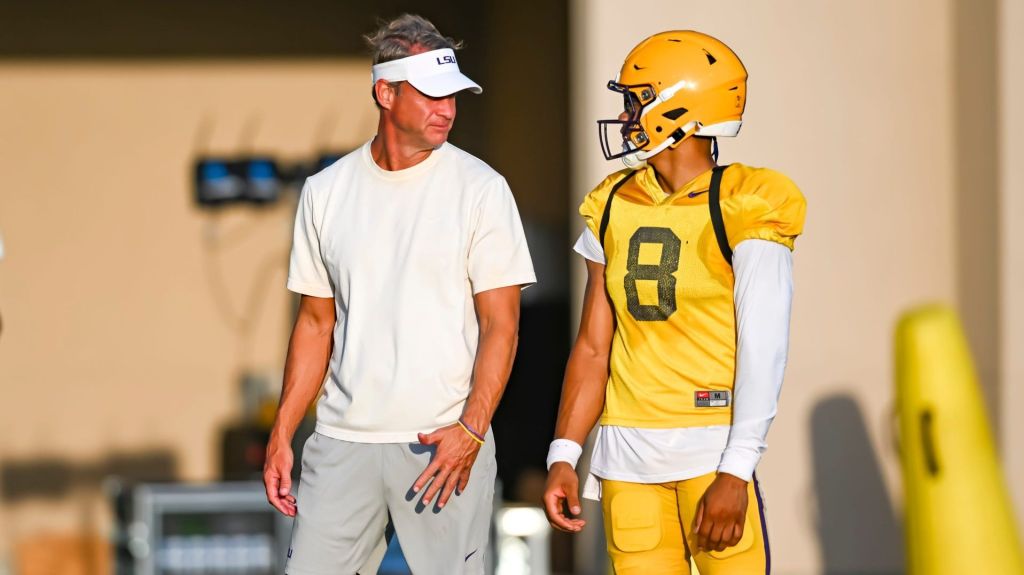
The earliest blockbusters: UCLA’s DeShaun Foster, Florida’s Billy Napier, and Penn State’s James Franklin, who was fired in mid-October but got about $50 million for his troubles. But the biggest story by far—and the biggest buyout—was the firing of LSU’s Brian Kelly. LSU filled the position in short order with Ole Miss head coach Lane Kiffin, who departed amid the Rebels’ historic College Football Playoff run.
In two weeks, Kiffin will take the field with the Tigers for the first time; in Oxford, his former defensive coordinator Pete Golding is in charge. Franklin is at Virginia Tech, with Iowa State’s Matt Campbell filling his old position at Penn State. Former James Madison coach Bob Chesney is leading UCLA. Former Tulane coach Jon Sumrall is coaching the Florida Gators. Napier, the Gators’ former coach, will head up JMU.
There’s also the sordid saga of Michigan’s Sherrone Moore, who was not only fired for cause in December for having an inappropriate relationship with a staffer, but also arrested and sentenced to 18 months’ probation. Former Utah coach Kyle Whittingham has taken his place in Ann Arbor.
Jersey Patch Mania
From rising roster costs to the price tag of firing coaches, schools have been looking for ways to increase athletic-department revenue. In January, the NCAA passed a new rule allowing schools (and conferences) to sell sponsorships for jersey patches for the first time.
Schools have wasted no time securing partners, signing deals with crypto brands, AI companies, and even sports-content outlets. And it’s not just power conference programs that have hopped on the bandwagon: Multiple schools in the Group of 6, including Army, Memphis, and UNLV, secured jersey patch deals of their own.
To date, the Big 12 is the only conference with a league-wide deal, a $20 million partnership with Monster Energy.
Realignment Musical Chairs
When the Pac-12 collapsed in 2023, the majority of the college sports world pronounced it dead. This week, however, the league completes its official resurrection.
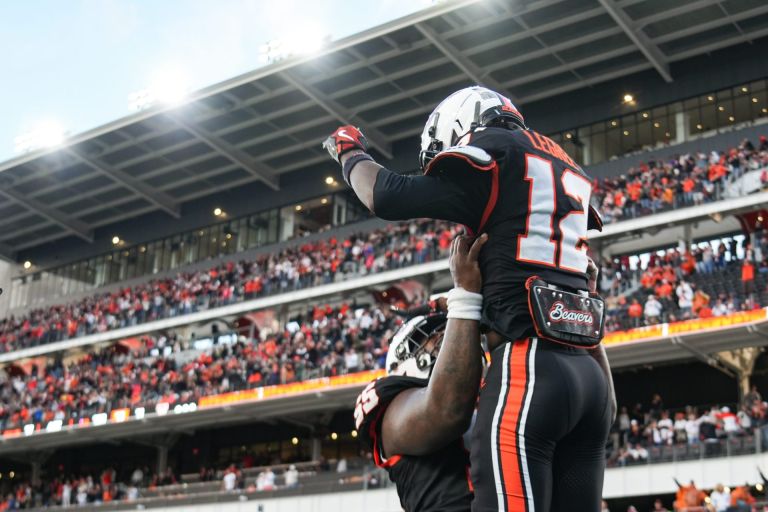
The Pac-12 roared back to life in fall 2024, when new commissioner Teresa Gould announced the two-member league of Oregon State and Washington State would add five Mountain West programs in 2026: San Diego State, Boise State, Fresno State, Utah State, and Colorado State. It later added Texas State, as well as Gonzaga (non-football). With eight full FBS football-playing members, the Pac-12 was able to survive and maintain its FBS status, with a Group of 6 designation for the College Football Playoff.
The Mountain West, led by commissioner Gloria Nevarez, engineered a rebuild of its own.
The league’s full football-playing members now include Air Force; Hawai‘i at Manoa; UNLV; Nevada, Reno; New Mexico; San José State; UTEP; and Wyoming. North Dakota State jumped from the FCS to the Mountain West and will compete as a football-only member. Northern Illinois will compete in football and women’s gymnastics. Non-football members include Grand Canyon and UC Davis, as well as Colorado College for women’s soccer.
The Pac-12 and Mountain West, as well as several schools, were embroiled in litigation over the events of 2024. All parties reached a global settlement, finalizing a deal just a few weeks before the season kicks off.