Cowboys Co-Owner: Decision Time in Bears Stadium Drama
Want more from Front Office Sports
in your search results?
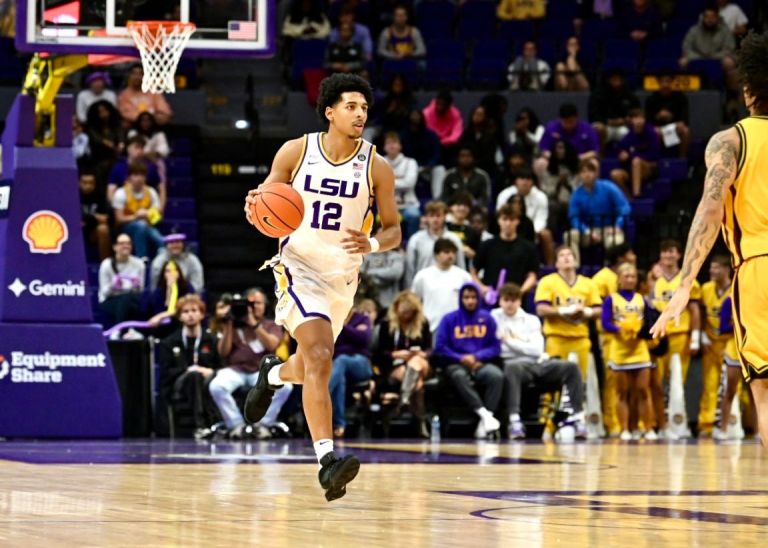
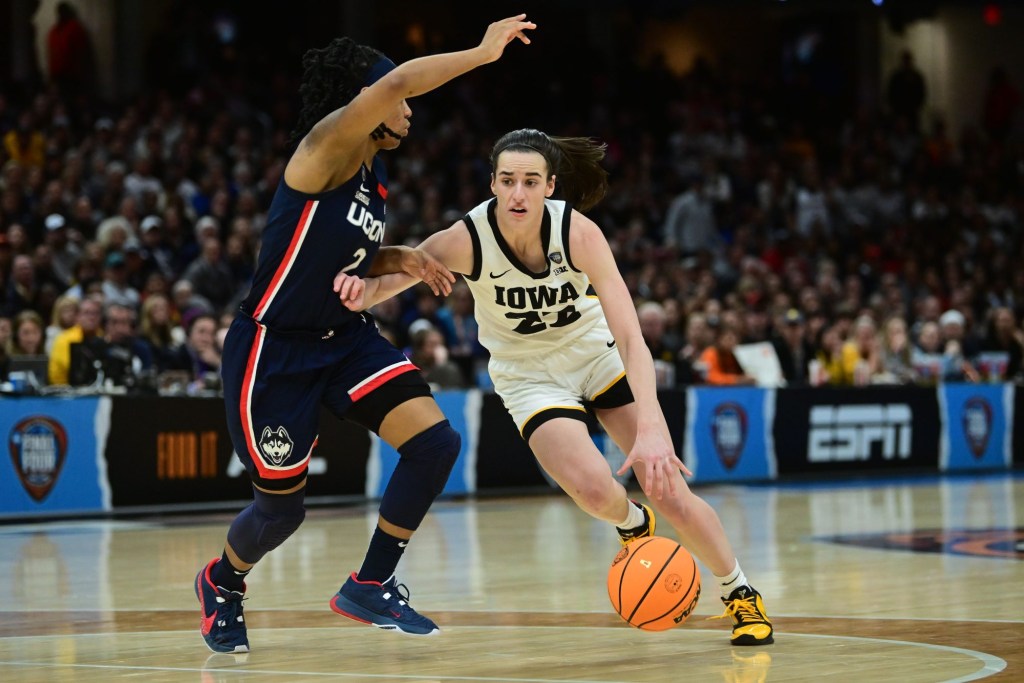
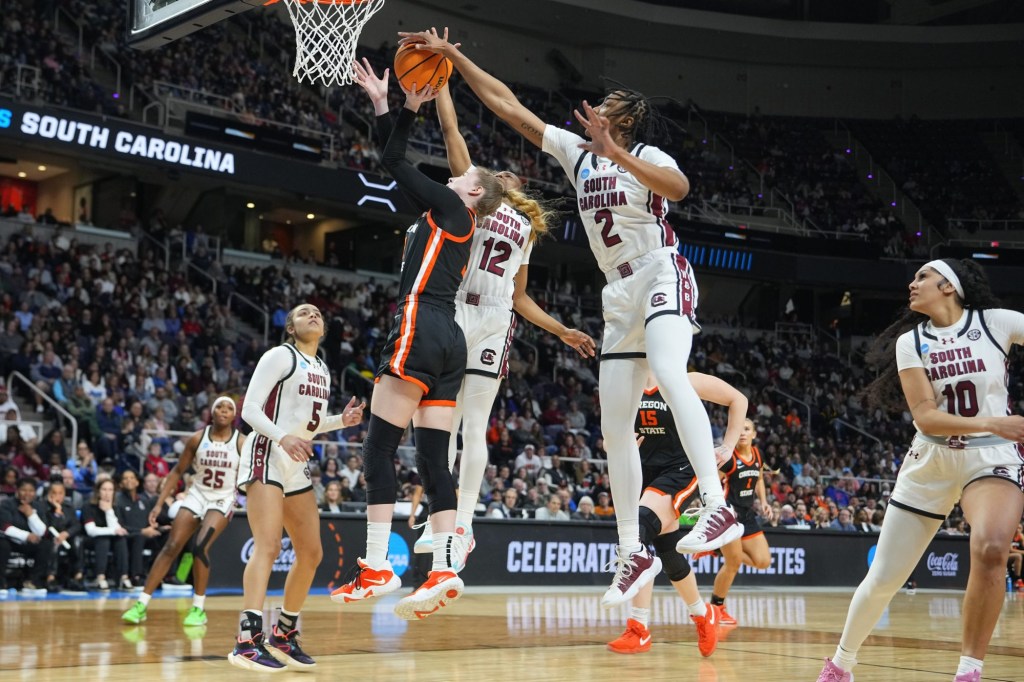
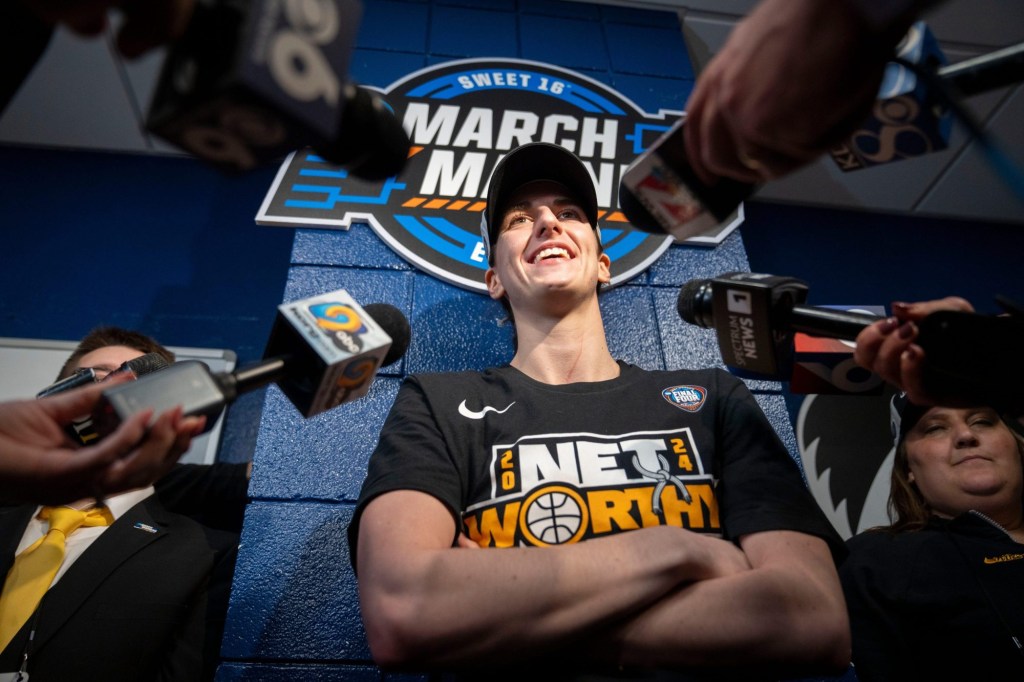
On ESPN’s marquee morning talk show, First Take, Stephen A. Smith performs one of his signature rants about the lasting legacy of Iowa’s Caitlin Clark. At a newsstand inside New York’s John F. Kennedy International Airport, glossy magazine covers showcase LSU’s Angel Reese. On a Monday night in April, a record number of people tune in to watch as those two sensational women and their teams face off in the Elite Eight of the women’s NCAA tournament. Subsequently, every national news outlet sends reporters to cover the Final Four in Cleveland, where ticket prices surpass the men’s version and where one semifinal, between UConn and Iowa, again shatters records. There even grows talk that the women’s final TV ratings could easily surpass the men’s, too.
It wasn’t always this way. For decades, the women’s tournament was undervalued, held back by structural inequities. Only now is it finally getting significant investment and visibility; and only next year will it finally receive a media-rights contract that comes close to reflecting its worth.
By comparison, the men’s tournament has for decades enjoyed hundreds of millions in investment; breathless, minute-by-minute broadcast coverage; and a Final Four that takes over a city much like a Super Bowl does. But nowhere is that investment and care more clear than in its media deal with CBS and Warner Bros. Discovery, which pays out $870 million each year for the three-week event.
Finally, though, women’s March Madness is catching up—and so is the value of its media rights. “Our game is growing and growing,” South Carolina women’s coach Dawn Staley told reporters earlier this week. “A lot of it has to do with us being treated like a sport now. When you treat us like a sport, you will get a return on your investment.”
Over the course of the current media contract covering women’s March Madness, which expires this fall, ESPN has paid out an average of just $34 million each year for those games, plus more than two dozen other collegiate championships included in the deal.
ESPN only began broadcasting all of the women’s tournament’s games on national platforms in 2021, the same year the NCAA faced widespread criticism for inequities exposed between the men’s and women’s tournaments. To save face, the governing body hired an outside law firm to conduct a gender-equity review, which found, among other things, that the longstanding ESPN media contract significantly undervalued the women’s tournament.
In turn, the NCAA overhauled the entire event: It added a First Four (which the men’s tourney had included for more than a decade), finally applied March Madness branding to women’s games, and generally improved tournament funding, staffing, and other “experience-related” offerings. Crucially, the NCAA also promised to put together a strategy for procuring a new media-rights contract that reflected the tournament’s true value, and to consider other structural changes.
And right on cue, the ratings for the 2022 tournament—the first after that equity review was conducted—skyrocketed. Just minutes after the confetti fell to celebrate South Carolina’s title, Staley challenged the very network broadcasting her postgame interview. “You need some competition, some network competition,” she said. “That’s what drives the money up.”
In 2023, a similar story played out: The women’s event saw a 55% overall increase in viewership, capped by a semifinals that set a record of 4.5 million average viewers and an LSU-Iowa championship game that upped the number to 9.9 million, shattering the previous ratings mark. All the evidence was there, and the timing was perfect. The women’s game was delivering more than what the previous deal had accounted for, and the window had just opened for the NCAA and ESPN to renegotiate. In the words of Pac-12 commissioner Teresa Gould, who spent six years running the conference’s women’s basketball strategy, building it into a powerhouse before eventually taking the helm of the new Pac-2: “The sport has been undervalued and underexposed.”
That offseason, officials went to work building a new media contract for all NCAA championships, outside of the men’s tournament (and the College Football Playoff, which is not operated by the NCAA). The NCAA’s new president, Charlie Baker, had assured reporters at the 2023 women’s Final Four that he would approach the negotiations with only the most sophisticated business acumen, and here he tasked Endeavor’s IMG and WME Sports with the job. Karen Brodkin and Hillary Mandel, the two masterminds behind the project, considered spinning off the women’s tournament and selling it as its own product. They even reached out to other networks to gauge interest. Ultimately, though, they opted to keep the tournament bundled with other NCAA championships, and in January they agreed to an extension with Disney.
The terms: $920 million over eight years for 40 NCAA championships, across men’s (excluding basketball) and women’s, in a package that values the women’s basketball tournament at $65 million annually, or twice its previous price. The deal didn’t satisfy everyone, though; critics argued that the NCAA could have gotten more if it had spun women’s hoops out of the package. To which Brodkin and Mandel countered with two points: They were asked to do what was best for all NCAA championships, not just women’s basketball. And they had negotiated in an abysmal broadcast-rights economy. “This media market is not like we’ve ever seen before,” Brodkin told Front Office Sports at the time.
That new contract begins in September, which means this year’s women’s tournament will be the last under the current deal. And to say that the event is ending on a high note would be a massive understatement. The Elite Eight meeting of LSU and Iowa, a rematch of last year’s championship that featured the final collegiate meeting between Clark and Reese, averaged 12.3 million viewers—more than every previous women’s college basketball game in recorded history; more than any previous college hoops matchup, men’s or women’s on ESPN’s platforms; and seemingly, at the time, the most-viewed women’s basketball game at any level in three decades. Viewership was up 127% over last year heading into the Final Four. Then, on Friday night, an average of 14.2 million people tuned in to a thrilling women’s semifinal between Iowa and UConn, which easily broke all those just-established records (and more, becoming the most-watched basketball game on ESPN ever, college or pro, men’s or women’s). The two women’s semifinal games combined to be the most-watched in history as well.
All of which has left experts across the women’s basketball industry to wonder: Were people perhaps right to criticize that $920 million bundle?
Next season, the women’s tournament should see almost immediate improvements in its coverage, even beyond the elevated treatment it has already seen on ESPN. The storytelling, for starters, will go deeper—the network is required to provide long-form, documentary-style storytelling every year, which Brodkin and Mandel say is a rare promise in any media-rights contract.
The most important change, however, has nothing to do with the TV product itself. The deal so richly lines the NCAA’s pockets that it is willing, finally, to offer a prize-money distribution system, more commonly known as tournament “units.” Currently, Division I conferences receive units—each one a $2 million prize package—based on how many of their teams make it to the men’s tournament, and how far they advance. Those units are paid out over a rolling six-year period, with each team earning money for every game, with just two exceptions: the first game for each conference’s automatic qualifier, and the championship game. This year, the NCAA will pay $170 million in units from its men’s basketball performance fund.
The women’s tournament has never had this system, even though coaches nationwide—from Staley to Stanford’s Tara VanDerveer—have described it as the most pivotal change the NCAA could make. A units system wouldn’t just award more money to schools to invest in their women’s basketball teams; it would incentivize athletic departments to spend more with the hopes of earning units in the future. “With so many complex challenges facing college sports, fixing this inequity by providing equal incentives for athletics success for men’s and women’s teams should be a lay-up,” read a statement from one NCAA advocacy group, the Knight Commission on Intercollegiate Athletics, released ahead of the Final Four.
The NCAA continues to tease that a women’s unit system is on its way, but it still has refused to fully commit.
With the new ESPN deal, the timing of its scheduled conclusion is arguably just as important as when it begins. The contract that Brodkin and Mandel negotiated will expire in the spring of 2032, just as the men’s deal with CBS and Warner Bros. Discovery comes to an end. That synced timing was intentional, leaving hope of rectifying at least one more major inequity.
The current CBS-WBD deal for the men’s tournament includes a sponsorship component that is hugely problematic for the women’s tournament: The NCAA’s corporate partners program, sold by the two networks, requires brands to buy sponsorships in the men’s tournament before signing on to any other sport. In other words, no company is allowed to buy a women’s tournament sponsorship à la carte. This creates a huge cost-barrier to brands that want to activate around the women’s tournament. They may not be able to afford the men’s buy-in—and they may not want to. Plenty of companies—feminine hygiene products, for example—see value in partnering with women’s basketball exclusively. But now, by timing the ESPN and CBS-WBD deals to wind down at the same time, the NCAA will have a chance to redo a future corporate partners program that doesn’t hinder the women’s tournament.
The timing of that future termination date also allows the NCAA to consider a completely new strategy for selling D-I basketball. The NCAA has more than 40 championships to sell, including the men’s and women’s tournaments. Could the governing body regroup these properties to get higher bids? “You should give people options,” says Octagon’s SVP of global media rights consulting, William Mao. “Lay out a menu.” A couple of different combinations, he says, could include spinning off women’s basketball and selling it as a stand-alone property, or selling all D-I basketball—men’s and women’s—together.
At first glance, selling the men’s and women’s tournaments together in 2032 could prove once and for all that the two events are on equal footing. But if history is any indicator, the women’s tournament would almost certainly make more money if it was sold by itself. Across the sports landscape, bundling men’s and women’s properties together almost always ends up with a women’s event getting the short end of the stick—just look at the World Cup media rights.
In any case, there are very few media companies with enough channels and streaming platforms to broadcast not one but two overlapping fields of 68, Mao says. Adding another wrench is the upcoming arrival of an ESPN-Fox-WBD bundle, informally referred to as “Spulu,” which could allow all three networks to profit off one another’s inventory but leave the future of March Madness Live hanging in the balance.
From a broad NCAA standpoint, there could be enough other popular events beyond basketball to sustain a separate media-rights package that doesn’t include D-I women’s hoops. Championships in baseball, softball, women’s gymnastics, and volleyball have seen growth in recent years, and less-popular or lower-division championships could ride their coattails. But the NCAA could also decide, again, to stick women’s basketball in the package, sacrificing a few extra million dollars in women’s March Madness rights for the good of the group.
There are no (serious) estimates for how much either tournament could be worth by 2032, given how quickly the broadcast-rights economy can change between now and then. Realistically, in eight years the NCAA itself may no longer even exist. But it’s clear that women’s basketball is growing in popularity, and that growth isn’t slowing down.
“It’s a moment, like people are saying—but it’s more than a moment,” UConn women’s coach Geno Auriemma told reporters this week. “Sometimes moments become minutes, and minutes become hours, and hours become days. And the next thing you know, it becomes part of the national pastime.”
Men’s March Madness can only hope to keep pace.
Download the FOS App
The business of sports, in your pocket.



Scan the QR code to get the app now.