Want more from Front Office Sports
in your search results?
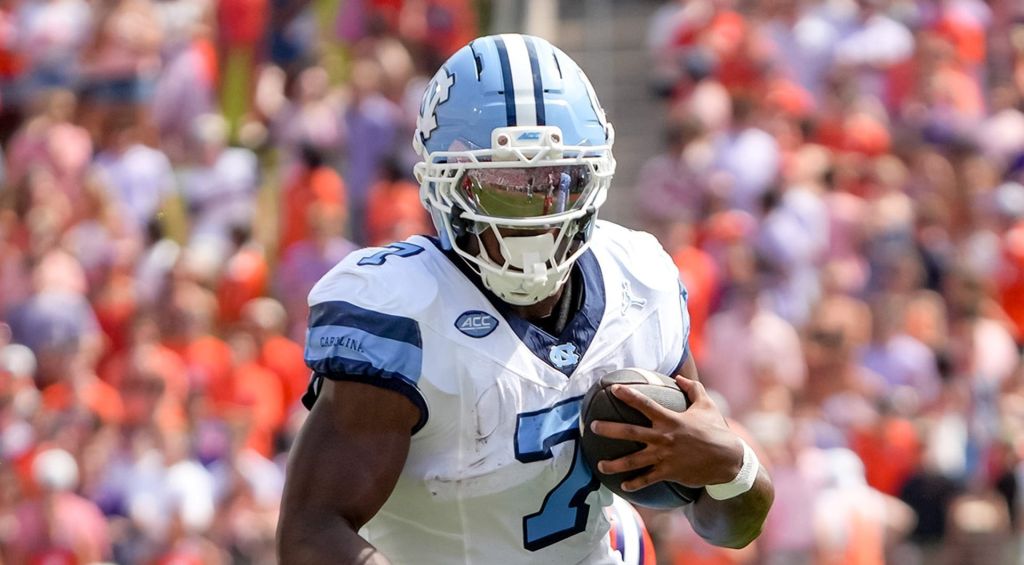
The University of North Carolina took the lead role organizing a group of ACC universities opposed to conference realignment restrictions in the Protect College Sports Act, according to emails obtained through public records requests.
Florida State and Clemson sued the ACC in 2023, making them the presumed leaders of any organized effort of schools to leave the conference; their 2025 settlements established more favorable terms for departing the league. But it was the ACC’s bedrock institution that organized the opposition within the conference.
Beginning in late August and over the course of the next five weeks, UNC officials helped coordinate efforts among multiple ACC schools to strike the conference realignment restrictions, culminating in letters to both chambers of Congress.
On Aug. 25, UNC assistant director of federal affairs Kelsey Mason emailed UNC chancellor Lee Roberts, AD Steve Newmark, UNC vice chancellor and general counsel Paul Newton, and other senior university officials about Section 205 of the bill. As drafted at the time, the provision would require schools leaving one power conference to remain independent for five years before they could join another, and it would cap membership in the power conferences at 19 schools.
Mason wrote that UNC’s federal-affairs staff believed the provision wasn’t “an absolute requirement” for Sen. Maria Cantwell (D., Wash.), the bill’s Democratic sponsor, but that, “our current understanding is that this provision was ultimately kept in the bill by Sen. Cruz staff, at the urging of Commissioner [Jim] Phillips.”
If Phillips did push to keep the provision, he might have violated Section 4.11 of FSU’s 2025 settlement with the ACC, which bars the conference from taking any action “that conflicts with, limits, or otherwise interferes or frustrates the rights of FSU.” The settlement explicitly affirmed one of those rights being the “contractual right to withdraw from the ACC.”
Mason asked in her email whether her office could coordinate with “trusted government relations colleagues” at Clemson, Florida State, Miami, and Stanford. In UNC AD Newmark’s response to Mason, he wrote, “I did speak with the ACC today, and they stated unequivocally that the Commissioner did not advocate for the provision, or request that it be included or retained.”
The ACC declined to comment for this story on the record. UNC pointed FOS to an Oct. 27 ESPN interview with Newmark as representative of its position. (In that interview, Newmark said UNC supports the bill, but “what we’ve not received clarity on is the purpose of the independence clause.”)
On Aug. 29, four days after Mason’s email, Stanford president Jonathan Levin asked UNC chancellor Roberts for a call about the bill. The two scheduled one for Aug. 31. Records do not disclose what exactly was discussed.
Stanford only just joined the ACC in 2024 after the breakup of the Pac-12, agreeing to a partial media distribution from the ACC for several years. Stanford later said the arrangement created a budget shortfall and it needed $40 million in support from the Office of the President’s discretionary fund for athletics in 2024–25.
A Sept. 23 draft of the coalition’s letter to House leadership included Levin and UC Berkeley chancellor Rich Lyons as proposed signatories alongside the leaders of UNC, Clemson, Florida State, and Miami.
On Sept. 24, Mason told UNC officials that House Majority Leader Steve Scalise (R., La.) had requested a letter from House members outlining the concerns of UNC and “other likeminded institutions.” UNC had been given the opportunity to edit that letter, and planned to ask North Carolina representatives to sign it.
The university’s role extended to strengthening the coalition’s demands. An initial Sept. 25 draft of the school’s letter to Cruz and Cantwell proposed a three-year sunset to the three-year independence requirement, rather than its immediate removal. UNC Board of Trustees chair Malcolm Turner pushed for stronger language, arguing the draft “indicates a form of support for an independence provision when we believe it should ultimately be removed.”
Clemson Board of Trustees chair Kim Wilkerson agreed and said Clemson staff would draft a new letter seeking the clause’s removal. She added that FSU Board of Trustees chair Peter Collins was reaching out to USF, Cal, and Stanford about joining the effort.
The revised letter sought complete removal of the independence requirement and a conference membership cap of 22 schools. UNC, Clemson, Florida State, and Miami sent the revised letter to Cruz’s and Cantwell’s staffs on Sept. 27 and the House letter on Sept. 29.
The push exposes cracks in the lobbying campaign of Saving College Sports, the advocacy group founded by Texas Tech booster Cody Campbell, which had appeared largely unified throughout the summer.
On Sept. 15, SCS leader and former Baylor board chair Dary Stone sent supporters an email with the subject line “Pay Attention,” criticizing opposition to Section 205 as “special interest driven” and warning “certain ACC School leadership are trying to leverage Senators for relief in Section 205.”
UNC board chair Turner and former UNC AD Bubba Cunningham were among the recipients. Ten days later, Turner was pushing the coalition to demand the provision’s removal.
After the “blue wave” of the midterm elections, the PCSA is thought to be highly unlikely to sail through.
Republican lawmakers are attempting a last minute push to get the bill passed before Democrats take control of Congress in January. FOS previously reported that Senate GOP staffers had warned the conferences that the bill would die once Democrats take control of Congress and their demands started with “employee status, collective bargaining rights, and end with private right of action.”
A revised bill released on Nov. 20 included the changes sought by UNC, FSU, Clemson, and Miami in their September letter to Congress. Those changes were considered a prerequisite for the bill to have a chance of clearing the House.
Download the FOS App
The business of sports, in your pocket.



Scan the QR code to get the app now.