Want more from Front Office Sports
in your search results?
Time is running out for the Protect College Sports Act—but it isn’t fully dead yet.
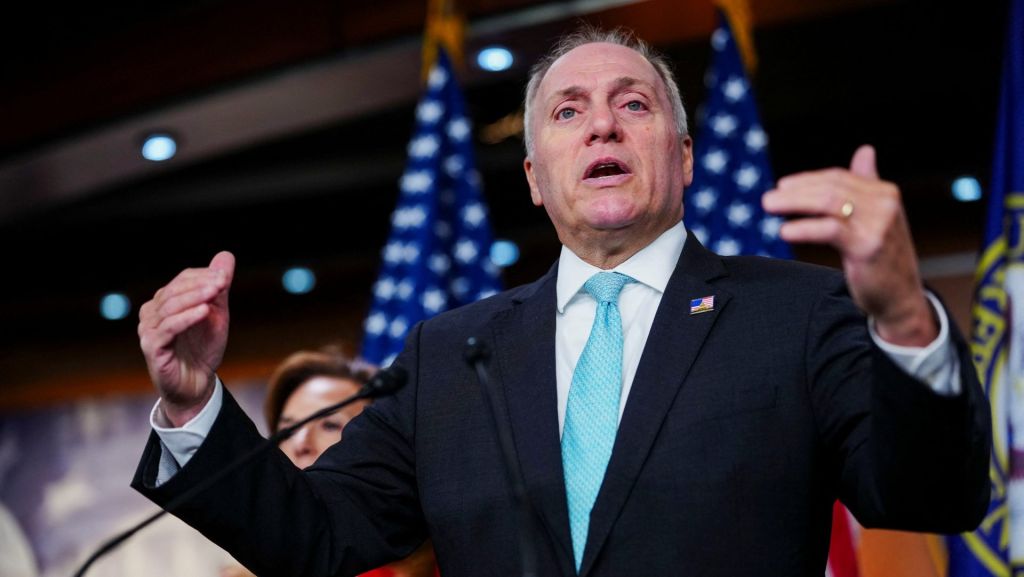
On Tuesday, House Majority Leader Steve Scalise (R., La.) affirmed that an amended version of the PCSA would receive floor consideration in the House next month. However, the timing has already been pushed back from the week of Nov. 30 to the week of Dec. 8.
While it’s surprising to some that the bill is scheduled for consideration at all in the lame duck session, obstacles remain.
It’s unclear if House Republicans can coalesce around a version of the bill, which Democrats oppose. The bill’s biggest enemies may be logistical, from Republican attendance in D.C. after the midterms to a condensed timeline if the bill returns to the Senate. If the bill doesn’t reach President Donald Trump’s desk by the time the next Congress is sworn in in January, it would have to completely restart the legislative process.
“We remain committed to working together to address outstanding concerns in the House as we keep building the support necessary to move this important legislation across the finish line,” Scalise said as part of a joint statement with New York Yankees president Randy Levine—an advisor to Trump who’s been working to pass the PCSA.
A ‘Fragile Coalition’
The PCSA has faced an uphill battle in the House since before the midterms.
House Democrats were already unlikely to support the bill en masse given previously publicized concerns over labor and civil rights issues. But after the blue wave swept the nation, Democrats are now less incentivized to compromise weeks before they take control of Congress. (Incoming House Speaker Hakeem Jeffries (D., N.Y.), is a member of the Congressional Black Caucus, which has come out against the PCSA.)
House Republicans could have passed the bill using their narrow majority—but many GOP lawmakers weren’t on board with the legislation either.
House Republicans including Scalise wanted to include a clause preventing athletes from being deemed employees, while members of the House “Freedom Caucus” want to add a provision limiting the number of international athletes, House aides said. Plus, FSU, Miami, UNC, and Clemson took issue with conference realignment restrictions, as FOS previously reported—-meaning Republicans from South Carolina, North Carolina, and Florida might not vote yes.
But neither outside proponents of the bill (including the White House) nor bill authors like Sen. Ted Cruz (R., Texas), gave up on pressuring the House to act. Last week, House Republicans announced they would bring the bill for consideration the first week of December.
“The PCSA in its current form faces real challenges in the House from many factions of our conference who take issue with several measures in the bill, along with Democrats outright opposing it,” Education & Workforce Committee Chairman Tim Walberg (R., Mich.) and Energy & Commerce Committee Chairman Brett Guthrie (R., Ky.) said in a joint statement. “We are working with our members to address as many issues as possible while keeping those changes narrow in order to maintain the fragile coalitions in the House and Senate.”
Procedural Barriers
On Friday, House committee leaders released a revised version of the bill, which implemented some moderate Republican requests while softening the conference realignment restrictions.
One source involved in the discussions accused Scalise of attempting to tank the bill altogether, given that by modifying it, it would have to return to the Senate—and face an even more precarious path.
But two House aides denied that characterization in conversations with FOS. They pointed to the fact that the no-employee clause and international athlete limits weren’t included in the bill as proof that they were attempting to keep it bipartisan, as almost no Democrats in either chamber are expected to support those clauses.
Tuesday’s joint statement from Scalise and Levine could signal increased cooperation at least within the GOP. But that may not be enough.
Democrats have concerns included the narrowing of a private right of action, counting more third-party NIL deals against the revenue-sharing cap, and allowing schools to block player jobs or internships, according to one House aide. “House Republicans’ PCSA leaves athletes even worse off than the one that passed the Senate,” the aide said.
Other major hurdles for the PCSA revolve around attendance and timing. After many Republicans lost in the midterm elections, some have decided not to return to D.C.—a problem expected to continue throughout the lame duck session, sources said.
And if the bill makes it to the Senate, there’s no guarantee the Senate would have enough time to pass a new version in the few weeks between Dec. 8 and when Congress breaks for the holidays.
Download the FOS App
The business of sports, in your pocket.



Scan the QR code to get the app now.