Want more from Front Office Sports
in your search results?
MLB’s already compressed free agent market is set to find yet another gear after ace pitcher Tarik Skubal completed his record-setting deal with the Mets.
In the wake of Skubal’s nine-year, $450 million pact with New York, setting a league record for a pitcher contract, the rest of MLB’s free market is projected to produce a flurry of deals.
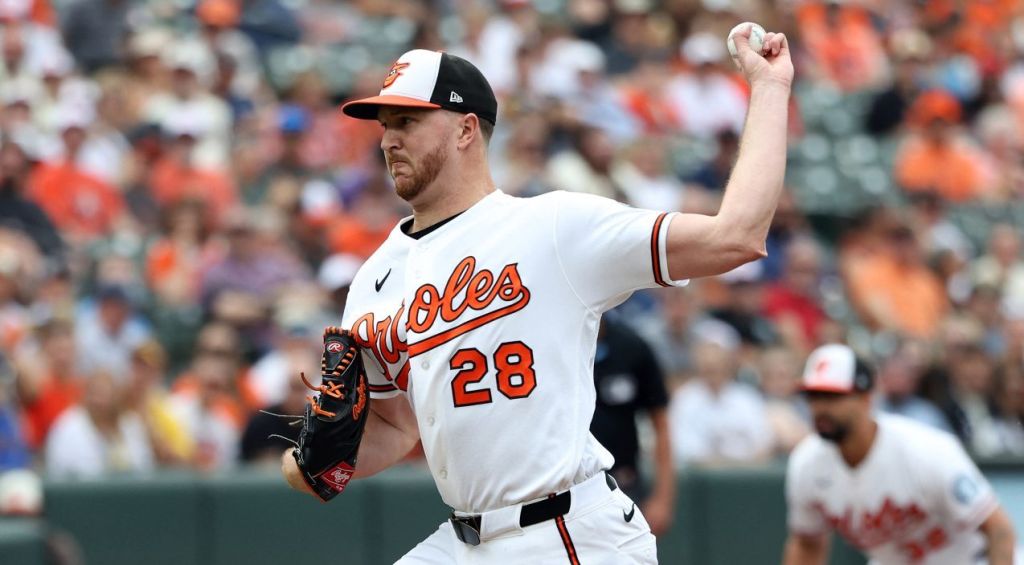
That already has started this week as the Cubs signed left-hander Trevor Rogers, seen as one of the top available pitchers after Skubal, to a five-year, $120 million deal. The Mets, meanwhile, also signed veteran first baseman Paul Goldschmidt to a one-year, $8 million contract, and the crosstown Yankees agreed to terms with reliever Brent Suter on a one-year, $4 million pact.
The Cubs also dipped into the international market, signing Japanese slugger Teruaki Sato, a two-time MVP in Nippon Professional Baseball, to a six-year, $120 million agreement.
Other players expected to sign sizable free-agent deals around the league over the next week include pitchers Michael King and Freddy Peralta, outfielders Seiya Suzuki and Randy Arozarena, and infielder Jazz Chisholm Jr.
Skubal’s contract, however, will have a pronounced downstream impact as several clubs that were also pursuing the two-time Cy Young Award winner will now turn their attention and budgets elsewhere.
“The Skub-ino has fallen,” Scott Boras, Skubal’s agent, told USA Today in one of his trademark puns. “A lot of doors are opening now. No doubt about it.”
Looming Labor
The rush of player deals is happening as the current labor deal between MLB and the MLB Players Association expires Dec. 1., and a management lockout is widely expected after that. As a result, many free agents are eager to lock in their next contracts before all transaction activity is frozen during the lockout, and the league’s economic system potentially changes.
Team owners are seeking a hard salary cap and floor, and vow they will now approve a new agreement without such a system. The union, however, is just as firm in its opposition, and argues that a cap reduces player compensation and movement and erodes contract guarantees.
Bargaining sessions on Friday and Monday produced some progress on other economic and policy-related fronts, but the sought-after cap remains the elephant in the room.
“Players are emboldened by the success of this game,” Boras said earlier this month. “They are standing on truth, absolute truth, of the fact that we have record franchise revenues in every quadrant of the market. We have record viewership. We have record sponsorship. We have record attendance. We don’t have to guess anymore like [in 2021].”
Download the FOS App
The business of sports, in your pocket.



Scan the QR code to get the app now.