
SportsGrid Up for Sale Amid Revenue Slide
Want more from Front Office Sports
in your search results?
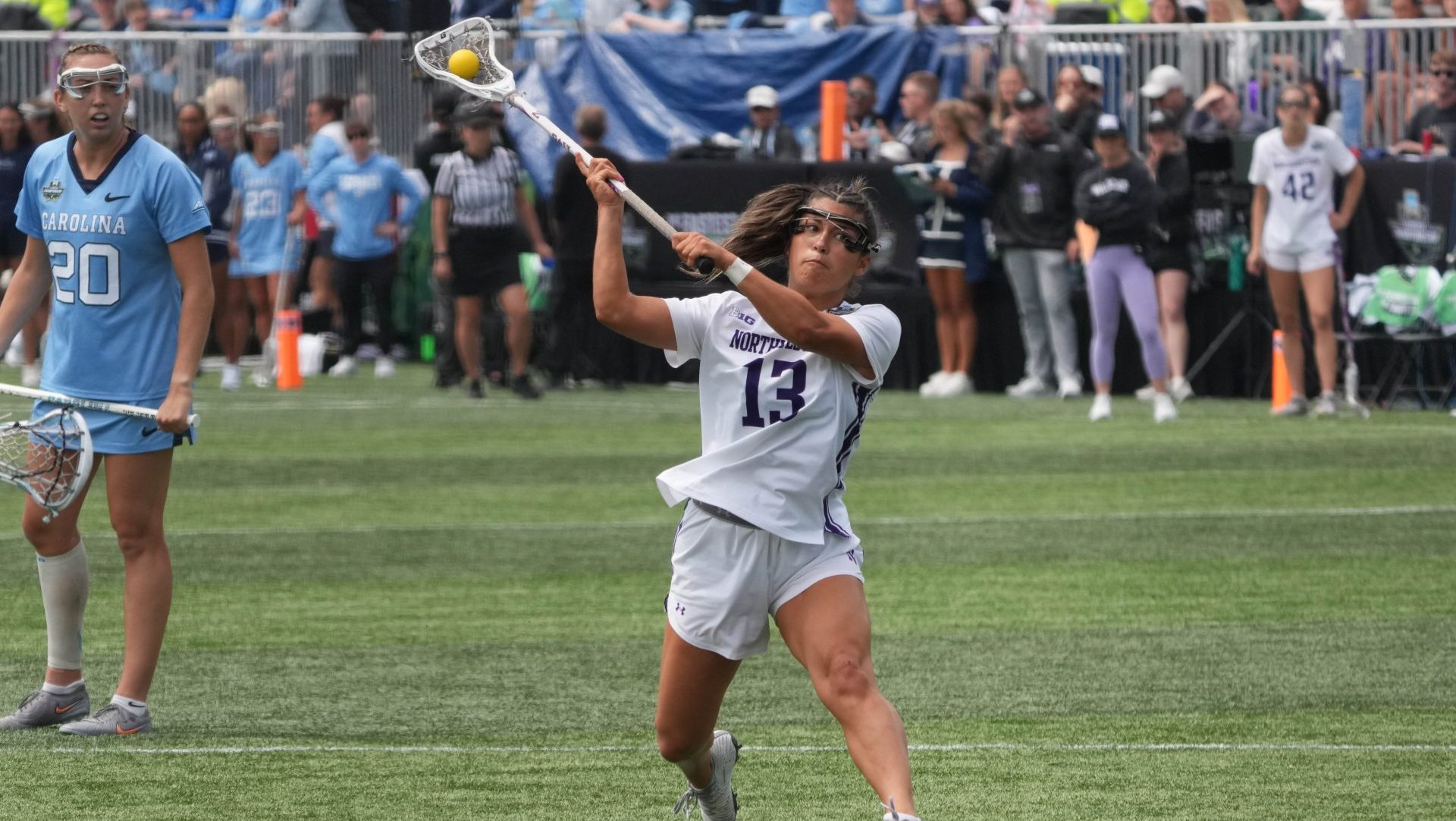
EVANSTON, Ill. — More than 8,000 fans descended on Northwestern’s lakefront stadium on Memorial Day weekend to watch the top-seeded home team beat No. 2 North Carolina in the Division I women’s lacrosse championship. It’s the ninth national championship for the Wildcats, who are the only team west of Virginia to capture a title.
“I hope we’ve inspired more people to watch this game,” Northwestern coach Kelly Amonte Hiller said in a press conference after the final. “I hope ESPN felt good about the broadcast, the sport, and the potential for this to grow on TV and beyond.”
Growth is the main goal for every one of the sport’s stakeholders—from the youth level through the highest tiers of the NCAA and into the new pro ranks. But it’s not a straightforward proposition in college sports’ revenue-sharing era.
After last July’s House v. NCAA settlement allowed schools to pay players directly, the viability of many smaller college sports is being tested. More than 40 D-I programs have been cut in the past year, including Iowa State gymnastics, Quinnipiac rugby, and several tennis programs.
Women’s lacrosse, the fastest-growing NCAA sport throughout the past two decades, is a unicorn in this unsettled landscape.
On one hand, the number of D-I programs ballooned from 77 in 2006 to 131 today, including the recent additions of Clemson and Florida State in the ACC. (Both were added to meet Title IX requirements, which have been a boon for women’s lacrosse.) And no D-I programs have been cut post-House settlement.
Yet compared to volleyball, softball, and soccer, women’s lacrosse is still niche, with fewer programs. The sport also has a much smaller audience than its men’s counterpart. Although the sport has diversified geographically in recent years, the majority of lacrosse programs are still clustered in the Northeast and Mid-Atlantic.
Women’s lacrosse is in a “stable, good position,” USA Lacrosse CEO Marc Riccio tells Front Office Sports. But the sport also has well-established challenges.
In 2025, the Intercollegiate Women’s Lacrosse Coaches Association (IWLCA) hired a consulting firm to evaluate the sport’s future in the House settlement era. The resulting whitepaper, released in November, said the sport lacks “a compelling vision, clearly defined core values, and a cohesive brand,” while aspects of the House settlement including roster limits, revenue-sharing, and resulting sports cuts were considered threats.
Women’s lacrosse is increasingly successful, yet these issues—and their tricky solutions—are keeping the sport’s leaders on their toes even with the success of its marquee event this year.
“When colleges are seeing millions of dollars walking out the door, the thought of bringing on a 38-person roster is tough,” IWLCA executive director Liz Robertshaw tells FOS. “ What can we do?”
Prioritizing Expansion
With its title game broadcast on ESPN, D-I women’s college lacrosse benefits from the increased budget of an “elevated championship,” says NCAA media coordinations associate director Michelle Watsky. This year’s title game aired in a prime weekend slot—Sunday at noon E.T.—and averaged 470,000 viewers to become the most-watched women’s lacrosse game on record.
But its biggest challenge historically is obtaining a significant footprint beyond the East Coast.
Riccio says sanctioned lacrosse at the high school level—currently in 27 states, including emerging hotbeds California and Florida—directly correlates with increasing participation. But Robertshaw, as well as UNC lacrosse alumnae Ashley and Nicole Humphrey (sisters of current UNC star attacker Chloe), tell FOS that expanding participation starts with exposure from big-time college programs.
It’s why the IWLCA desperately wants to push the sport into football-rich SEC territory and the West Coast, to further expand it in an era where colleges are concentrating spending in a few major sports.

Title IX has helped D-I add new women’s lacrosse programs in historically untraditional areas—Robertshaw says Clemson, which started play in 2022, has “great attendance numbers.” But college sports’ new era has complicated further similar expansion. “No one feels safe in this House era,” Robertshaw says.
Still, if big-brand schools do take the jump to support women’s lacrosse, the sport could find additional footing—and more security. The NCAA’s Watsky says that more schools sponsoring a sport is directly correlated with greater investment from the organization.
“If I look at soccer, they have upwards of 300 or more women’s soccer programs at the D-I level, and they’re not being cut on the regular,” Robertshaw says. “In order for our sport to grow, we need more programs, especially those that are being seen on TV. I need to see Alabama, Tennessee, and Oklahoma.”
Amonte Hiller, who revived Northwestern’s team in 2002 when it was initially cut from varsity status, understands how difficult it is to expand a sport currently. “We’ve been fortunate enough to go west beyond Northwestern and the Midwest, and we’ve got the mountain states, we’ve got the West Coast, and we really want to see that stay, but also grow, and that’s challenging right now,” she said in Evanston. (She notes her daughter, Harlee, attends Iowa for wrestling, which first sanctioned NCAA women’s championships just last year.)
The location of this year’s championship weekend—always a big topic of discussion for lacrosse’s top brass—was particularly significant for expansion ambitions.
In its push to make sure women’s lacrosse covers more ground, the IWLCA wants to expand its championship weekend to newer locations. This year’s season final at Martin Stadium, with its 12,000-plus capacity,marked the first D-I championship outside of the Eastern time zone.
Northwestern was successful, but the organization still has an overarching worry that continually pushing the sport out of its traditional boundaries would hamper the audience.
This year’s men’s and women’s championship weekends were initially supposed to take place at Gillette Stadium outside Boston, but the 2026 World Cup rendered the venue unavailable in early 2025. NCAA assistant director of championships Caleb Kolby told FOS before that picking Northwestern as a host was an “inherited risk” because it was significantly further west than the event’s previous hosts, but the tighter timeline to find a replacement host made geographical considerations a lower priority.
In Evanston, all four coaches of the competing teams praised the opportunity for Midwestern fans to see championship college lacrosse in their region for the first time. It’s a small step in the broader constellation of concerns, says USA Lacrosse’s Riccio, but a meaningful one.
“We’re seeing it right before our eyes,” Ashley Humphrey told FOS in Evanston of lacrosse’s growth. “We’re in Chicago for a national championship, which years ago I don’t think would have happened.”
“Move It Forward”
As small and emerging women’s sports look to expand their geographic reach, they aren’t just challenged by schools pouring resources into football and basketball.
For lacrosse, among the “threats,” according to the IWLCA whitepaper, is the expansion of women’s sports such as flag football, wrestling, acrobatics and tumbling, stunt, and triathlon, which “may slow the growth of girls’ and women’s lacrosse.”
Robertshaw says that women’s flag football is “definitely concerning,” as the NFL has heavily invested in it. The NCAA recently recommended for the sport to be elevated to championship status by spring 2028, just a few months after Nebraska (which doesn’t have women’s lacrosse) became the first Power Four school to field a team.
“We don’t have that kind of financial backing to be putting lacrosse in schools the way the NFL is doing that at both the collegiate and the high school level,” Robertshaw says. “It’s an easy way for schools to show that they’re working on their Title IX non-compliance by pulling up a 15-person flag football team roster.”
The IWLCA says another potential concern limiting the sport’s broader appeal is inconsistency in rules, which Maryland coach Cathy Reese also alluded to during championship weekend. Two overturned UNC goals generated significant controversy during Sunday’s title game—UNC coach Jenny Levy, who called the decisions “momentum changing,” said they were an indicator that her sport still had a lot of work to do.
Amid these threats—however real they are—Robertshaw says that the problems in women’s lacrosse can only be fixed by people within the sport. Throughout championship weekend, that was the message from coaches as well. They emphasized the progress their sport has made, but also acknowledge there’s still significantly more that needs to happen—and quickly. Other sports are in the same position.
“It’s really important to grow the game right now, and it’s on us to do that,” Levy said. “There are other things that will threaten that if we don’t take care of the game and move it forward.”
Download the FOS App
The business of sports, in your pocket.



Scan the QR code to get the app now.