Want more from Front Office Sports
in your search results?
Photo via USOC
Phil Cheetham is careful to avoid analysis paralysis.
The term was used to describe providing athletes with too much information from the variety of ways data can be collected today. Cheetham, the U.S. Olympic Committee’s director of sport technology and innovation, said the TMI condition is possible, but easily maneuvered around by allowing coaches to be the gatekeeper.
“We’ll feed coaches as much as we can,” Cheetham said. “They’re the filter, they have to take the data and filter it into coach speak and into the drills and exercises.”
Cheetham’s role is largely to interact and advise with the various National Governing Bodies that make up the U.S. Olympic teams as they enter into the final training stretch of Tokyo 2020.
READ MORE: Inside Sports Tech Tokyo’s Aspirations to Be Gateway to Asia for Sports Tech Businesses
His main goal is to help the various teams, coaches and technical directors select technology that is simple to use and helps understand and improve athletes more rapidly and to avoid injuries.
“If tech can help an athlete be quicker and better, then we’re for it,” Cheetham said.
That said, Cheetham said the technology used within the U.S. teams across the sports spectrum have to not be too intrusive. The equipment — like wearables – must be simple and easily integrated into a piece of clothing or shoes, without impeding the athletic performance. They also need to be accurate, and accuracy is improving regularly, but still can be a problem.
Cheetham, a former Olympic gymnast for Australia, also has a passion for diving and has several pet projects working with those two sports at the USOC.
The technology within the U.S. Olympic community is greatly helped by a fund created by philanthropists from Silicon Valley. Cheetham said the fund is made up of entrepreneurs and billionaires from V.C. firms and tech companies, to provide an advisory board.
[mc4wp_form id=”8260″]
“It’s not just money, but expertise and networking,” Cheetham said. “These guys are the top of Silicon Valley, so they know everybody. If we want to know what’s best in motion capture, artificial intelligence or virtual reality, we can go to them first.”
The Olympic organizations often have a chance to be among the first users for a lot of technologies in sports — and while it can be great to be on the cutting edge of the innovation, Cheetham said it’s important not to let the athletes be guinea pigs.
“A lot of times, we get prototypes, and that’s good and bad,” he said. “A lot of times, a weekend warrior or high school and college athletes can do the basic testing and when the tech is close to ready, that’s when it comes to the Olympics.”
That’s because if the data doesn’t work, it can’t help the teams improve. Technology, like one of his pet projects in motion capture, has increasingly gotten better and faster, collecting so much more data and more efficiently without disrupting athletes. Now the statistical models created can be much more useful in following trends and designing training around how long to train and when to take breaks.
READ MORE: Why Alibaba’s Push Into Sports Is a Natural Fit for the Chinese E-Commerce Company
“We’re really interested in tech that helps us track training length and intensity, and if we can do that, we can periodize training sessions better and taper perfectly for a competition,” Cheetham said. “When you’re training at an elite level, you’re walking a tight-rope of performance and injury. You can’t win a competition if you’re not in it, and the tech is helping us avoid injuries.”
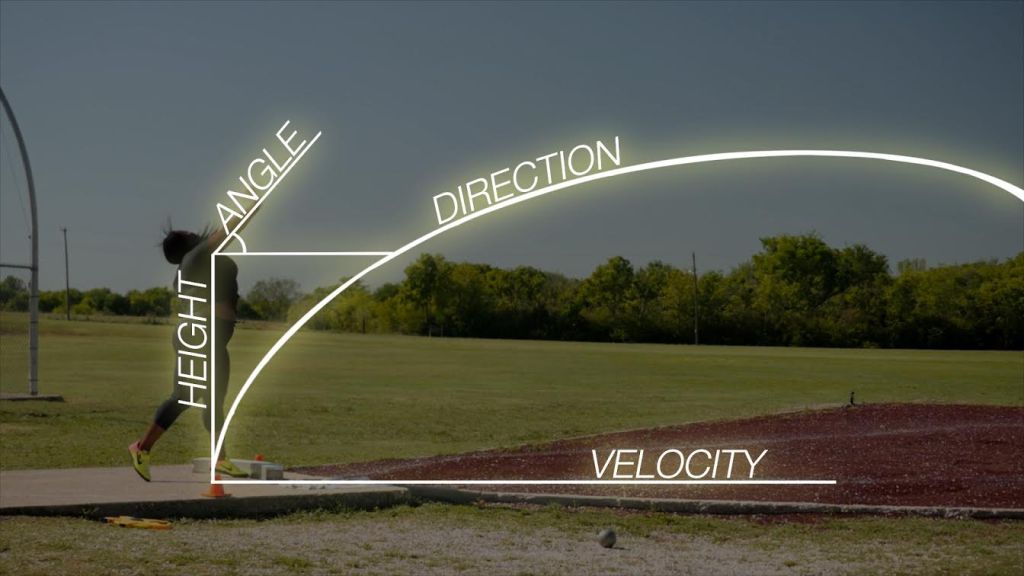
The data collected can also provide coaches with more accurate information for better coaching, like if a shot put throw is off six degrees. It’s no longer “I think you were.” Now, it’s “I know you were.”
When it comes down to the technology used, Cheetham said the USOC takes yearly solicitations and ranks projects and budgets based on which ones will have the best chance to improve medal count. Often, the projects are easily transferable from one sport to another.
One example he provided was a radar technology used to track shot put, javelin, discus and hammer throws. The USOC technology was originally developed to track golf balls.
“We’ll do some blue sky projects, but most are good sells and no-brainers.”
Download the FOS App
The business of sports, in your pocket.



Scan the QR code to get the app now.