Want more from Front Office Sports
in your search results?
Former NFL quarterback turned NBC host Chris Simms doesn’t think the era of NIL (name, image, and likeness) deals was such a smart idea for college sports—just maybe not for the reason you’d think.
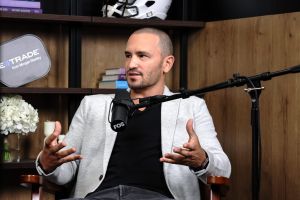
“College football messed up with this NIL,” he told Front Office Sports during an interview at Radio Row in New Orleans before the Super Bowl. “They messed up because nobody’s got more money than Texas. Texas and Notre Dame are going to be like, ‘NIL? Sure. We can print money at these schools.’”
He added Ohio State and Michigan to the list of clear NIL winners due to their financial largesse.
To be fair, Simms has a rooting interest as a UT alum. But he’s not wrong. In December, with private equity firms circling college athletic programs to try to invest, CNBC released a ranking of the most valuable programs. It listed Ohio State and Texas at No. 1 and No. 2 with valuations of $1.32 billion and $1.28 billion, respectively.
Those figures matter as the NCAA sprints toward a future in which players get a share of athletics revenue. The House v. NCAA settlement, a $2.8 billion deal that outlines damages for schools and establishes infrastructure for paying players, was preliminarily approved in federal court in October 2024 and should be finalized in April—well before college football season kicks off.
According to the proposal, every Division I school will be able to pay out $20.5 million to athletes across sports—not just football.
This proposed system stands in contrast to the current NIL system in which players negotiate the rights to each instance in which their name, image, and likeness is used for marketing purposes, but can’t directly get paid by schools for playing their sport. To get around this, groups connected to the school have launched NIL collectives run by companies or nonprofits to raise funds from boosters that are then distributed to athletes.
It’s a bit like political action committees, which technically can’t coordinate with candidates on messaging—but act in concert. Revenue sharing, by contrast, will allow athletic departments to take a more direct role in deals and begin paying players.
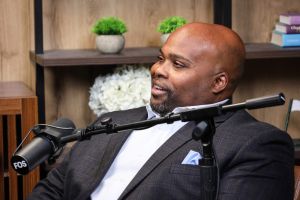
“But what that means is when every school pays their players $20.5 million, everyone’s back at zero,” Adam Breneman of “Next Up” told FOS at Radio Row. “No one has the competitive advantage, which means the money from the NIL collectives will still come into play. Because when Ohio State and Penn State pay their players $20.5 million, they’re going to try to figure out, ‘How do we get an extra $5 million to pay them extra?’”
Theoretically, the agreement has limits to how much collectives could offer. The NCAA pushed for NIL deals above $600 to be approved by a third-party clearinghouse to make sure it’s “fair market value.”
But as Breneman suggested, this could turn out to be a huge loophole. As FOS has previously reported, it’s unclear who will run the clearinghouse and how fair market value will even be determined in an industry that’s never had payments; lawyers suggest it could very likely be challenged in court.
Collectives have been particularly instrumental in getting players to transfer to a new school. In 2021 the NCAA lifted the restriction on one-time transfers; players can now transfer between seasons without penalty—even before their bowl games.
Thus players like former UNLV quarterback Matthew Sluka are quickly taking their talents elsewhere if they feel their school isn’t living up to its NIL promises.
“Most of the college coaches I talk to, it’s really hard to set a culture, it’s really hard to coach kids the way they want to coach them because they’re so scared of guys jumping in the transfer portal and leaving,” former Panthers center Ryan Kalil, who played at USC, told FOS at Radio Row. “I think, if anything, we should look at how to fix the transfer portal so guys just can’t keep jumping and going from school to school.”
Several schools, including Deion Sanders’s Colorado, have prepared for revenue sharing by doing away with their collectives, but that could change just as easily as the college athletic landscape has changed.
One school that hasn’t gotten rid of its NIL collective? The University of Texas. The Texas One Fund raised $10.5 million in 2023 and gave $11.9 to Texas athletes.
Download the FOS App
The business of sports, in your pocket.



Scan the QR code to get the app now.