Want more from Front Office Sports
in your search results?
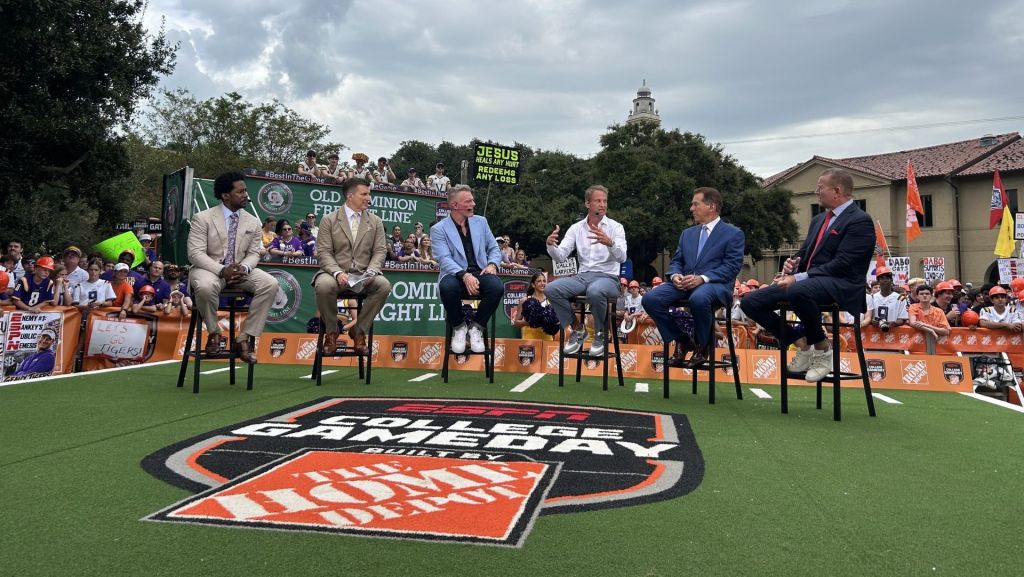
BATON ROUGE — Lane Kiffin arrived on the set of ESPN’s College GameDay around 10 a.m. local time with a look of determination. He still flashed a peace sign at LSU fans who cheered him as he walked, but otherwise didn’t break stride.
Clad in a white button-down and grey slacks, Kiffin was several hours away from making his debut as Tigers head coach. But first, he had some questions to answer about a massive and consequential decision.
On Friday night, LSU decided not to add Dae’Quan Wright and Zxavian Harris to its final roster—a shocking turn after the players, as well as LSU itself, fought a legal battle for the right to take the field as Tigers.
Wright and Harris were just two of hundreds of college athletes who have sued the NCAA to challenge the implementation of its “age-based” eligibility policy, which offered a fifth year of eligibility to college athletes—but didn’t include players from the freshman class of 2022 who had already completed four years, like them. But their lawsuit drew national news because they had signed NFL contracts, though both were waived before making a regular-season roster. A multipart legal battle ensued after the SEC issued a ban on players with this NFL experience, and the players and LSU refused to back down.
In a Baton Rouge courthouse Thursday, players won an injunction to suit up Saturday—a court order that prevented both the NCAA and SEC from implementing its rules. During the nine-hour hearing—specifically when SEC commissioner Greg Sankey was on the stand—news broke that the conference had sued LSU in federal court in Alabama, adding another layer to the feud.
All day Friday, the college sports world waited with bated breath to see if Kiffin would test the limits of his fellow schools in the SEC, the NCAA, and even several politicians. Front Office Sports confirmed Friday night that Kiffin decided not to roster Wright and Harris. Attorney Darren Heitner, outside counsel for Wright’s agent, later told FOS that Wright’s representatives also received the news in the evening, but declined to comment further.
“LSU has made a measured decision to keep these two young men off the roster for now while preserving a place for them to be added later,” Ryan Downton, an attorney representing the players, said in a statement Saturday. “Everyone should use that space to lower the temperature and look at the facts” that neither player was drafted, or made an NFL regular-season roster or practice squad.
By the time Saturday morning came, everyone was expecting an explanation from Kiffin as he took the GameDay stage. In front of hundreds of fans on the ESPN broadcast, he explained the decision “wasn’t easy.”
“As much as I feel for the players and I believe that you fight for what you believe in, and I believe these kids have an opportunity to play just like all the other kids around the country that are winning court cases and being put on rosters,” Kiffin added that “uncertainties of what potentially could have come by adding them to the roster” drove LSU to hold off.
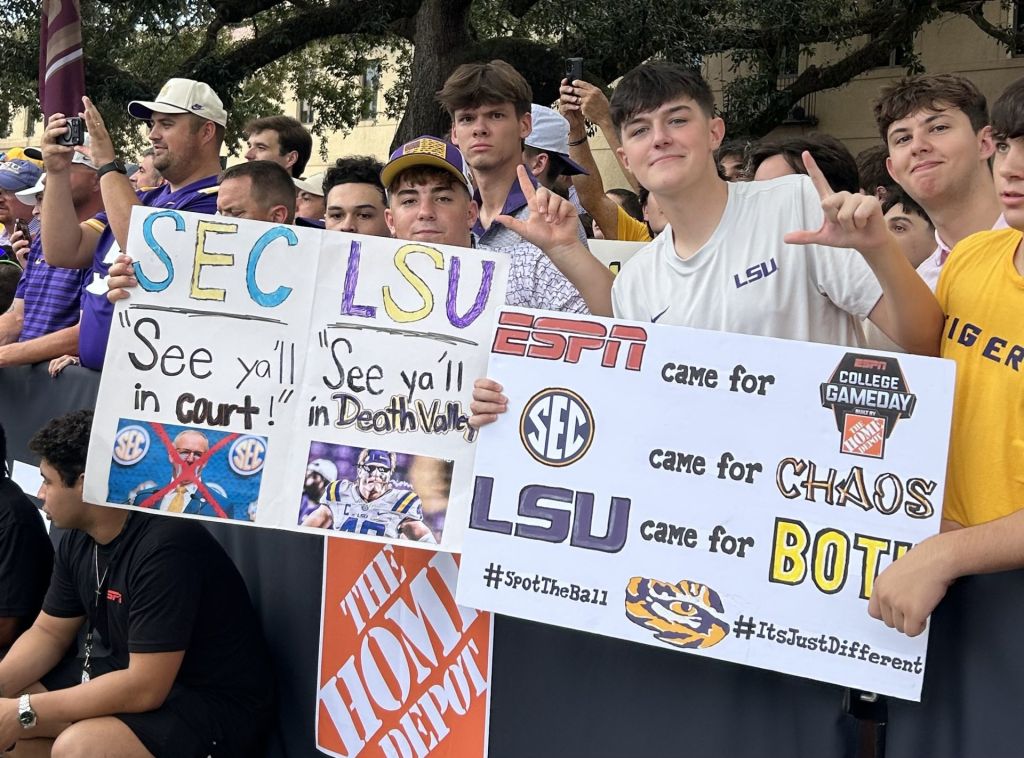
Behind him, fans used the eligibility conundrum as just the latest example of a familiar narrative in Baton Rouge: that it is LSU vs. everyone; and now, LSU vs the SEC. One sign read: “My other sign was ruled ineligible.” Another held up a split poster: One side depicted the SEC saying “see ya’ll in court,” while the other portrayed LSU saying, “see ya’ll in Death Valley.”
Even fans with a moral quandary about Kiffin’s decision brought signs of support and cheered him on.
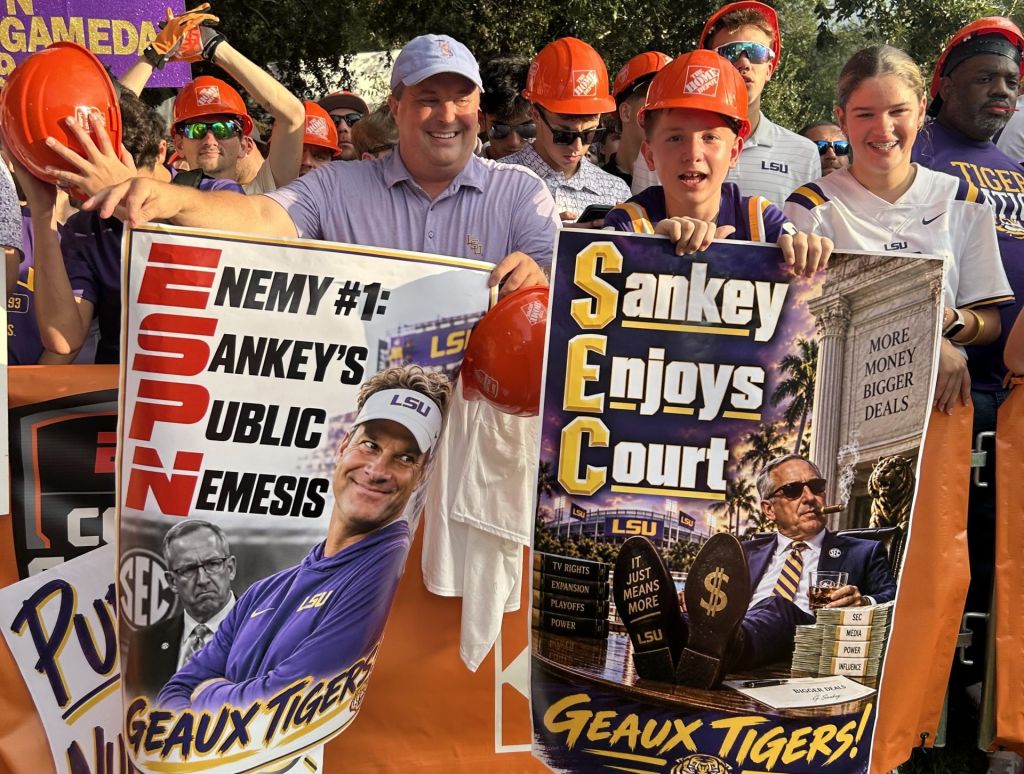
A trio of “lifelong” LSU fans from Lafayette held up one of the most colorful posters: A 13-year-old clutched a sign with the letters “SEC” spelling “Sankey Enjoys Court.” The poster included what appeared to be an AI-generated image of Sankey kicked back at a desk wearing a purple suit and holding an alcoholic beverage. Matthew West, 50, standing beside him, said: “We thought that was hilarious because he [Sankey] was sitting in there, and then he filed that suit in Birmingham. We thought, ‘Well man, he likes to be in court, apparently!’”
Still, West, like some other LSU fans, doesn’t necessarily think that Wright and Harris should set a new precedent. “I have a mixed opinion about that,” he said. “It may be legal, but is it ethically clean for college football to have this happen? I don’t know.” He added, however, that he would have supported the players if they had been able to take the field.
Kiffin, for his part, was ushered off the GameDay set after the brief segment to head to a team meeting. Surrounded by body guards and athletic department officials, he put his game face back on and strode out of the limelight.
Later, another ESPN interview aired with Kiffin in that same outfit, expanding on his decision not to roster Wright and Harris. He suggested that he had concerns about potential postseason penalties, and also expressed remorse for his inability to support the two players who had attempted to follow him to LSU from Ole Miss (and NFL preseason).
Like LSU fans, Kiffin, too, is clinging to the LSU-vs.-everyone narrative.
“[The players] have a feeling… that they’re treated different at LSU and have been treated different this week. And so that’s probably a good thing,” he said on ESPN. “That bonds people together, puts a little chip on their shoulder. And now they need to go play really well.”
Download the FOS App
The business of sports, in your pocket.



Scan the QR code to get the app now.