Want more from Front Office Sports
in your search results?
As prediction markets continue their push into professional sports, two prominent women’s leagues are still holding off.
The National Women’s Soccer League and Professional Women’s Hockey League both told Front Office Sports they are not currently pursuing deals with prediction markets. The NBA, NHL, MLB, and MLS all have between one and four prediction-market partnerships with platforms such as Kalshi, Polymarket, DraftKings, and Novig. The NBA’s agreements did not apply to the WNBA, which recently told FOS it’s open to prediction-market deals.
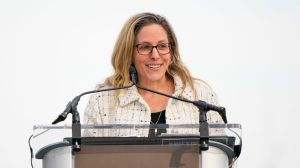
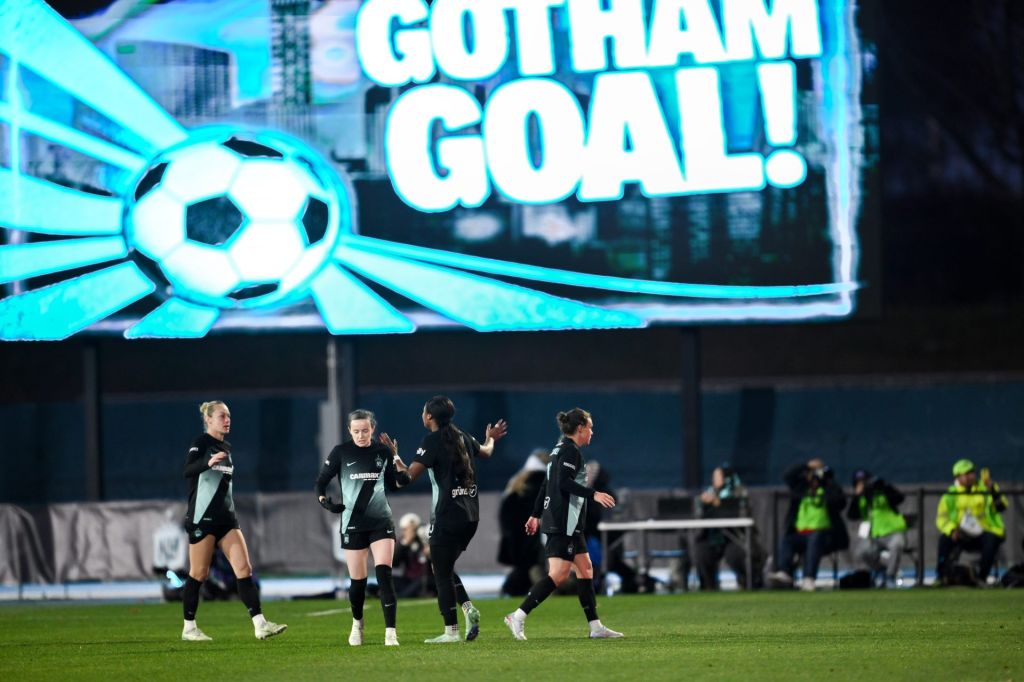
NWSL commissioner Jessica Berman told FOS on Thursday at NWSL media day in Washington, D.C., that prediction markets have expressed interest in the NWSL, but the league isn’t moving forward with them for now.
“It’s something that as a category we are continuing to evaluate and watch,” Berman said. “It obviously is subject to a lot of scrutiny and questions about how the regulations around it will evolve. And we’re going to continue to watch it and use that information to decide whether we want to move forward in any way with it.”
The PWHL is also sitting on the sidelines of the prediction markets game.
Prediction markets “have not been an area of focus for the PWHL,” a league spokesperson told FOS this week. “We have not pursued partnerships in this space.”
While many U.S. men’s leagues have prediction market deals, the NFL is a notable exception.
Elsewhere in soccer, Polymarket has aggressively pursued international leagues, and has made deals with Bundesliga, La Liga, and Serie A.
The Legal Landscape
Companies like Kalshi and Polymarket have been using some of the billions of dollars they’ve raised from investors to reach deals with pro leagues (and teams), even while they argue the product they offer is different from traditional sports betting. Prediction markets are regulated at the federal level, by the Commodity Futures Trading Commission, while traditional sportsbooks are regulated on a state-by-state basis. Currently, 39 states and Washington, D.C., allow some form of legalized sports betting. The states that do not include Texas, California, and Utah.
A testy legal fight has been playing out in courtrooms across the country over whether prediction markets should be regulated at the state or federal level. Utah recently brought felony criminal charges against Kalshi cofounders Tarek Mansour and Luana Lopes Lara, and that duo is due to be arraigned in court on Dec. 4.
Last year, Kalshi had some legal momentum with early victories in a number of cases, but the tide has been shifting, and Kalshi and others have been getting hit with adverse rulings. Four cases involving Kalshi have reached federal appeals courts, and three of those courts have ruled against Kalshi.
The issue of sports event contracts is widely expected to eventually reach the U.S. Supreme Court as soon as next year, and one case has already reached the high court’s doorstep (although it has yet to agree to hear that case).
The federal government under President Donald Trump has been supportive of the industry, but experts recently told FOS that a prediction-market reckoning has already begun after the midterm elections saw Democrats take control of Congress.
Download the FOS App
The business of sports, in your pocket.



Scan the QR code to get the app now.